
Can You Use an Aerial Lift on Raised Floors and Mezzanines? A Floor Load Checklist
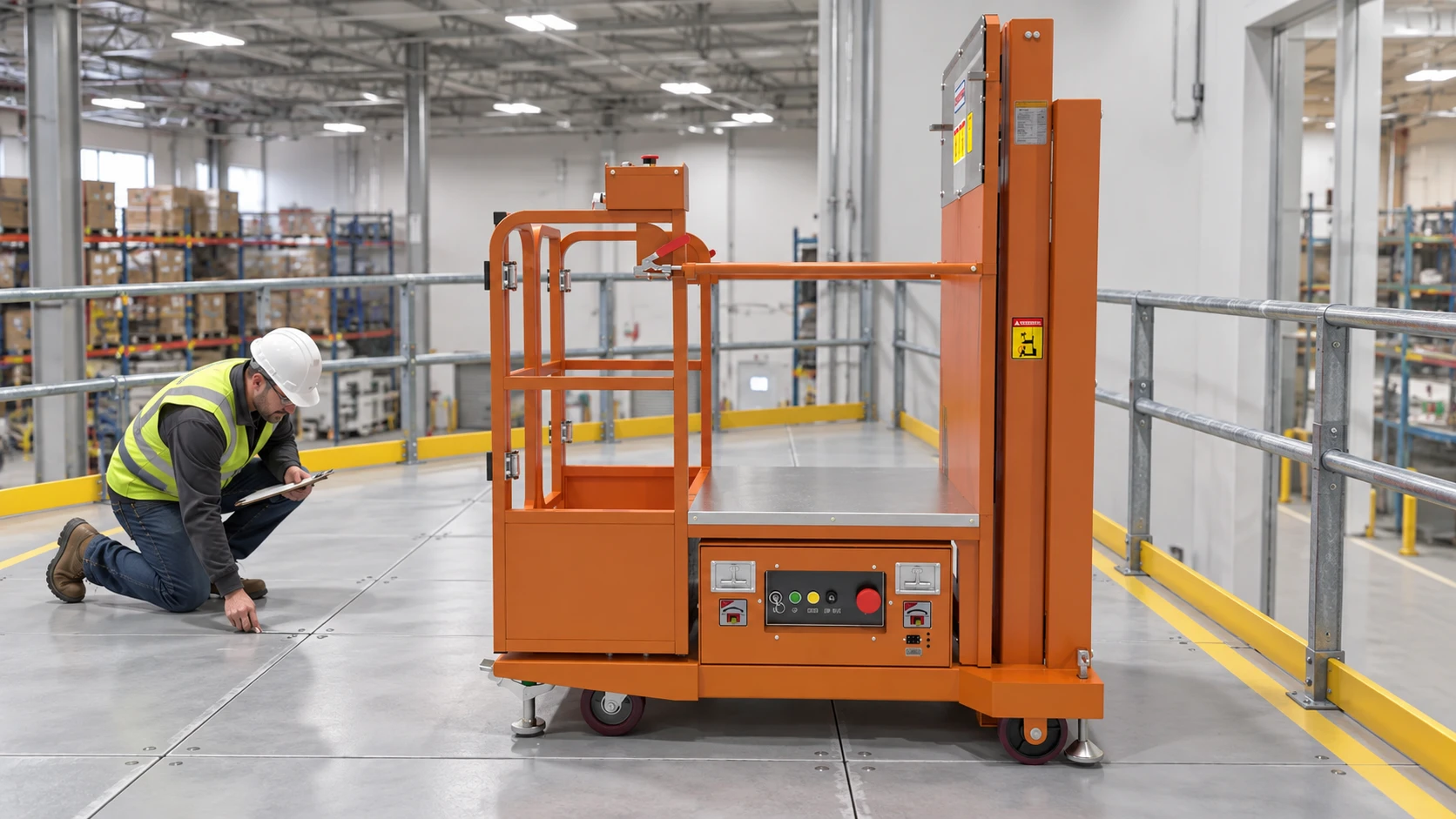
Yes, an aerial lift may be used on some raised floors and mezzanines, but only after the exact machine, route, and working position have been checked against the floor system. A general live-load rating or the word “indoor” in a product description is not enough. The approval must address the loads delivered through the wheels or outriggers, not just the machine’s average weight over its footprint.
The practical decision belongs to the facility owner and the qualified person responsible for the structure. The lift supplier can provide machine data; the floor-system supplier or structural engineer must determine whether the raised floor, decking, framing, connections, and supporting slab can accept those loads.
Why Total Machine Weight Is Only the First Check
An aerial lift’s operating weight includes the machine, occupants, tools, materials, accessories, and any model-specific options. That total helps screen elevator limits and overall floor capacity, but it does not describe how the load enters the floor. A mobile lift can place a large share of its weight on one wheel while turning, braking, crossing a joint, or operating with the platform raised. A supported mast lift may transfer load through several small outrigger pads.
For that reason, request maximum wheel load, maximum outrigger reaction where applicable, tire or pad contact area, occupied floor area, operating weight, and the conditions under which each value applies. Average floor pressure can be useful for comparison, but it must not replace a concentrated-load check. Platform capacity is a separate rating: it limits the people and materials on the platform, not the load a building floor can carry.
Match the Load Data to the Floor System
| Floor condition | What can control | Evidence to obtain |
| Raised access floor | Panel concentrated and rolling ratings, pedestal/stringer system, cut panels, joints, and the structural slab below | Floor-system data, layout, condition survey, machine wheel loads, route, and approved load-spreading method |
| Mezzanine | Decking, joists, beams, connections, openings, edges, local point loads, and vibration or movement | Current drawings, posted limits, structural review, exact travel path, work positions, and wheel or outrigger reactions |
| Elevated concrete slab | Local punching, slab thickness and reinforcement, joints, deterioration, and temporary construction loads | Structural drawings or investigation, machine load data, route, and written approval for the planned operation |
Raised Floors Need Rolling and Concentrated Load Checks
A raised access floor is a system, not just a panel. The panel rating may assume intact panels, full edge support, specified pedestals and stringers, and a defined test contact area. A wheel crossing a seam, damaged panel, cutout, ramp, or poorly supported edge can create a different load case. Rolling-load limits also matter because the lift must travel to the work point. Review the supporting slab as well as the access-floor assembly. JQLIFT’s data center aerial lift selection checklist provides a complementary route, weight, turning-radius, height, and load review for raised-floor environments.
Mezzanine Ratings May Not Cover Wheel Loads
A posted mezzanine live-load value usually describes a design basis for distributed occupancy or storage loads. It does not automatically approve a moving point load from an aerial lift. The review should follow the proposed route across the decking and framing, including turns, parked positions, platform-raised positions, construction openings, guardrail lines, and areas near stairs or edges. Changes made after the original design, including penetrations, repaired deck, added equipment, or corrosion, may also affect the decision.
Use This Aerial Lift Floor Load Checklist
1. Identify the floor. Record whether the route is on raised access flooring, a mezzanine, an elevated slab, or several systems. Mark panel types, joints, ramps, openings, transitions, damaged areas, and restricted zones.
2. Freeze the machine configuration. Specify the exact model, battery or power option, accessories, platform extension, tire type, occupants, tools, and materials. Use the heaviest planned operating case.
3. Obtain floor-loading data. Ask for operating weight, maximum wheel load, tire contact information, maximum outrigger reaction and pad size if used, and any manufacturer restrictions that affect indoor travel or elevated operation.
4. Map every load position. Include unloading, elevator transfer, straight travel, turns, thresholds, setup, emergency lowering, and removal. A safe work position does not make an unsuitable travel route acceptable.
5. Compare like with like. Uniform floor ratings, concentrated-load ratings, rolling-load ratings, wheel loads, and outrigger reactions are different quantities. The responsible engineer or floor-system supplier should compare the applicable load cases and units.
6. Approve any load distribution. Plywood, steel plate, or proprietary mats may protect a finish or distribute load, but their thickness, size, stiffness, support, joints, traction, and securement must suit the floor and machine. Do not treat an improvised sheet as structural approval.
7. Control the operation. Define approved routes and positions, platform limits, spotter needs, exclusion zones, edge clearances, and surface conditions. Also follow the model manual and OSHA’s Working Safely with Scissor Lifts guidance.
8. Document the decision. Keep the machine data, structural or floor-system approval, route drawing, load-spreading design, inspection findings, and operating limits with the job plan. Recheck the approval if the model, load, route, or floor condition changes.
Choose the Lift Only After the Floor Check
A compact machine can reduce total weight and improve access, but equipment type alone does not establish floor suitability. A small scissor lift may provide more platform space, while a vertical mast lift may have a narrower travel profile. Compare the exact operating weight, wheel or outrigger loads, contact areas, platform capacity, route dimensions, and setup method. JQLIFT lists both a scissor lift range and a vertical mast lift range for model-level review.
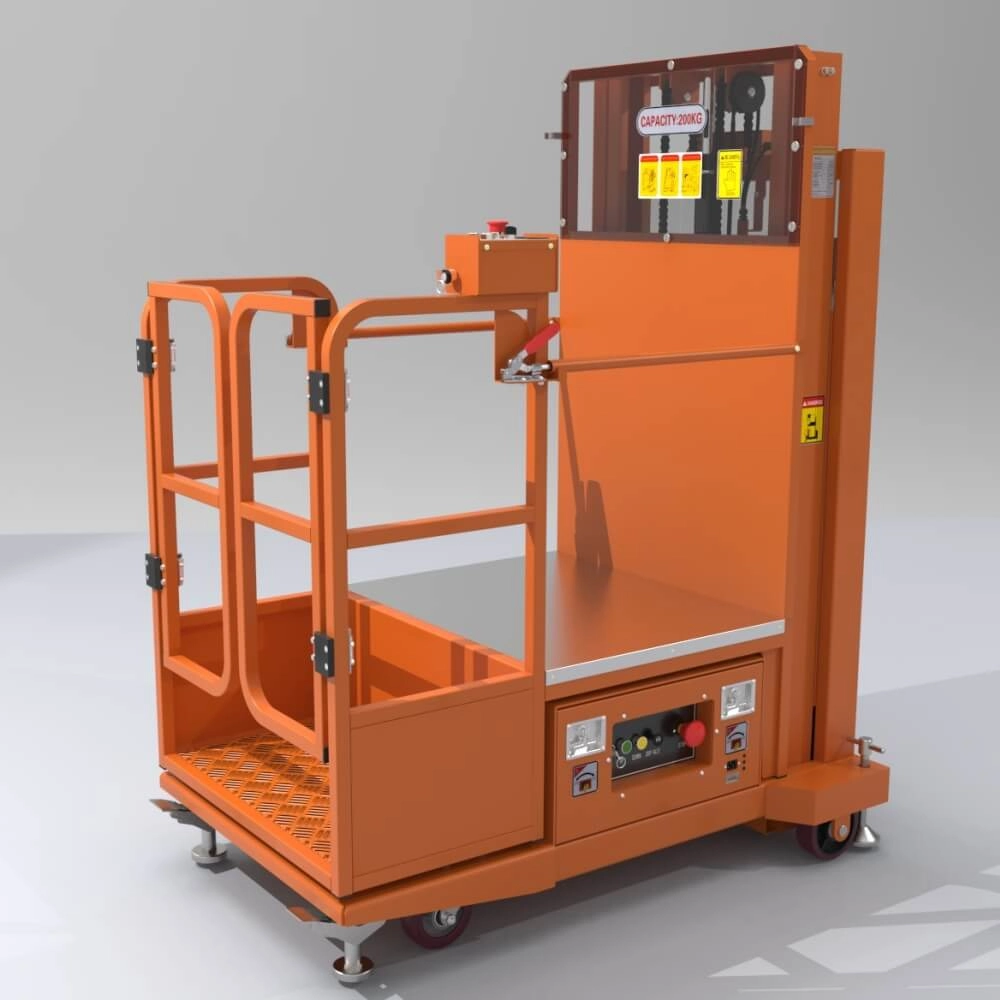
For an RFQ, send the floor type and drawings, exact travel route, required working height, operator count, tool and material weight, approved machine-weight limit, wheel-load or outrigger criteria, door and elevator dimensions, quantity, and photographs of transitions or damaged areas. JQLIFT can then identify a candidate configuration, but final floor approval should remain with the party responsible for the building or floor system.
Conclusion
An aerial lift can operate on some raised floors and mezzanines, but the decision cannot be made from machine weight or a floor’s pounds-per-square-foot rating alone. Verify the exact configuration, concentrated wheel or outrigger loads, rolling route, floor assembly, framing, and working position. Written, site-specific approval should come before delivery and should define any load-spreading and operating controls. To compare an application with current model data, request a model-specific floor-load review with the route, floor information, required height, payload, and drawings.
FAQs
Can a scissor lift be used on a raised access floor?
Possibly, but only when the complete raised-floor system and supporting slab are approved for the machine’s maximum wheel loads and rolling route. A panel’s uniform-load rating alone is insufficient.
Does a mezzanine live-load rating approve an aerial lift?
Not automatically. Aerial lifts introduce concentrated and moving loads. A qualified structural reviewer should check the decking, framing, connections, route, work positions, openings, and edges for the exact machine configuration.
Will plywood make a weak floor safe for a lift?
Plywood may protect a finish or help distribute load when properly designed, but it does not create structural capacity. The material, size, thickness, support, traction, and placement require approval for the specific floor and machine.
What lift data should be sent for a floor check?
Provide the exact model and configuration, operating weight, maximum wheel load, tire contact data, maximum outrigger reaction and pad size if applicable, platform load, route, setup positions, and operating restrictions.


