
Aerial Lift Machine Weight vs Floor Load: Why Total Weight Is Not Enough
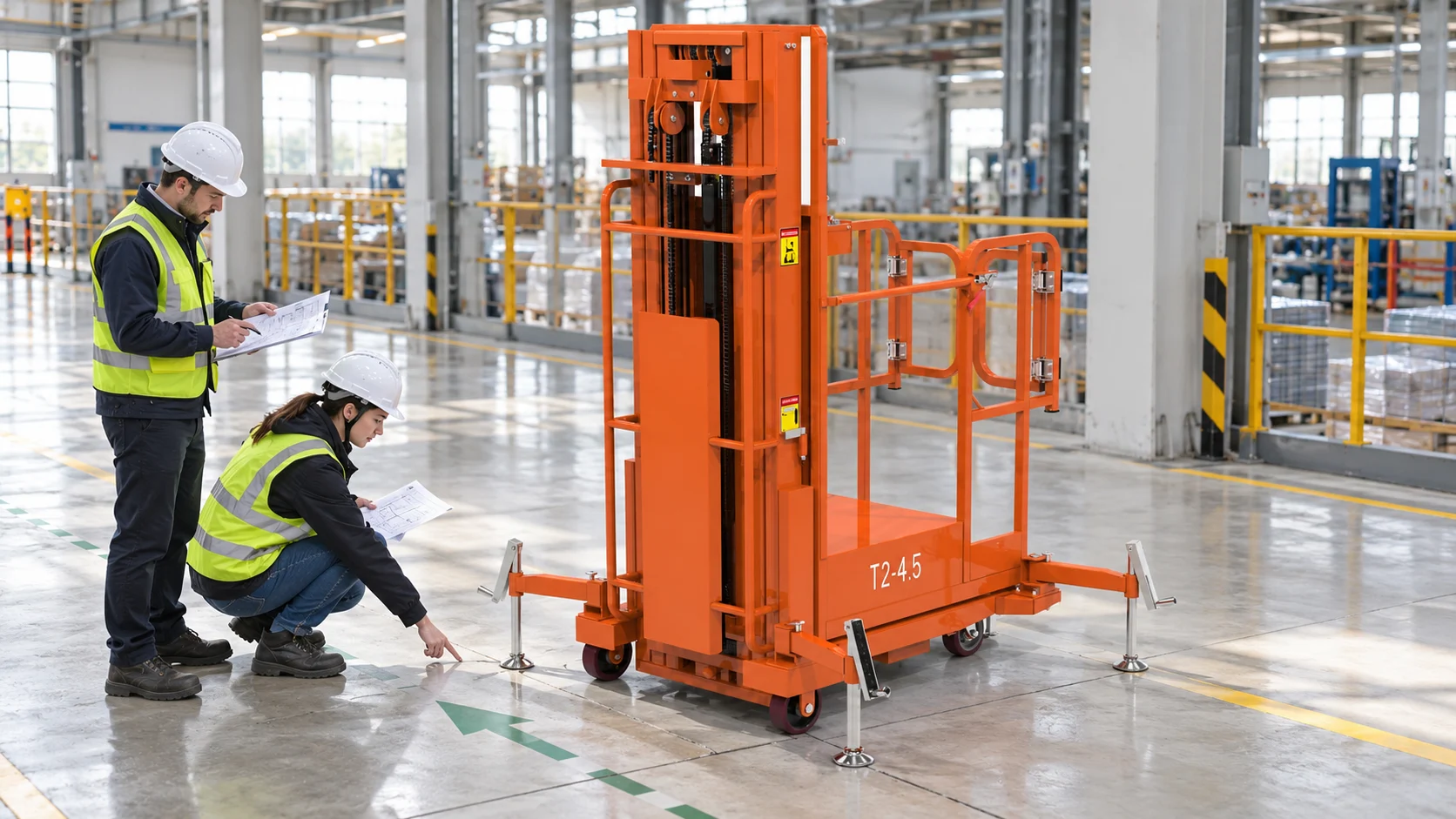
An aerial lift’s total machine weight is necessary for a floor review, but it is not enough to approve the equipment. A floor does not experience that weight as one uniform block. The load enters through individual tires, tracks, or outrigger pads, and the highest local reaction can control the decision. Travel, steering, braking, platform position, payload, and floor transitions can create additional load cases.
The practical rule is simple: use total weight to screen a machine, then verify average floor pressure, maximum wheel or outrigger load, contact area, rolling conditions, and the exact floor system. The lift supplier provides model-specific data; the facility owner and qualified structural reviewer decide whether the route and work positions are acceptable.
Machine Weight Answers Only One Question
Machine weight describes the equipment itself under a stated configuration. Depending on the document, it may exclude the rated platform load, optional equipment, attachments, or a particular battery package. For a site review, confirm what the published number includes and build the heaviest planned operating case with occupants, tools, materials, and installed options.
That number can help check freight limits, elevators, ramps, and a building’s overall loading. It cannot show how much force reaches one wheel, whether a small contact patch will damage a finish, or whether a moving wheel can cross a panel joint. Platform capacity is different again: it limits the payload carried at height. It is not the machine’s weight and it is not a floor rating.
Six Floor-Loading Values That Are Not Interchangeable
| Value | What it describes | Primary use |
|---|---|---|
| Machine weight | Equipment mass under the manufacturer’s stated configuration | Transport and initial site screening |
| Loaded operating weight | Machine plus the planned occupants, tools, materials, and applicable options | The total case used for floor review |
| Occupied floor pressure | Average loaded weight divided by a stated projected or occupied area | Broad comparison, not a local-load approval |
| Maximum wheel load | Highest reaction at any one tire in the specified condition | Slabs, decking, joints, panels, and local framing |
| Contact pressure | Wheel or pad reaction divided by its actual contact area | Surface layers, finishes, mats, and local bearing |
| Outrigger reaction | Highest force at one support pad while the machine is set up | Supported lifts and load-spreading design |
Why Dividing Total Weight by Four Can Fail
A four-wheel lift does not necessarily place exactly 25 percent of its loaded weight on each tire. Batteries, drive components, steering geometry, the platform extension, and payload location can shift the center of gravity. A manufacturer may therefore publish a maximum wheel load that is higher than a simple equal split. Use that value for the stated configuration rather than calculating a substitute from total weight.
The operating condition also matters. Straight travel on a level slab, turning near a joint, crossing a threshold, braking, and working with the platform elevated are not the same case. Raised access floors and mezzanines may have separate concentrated-load and rolling-load limits, while elevated concrete slabs may require checks near joints, openings, edges, or deteriorated areas. JQLIFT’s data center aerial lift selection checklist provides a complementary route, floor, height, and payload review for sensitive indoor sites.
Use PSF and PSI for Different Checks
Pounds per square foot and pounds per square inch describe different load scales. Average occupied floor pressure in PSF spreads total loaded weight across a projected area. Contact pressure in PSI focuses on a much smaller tire or pad footprint. Neither automatically proves that the supporting slab, raised-floor panel, deck plate, joist, or connection is adequate. The structural reviewer must compare like units and like load cases.
Manufacturer terminology can vary. A value labeled ground bearing pressure may describe an average over the occupied footprint or a local pressure beneath one tire or pad. Confirm the formula, loaded condition, and contact area behind the number before using it in a floor load calculation.
Consider a hypothetical screening example. A 4,000-pound loaded machine over a 20-square-foot projected area averages 200 psf. If the model’s maximum wheel load were 1,350 pounds, that single local reaction would still need a concentrated-load check. The example is not a product specification or approval; it shows why an acceptable average can coexist with an unacceptable point load.
A Practical Aerial Lift Floor-Load Review
1. Freeze the exact configuration. Record the model, power or battery option, attachments, platform extension, tire type, occupants, tools, and materials. Do not mix data from another model or option package.
2. Request the complete load set. Obtain machine weight, the manufacturer’s loaded condition, maximum wheel load, tire contact information, occupied floor pressure, and maximum outrigger reaction and pad size when applicable.
3. Identify every floor system. Mark the structural slab, raised access floor, mezzanine deck, grating, ramps, elevators, thresholds, joints, openings, edges, and damaged areas along the route.
4. Check travel and operation separately. Review unloading, straight travel, turns, braking, threshold crossing, parking, setup, platform-raised work, emergency lowering, and removal.
5. Compare the correct ratings. Uniform live load, concentrated load, rolling load, wheel load, contact pressure, and outrigger reaction are not substitutes for one another. Confirm units and any stated test contact area.
6. Document controls and approval. Record approved routes, work positions, payload limits, load-spreading design, surface protection, edge clearances, inspections, and operating restrictions. The job plan should also follow OSHA’s Working Safely with Scissor Lifts guidance and the exact model manual.
How Floor-Load Data Changes Equipment Selection
A lower machine weight can improve the shortlist, but the final choice still depends on how that weight reaches the floor. A compact scissor lift may offer a useful platform area, while a vertical mast lift may suit a narrower access route. Compare model-specific wheel or outrigger reactions, footprint, turning requirements, platform load, and working height. Review JQLIFT’s scissor lift range and vertical mast lift range only after the site constraints are defined.
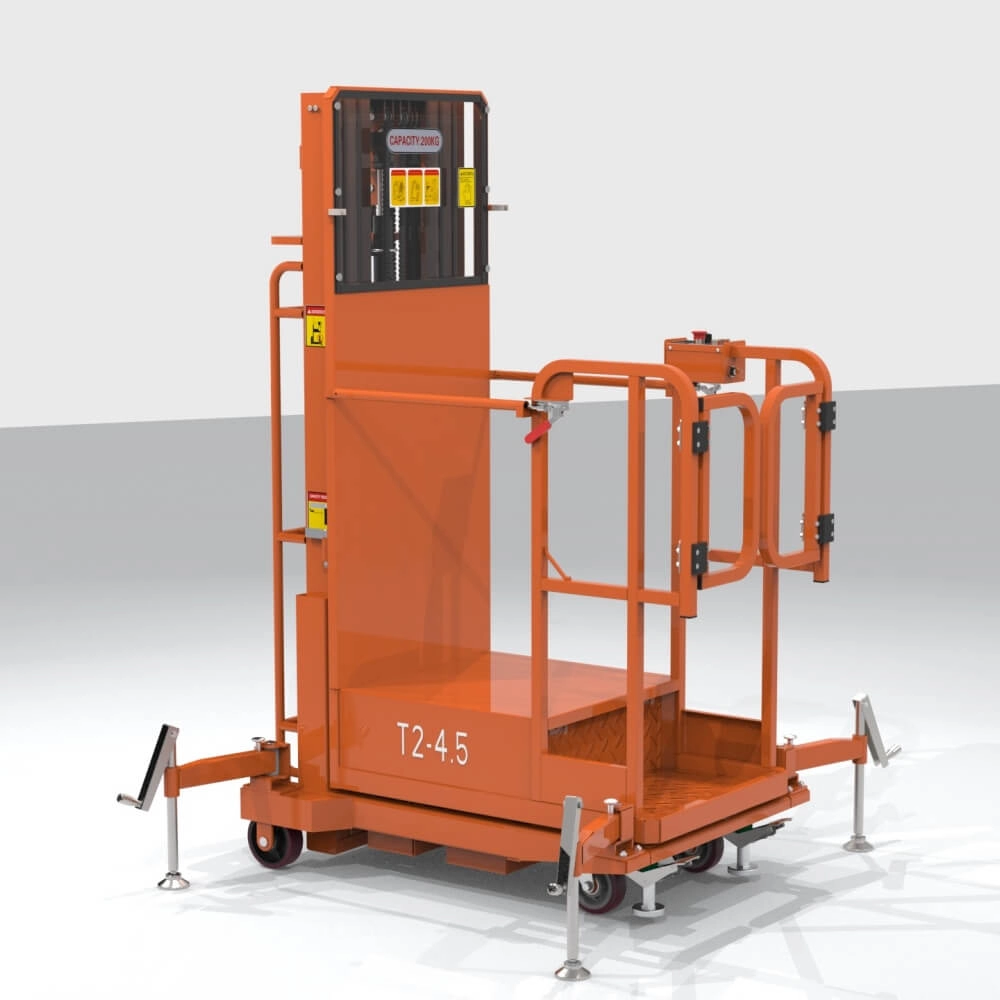
A useful RFQ should include the floor type and drawings, exact travel route, required working height, expected payload, allowable machine-weight limit, required wheel-load or outrigger data, door and elevator dimensions, quantity, and photographs of transitions or damage. JQLIFT can use those inputs to identify a candidate configuration, while final floor approval remains with the party responsible for the structure.
Conclusion
Total aerial lift weight is a starting number, not a complete floor-load decision. Approval requires the loaded configuration, maximum individual wheel or outrigger reaction, contact area, average floor pressure, rolling route, and the actual floor assembly. Compare each machine value with the matching structural or floor-system rating, then document the permitted route and operating conditions. To obtain model-specific data for an application, request a technical floor-load review from JQLIFT with the site information, payload, drawings, and required working height.
FAQs
Is machine weight the same as floor load?
No. Machine weight is the equipment’s total mass under a stated configuration. Floor loading describes how that weight is distributed through wheels, tracks, or outriggers and how the floor system responds.
Can I divide scissor lift weight by four to estimate wheel load?
Do not use an equal split for approval. Component layout, steering, platform position, payload, and operating condition can make one wheel reaction higher. Request the manufacturer’s maximum wheel-load data.
Should a floor check use PSF or PSI?
It may require both, plus a concentrated-load value. PSF commonly describes average pressure over a larger area; PSI can describe local contact pressure. The correct comparison depends on the floor system and load case.
Do plywood or load-spreading mats solve a floor-load problem?
They may protect a finish or redistribute a reaction when properly designed, but they do not create structural capacity. Material, thickness, size, stiffness, joints, traction, and support conditions require approval.


