
What Do 12V 24V and Ah Mean on an Aerial Lift Battery Specification
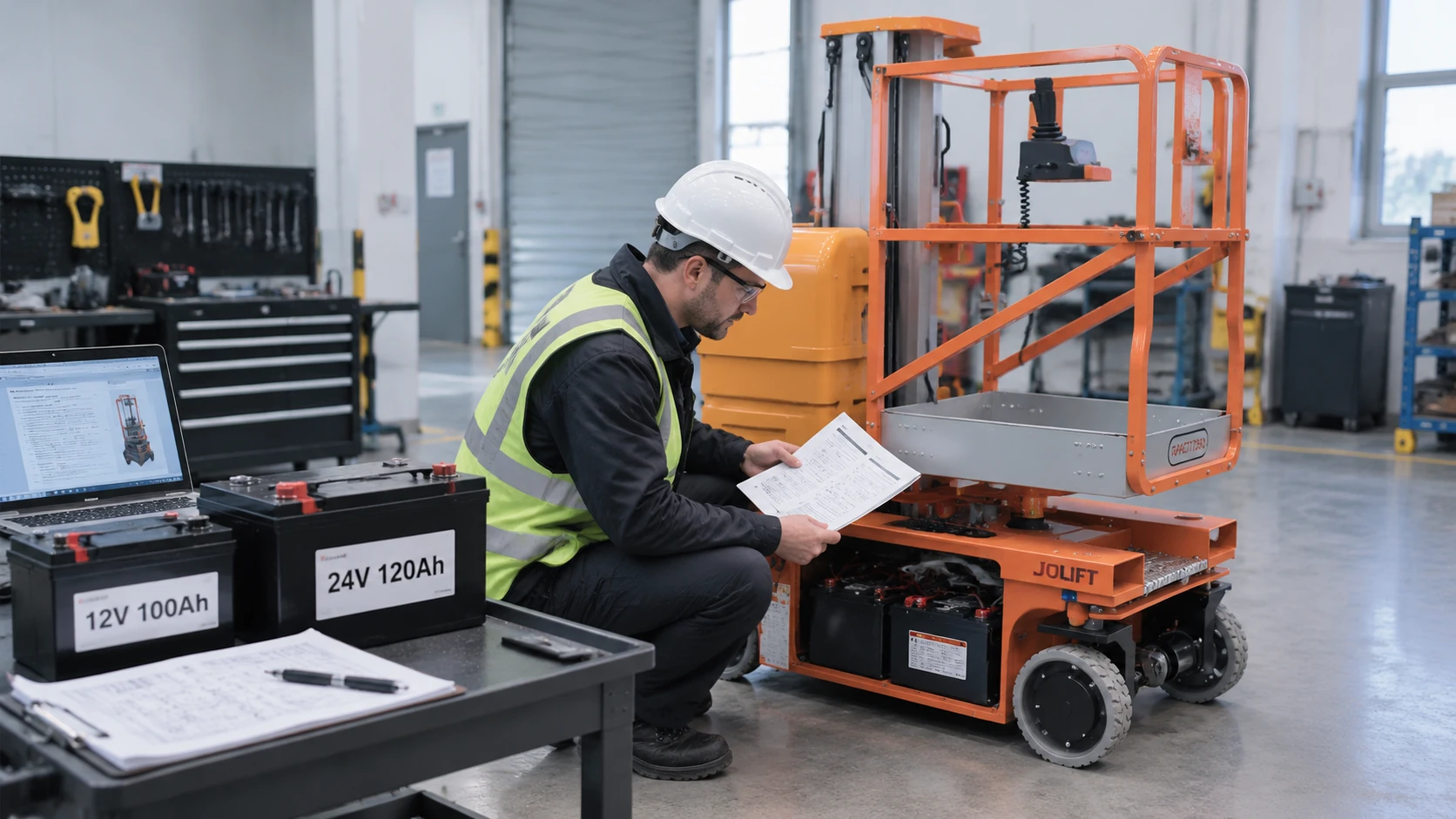
A battery label such as 24V 120Ah is a compact description of an electrical system, not a promise that a lift will run for a fixed number of hours. The voltage must match the lift and charger architecture. The amp-hour rating describes charge capacity under a stated test condition. To choose an aerial lift battery safely, read those figures together with the battery chemistry, series-parallel layout, load, duty cycle, physical fit, connectors, and charging method. This guide explains the label in practical terms for buyers, fleet managers, and maintenance teams. For model-level examples, the published specifications on JQLIFT electric lift products are a useful starting point, but the final configuration should be confirmed for the exact machine and application.
Voltage Defines the System Operating Level
Voltage, shown as V, is the electrical potential that the lift’s drive, lift motor, controller, contactors, and charger are designed to use. A 12V system, a 24V system, and a 48V system are different electrical architectures. A battery with the wrong nominal voltage may prevent the machine from starting, trigger controller faults, damage components, or create an unsafe charging condition. Do not substitute a higher or lower voltage because the battery physically fits.
The number on a specification may describe one battery or the complete battery bank. For example, two 12V batteries connected in series produce a 24V bank while the Ah rating remains the Ah rating of one battery in that series string. Four 6V batteries can also form a 24V bank. Series wiring increases voltage; it does not add the amp-hour ratings. Parallel wiring increases available Ah while keeping the voltage the same. The wiring diagram and the equipment manual should identify which arrangement the lift uses.
Ah Is Capacity Not a Direct Runtime Promise
Ah means ampere-hours, a unit of electric charge. In a simplified example, a 100Ah battery could deliver 5A for 20 hours under the test conditions used for its rating. Real lift operation is more demanding and variable. Motor current changes during lifting, travel, steering, braking, and starting. The usable capacity also depends on discharge rate, temperature, battery age, chemistry, state of charge, and the manufacturer’s permitted depth of discharge.
That is why a 24V 120Ah battery does not automatically run twice as long as a 24V 60Ah battery. The larger rating may extend operating time at the same duty cycle, but the lift may also weigh more, charge for longer, require a different battery compartment, or need a different charger profile. For a replacement, compare the complete specification rather than treating Ah as an isolated upgrade lever.
How 12V 24V and Ah Work Together
| Label | What it tells you | What it does not tell you |
| 12V or 24V | The nominal system voltage and compatibility target | Actual runtime or lifting performance |
| Ah | Rated charge capacity under a stated test condition | The exact number of working hours |
| V x Ah | A rough nominal energy comparison in watt-hours | Usable energy after losses and operating limits |
Multiplying nominal voltage by nominal Ah gives watt-hours, a useful first comparison: 24V x 120Ah is about 2,880Wh. It is not the same as guaranteed usable energy. In practice, conversion losses, low-temperature behavior, controller cutoffs, battery condition, and the permitted depth of discharge reduce what the lift can use. Use the calculation to compare options, then request an application-based estimate.
Use the Label as a Compatibility Check
Before ordering a battery for an aerial lift, verify the following against the machine plate, manual, and charger label:
• Nominal battery-bank voltage and the number of batteries in series or parallel.
• Rated Ah and the test rate used, such as a 20-hour rating where specified.
• Battery chemistry, charging profile, BMS requirements, and permitted operating temperature.
• Length, width, height, total mass, hold-down points, terminals, connector, and cable routing.
• Charger input and output voltage, output current, plug, ventilation, and approved charging method.
• Required lifting cycles, travel distance, load, shift length, idle time, and reserve requirement.
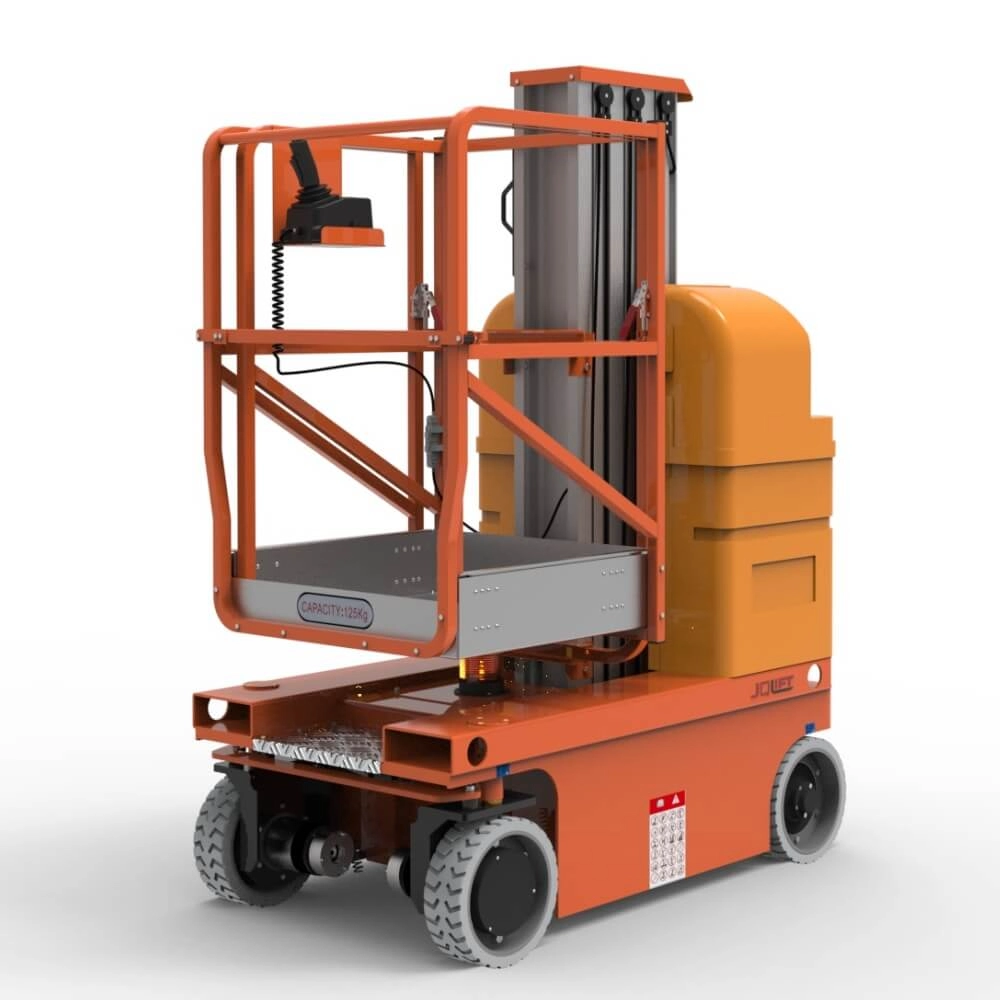
A product page can show why this check matters. JQLIFT’s AL all-electric aluminum alloy lift lists a DC configuration with 2 x 12V/105Ah, while its AT fully electric reclaimer lists 24V/120Ah. Those figures are model-specific examples, not a universal aerial-lift standard. They should be read with the machine’s dimensions, weight, charger, controls, and intended work pattern.
Why the Same Ah Can Feel Different in Service
Two batteries with the same voltage and Ah may deliver different results because the rating is not the whole operating profile. Lead-acid batteries can require maintenance, ventilation, and charging practices that differ from lithium-based systems. Lithium batteries may include a BMS that limits current or disconnects the pack under specific conditions. Temperature, battery age, incomplete charging, and a high lift frequency can all reduce available runtime.
The machine’s duty cycle is the most useful bridge between a label and a purchasing decision. Record how many hours the lift travels, how often it raises the platform, the typical load, the floor or terrain, ambient temperature, and the charging window. A short indoor maintenance job may need a different battery strategy from a multi-shift warehouse or a rough-site application. Do not accept a runtime number unless the supplier states the test conditions.
Do Not Change Voltage or Ah Without Checking the Charger
The charger is part of the battery system. Its output voltage must match the battery-bank voltage, and its charging profile must match the chemistry and battery management requirements. Output current influences charging time, but a higher-current charger is not automatically an approved faster option. Confirm the input power available at the facility, plug and connector, charging location, ventilation, and whether opportunity charging is permitted.
Changing from a lead-acid pack to a lithium pack can also change weight distribution, counterweight requirements, connectors, communication, and service procedures. A conversion should be treated as a system engineering change, not a simple battery swap. Ask for written compatibility confirmation and an updated charging and maintenance procedure.
A Practical RFQ Checklist
When requesting an aerial lift battery quotation, send the lift model, battery photos, nameplate data, voltage, Ah, dimensions, battery count, charger details, connector type, duty cycle, operating temperature, number of shifts, and acceptable downtime. Ask the supplier to identify the proposed part number, chemistry, nominal and usable capacity, weight, charging time, warranty terms, replacement method, and any BMS or controller communication requirements.
JQLIFT already publishes application-focused information for electric lifting equipment. Buyers can use the battery planning checklist for order pickers as a complementary reminder to document runtime, charging windows, access, replacement, and downtime, while keeping this article’s focus on interpreting voltage and Ah on an aerial lift specification.
Conclusion
On an aerial lift battery specification, V tells you the electrical system level and Ah tells you the rated charge capacity. Neither number alone predicts safe runtime. The right decision matches the battery bank to the lift, charger, chemistry, physical compartment, duty cycle, and service plan. If the application is unusual or the battery is being replaced with a different chemistry, request a model-level fit check before purchase. Contact the JQLIFT technical team with the machine model, platform height, load, operating hours, shift pattern, charging conditions, and battery photos so the proposed configuration can be checked against the real job.
Frequently Asked Questions
Is a 24V battery always better than a 12V battery?
No. The correct voltage is the voltage designed into the lift and charger. A higher number is not an upgrade when the controller, motor, wiring, or charger expects a different system.
Does a higher Ah rating always mean longer runtime?
Usually it provides more rated capacity at the same voltage, but usable runtime also depends on load, lift and travel frequency, temperature, battery condition, chemistry, and the permitted depth of discharge.
Can two 12V batteries replace one 24V battery?
They can form a 24V series bank when the equipment is designed for that arrangement and the batteries, cables, protection, charger, and mounting are compatible. Confirm the complete system before changing it.
What information should be checked before ordering?
Confirm voltage, Ah test rate, chemistry, dimensions, mass, terminals, connector, charger output, battery count, machine model, duty cycle, and the supplier’s written compatibility statement.


