
How to Select a Compact Aerial Lift for Narrow Data Center Aisles and Service Routes
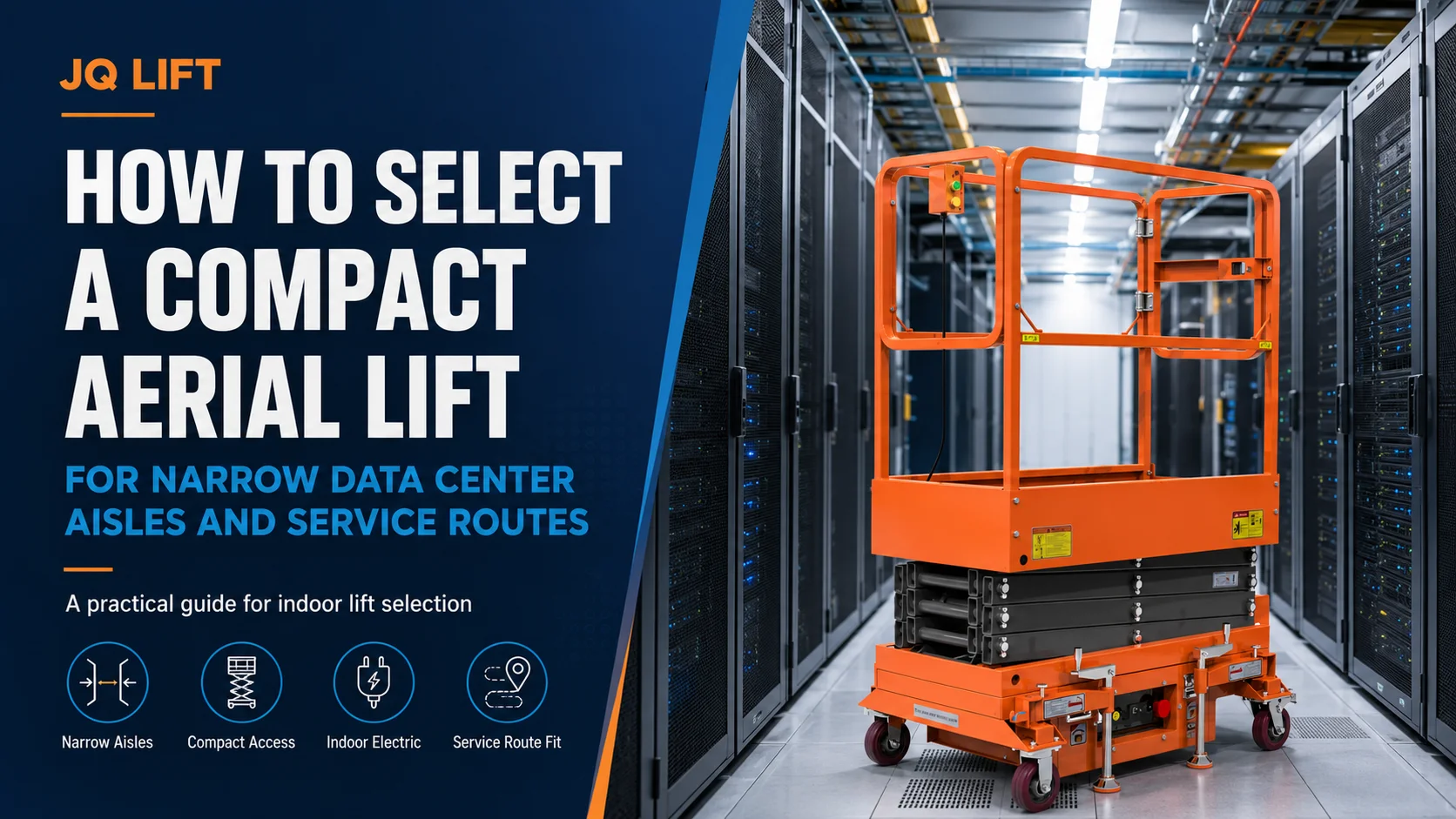
Selecting a compact aerial lift for a data center requires more than finding the smallest machine or the highest platform. The lift must pass through the narrowest doorway, travel along service routes, turn near equipment rows, and reach the required work point without exceeding floor or platform-load limits. A suitable choice depends on the complete route and task.
This guide explains how to compare compact vertical mast lifts and small scissor lifts for data center maintenance, cable tray work, lighting service, and overhead electrical installation. The Jiequ lift manufacturer website can be used as a starting point for reviewing lift categories, but final suitability should be checked against site measurements and the specification for the exact configuration.
Why Narrow Data Center Routes Change Aerial Lift Selection
Data center service routes often contain rack rows, containment systems, fire doors, thresholds, columns, and temporary barriers. These features can reduce usable clearance even when the nominal aisle width appears sufficient.
Passing Through the Door Is Not the Same as Reaching the Work Point
A lift may pass through the entrance but still be unable to reach the final maintenance position. The route should therefore be evaluated as a sequence rather than a single doorway measurement.
Record the clear opening at each doorway, the narrowest aisle, threshold height, turning points, and the space available for final positioning. Rack protection, cable covers, door hardware, and temporary construction materials should be included in the measurement.
Overall width, overall length, and turning radius must be considered together. A machine with suitable width may still require more turning space than the service route provides. Before purchase, request a dimension drawing for the exact quoted model, including guardrails, platform extensions, and other components that affect clearance.
Separate Personnel Access From Server Handling
A personnel aerial lift raises workers and their tools to an elevated work position. A server or rack lift moves equipment between floor level and rack level. These applications should not be combined under a general “data center lift” description.
Cable tray installation, lighting replacement, sensor inspection, and overhead electrical maintenance require a platform designed for people working at height. Server installation or cabinet movement may require separate handling equipment.
An RFQ should clearly state whether the machine will carry personnel, equipment, or both. This distinction helps suppliers recommend the correct product category and prevents a handling lift from being selected for overhead maintenance.
Measure the Service Route Before Comparing Models
A complete measurement record gives suppliers information they can use for a model-specific recommendation. It also allows a replacement machine to be compared with the equipment currently used on site.
Record the Narrowest Width, Doorway, Threshold, and Turning Point
Measure the smallest actual clearance, not an average aisle dimension. Include the doorway frame, door swing, fire door hardware, rack guards, raised-floor transitions, and any temporary obstruction that could remain during the project.
Turning points should be marked on a floor plan. A 90-degree corner, dead-end aisle, or narrow area beside a rack may require more maneuvering space than a straight route. The final work position should also be measured because the lift may need room to align with a cable tray or lighting row.
For replacement projects, document the existing machine’s width, length, platform height, working height, load rating, and turning behavior. These records provide useful reference points, although current site conditions still need to be verified.
Check Positioning Space and Overhead Clearance
The lift must have enough space to stop, turn, and position safely at the task location. Check the distance between rack rows, the space below cable trays, and the clearance around lighting fixtures, containment, pipes, and sprinkler lines.
Working height should be matched to the actual installation point. Platform height and working height may be defined differently by suppliers, so the quotation should identify which measurement is being used.
A higher lift is not automatically a better fit. Additional height can increase machine size and create interference with overhead systems. A route survey should identify the required height and the maximum available clearance before a model is shortlisted.
Compare Compact Vertical Mast and Small Scissor Lift Options
Both lift types can support indoor maintenance, but their strengths differ according to route layout, platform requirements, and crew size.
| Selection factor | Compact Vertical Mast Lift | Small Scissor Lift |
|---|---|---|
| Main movement | Primarily vertical access | Vertical access with a larger standing platform |
| Route suitability | Often considered for narrow service routes | Depends on overall width and platform dimensions |
| Typical crew | Often suited to a single operator | May support two-person work, subject to rated load |
| Platform need | Compact work area | More room for tools and materials |
| Main risk | Choosing by height alone | Choosing by platform size without checking route clearance |
When a Vertical Mast Lift Fits the Route
A compact vertical mast lift may suit data center tasks that require vertical access from a narrow route. Examples include localized lighting maintenance, sensor inspection, overhead cable tray checks, and electrical service where horizontal reach is limited.
The choice becomes less suitable when the crew needs a large working platform, must carry bulky materials, or requires substantial horizontal coverage. Platform load must include workers, tools, test equipment, and materials.
The vertical mast lifts for narrow data center aisles category can help purchasing teams review available configurations before selecting a specific model. Each candidate should then be checked against route width, turning points, floor conditions, working height, and rated load.
When a Small Scissor Lift Is More Practical
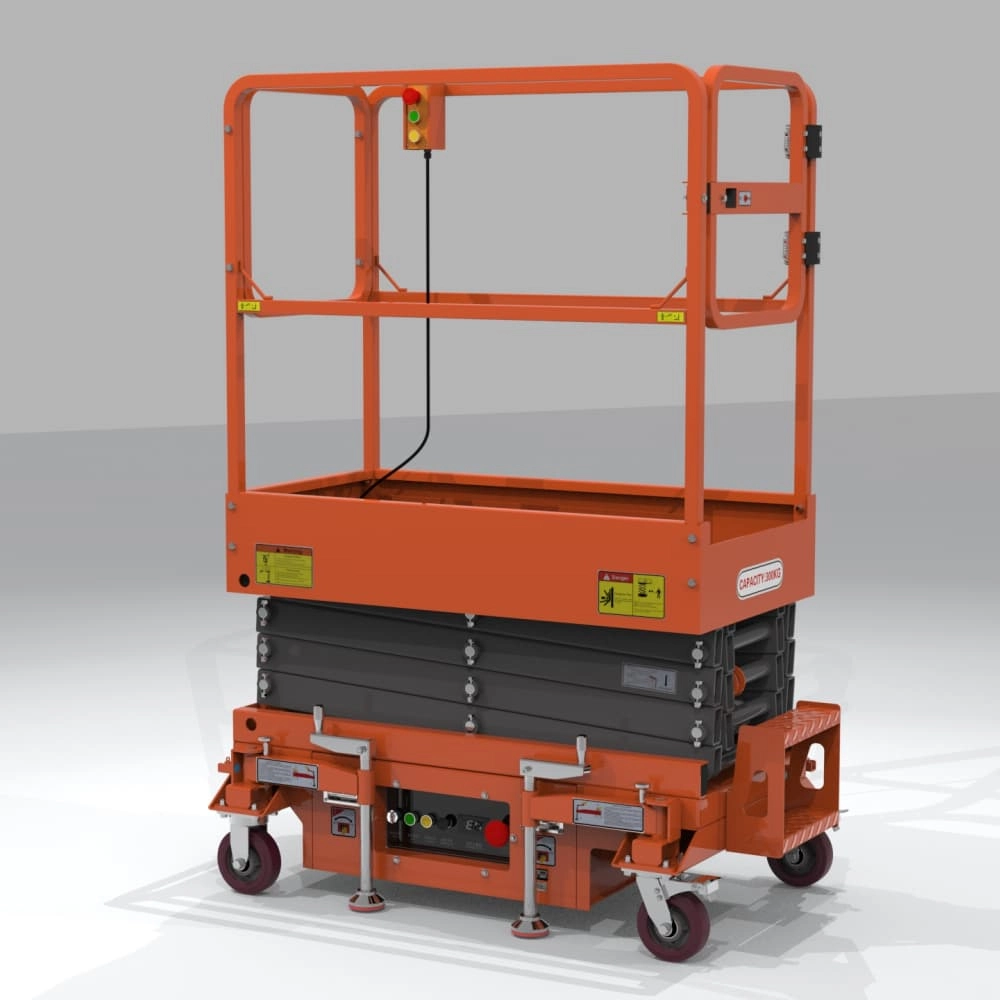
A small scissor lift may be more practical when two workers need to coordinate installation or when tools and materials must remain on the platform. A larger standing area can reduce repeated repositioning during lighting or cable tray work.
The tradeoff is access. A larger platform may require more aisle width and turning space. The machine may also impose different floor-loading requirements. The procurement team should compare platform length, platform width, overall width, working height, and rated load with the site measurements.
The SF semi-electric small scissor lift page lists a 760 mm overall width, a 4.8 m maximum working height, a platform measuring 1,155 mm by 600 mm, and model-dependent loads of 200 kg or 300 kg. The page states that the platform can accommodate two workers. These figures support an initial comparison, while exact application approval depends on the project requirements.
Check the Specifications That Control Fit and Operation
Overall Width, Length, and Turning Radius
Overall width determines whether the machine can pass through the narrowest route. Overall length affects positioning, reversing, and the ability to align with the work area. Turning radius determines how much space is needed to change direction.
These values should be reviewed on the same floor plan. Ask for dimensions of the actual configuration being quoted, including platform rails, extensions, batteries, and other accessories. A specification that appears suitable in a straight aisle may not work at a corner or beside a rack row.
The quotation should state whether the turning figure refers to an inside radius, outside radius, or another measurement. Consistent definitions make supplier comparisons more reliable.
Platform Height, Working Height, and Clearance
Platform height describes the elevation of the platform. Working height may include the operator’s reach or follow a supplier-specific definition. The difference matters when selecting equipment for cable trays, lighting fixtures, and overhead electrical systems.
Confirm the height of the task, the required operator position, and the available overhead clearance. Guardrails and platform extensions may change the clearance envelope. A model that reaches the target point may still be unsuitable if the raised platform interferes with containment or piping.
Machine Weight and Platform Load
Machine weight affects floor loading, transport, and movement over thresholds. Platform load covers the people, tools, equipment, and materials carried at height. The two values answer different procurement questions.
A load calculation should include every worker on the platform, hand tools, test instruments, cable sections, fixtures, and temporary installation hardware. The total should be compared with the rated load for the exact model and configuration.
If the requirement approaches the published limit, request a model-specific load chart or technical review. Do not rely on a broad description such as “compact lift” or “small scissor lift.”
Confirm Indoor Operating Conditions Before Purchase
Floors, Thresholds, and Wheel Materials
Record the floor type, raised-floor areas, thresholds, slopes, surface-protection requirements, and any restrictions on wheel materials. A data center may require additional review where equipment travels across removable floor panels or finished surfaces.
The acceptable solution depends on the application, material, size, load, operating environment, and configuration. Floor loading and wheel suitability should be confirmed by the responsible site team and supplier.
Specific claims about non-marking wheels, ESD performance, clean-room use, or raised-floor compatibility should be supported by technical documentation. Without that documentation, these items should remain procurement questions rather than product promises.
Charging and Site Restrictions
Electric equipment may require a defined charging location, suitable power supply, and a plan for moving the machine between work areas. Include charging access, operating hours, travel distance, and site restrictions in the RFQ.
Noise limits, clean-room requirements, ESD controls, and other environmental conditions should be stated by the customer. The supplier can then confirm whether the proposed configuration addresses them. These requirements may change the preferred lift type, platform size, or power arrangement.
Turn the Measurements Into a Compact Aerial Lift RFQ
A useful RFQ should include:
- Narrowest doorway and aisle width
- Doorway height and threshold dimensions
- Turning points and final positioning areas
- Required platform height and working height
- Overhead clearance
- Machine-weight restrictions
- Number of workers
- Tool, cable, fixture, and material weight
- Floor and raised-floor information
- Wheel and surface-protection requirements
- Charging and power conditions
- Existing equipment model and replacement reason
- Drawings, photos, target quantity, and delivery location
Before selecting a supplier, request a complete specification sheet, external dimension drawing, load information, power details, platform dimensions, and configuration limitations. Ask whether sample orders or production based on samples and technical drawings are available when the route or platform requirements are unusual.
The AL all-electric aluminum alloy vertical mast lift page can be reviewed when a compact vertical configuration is being considered. The published information includes an 820 mm overall width, 1,400 mm overall length, 1,600 mm turning radius, 6.0 m and 7.5 m platform-height options, and a 125 kg rated load. These figures are useful for preliminary screening, but site conditions and task requirements still need to be checked.
Use Published Specifications as a Conditional Shortlist
Published product data can narrow the options, but it should not replace a route survey or a model-specific technical review. The AL specifications may suit a compact, mainly vertical task when the route and platform load are within the listed values. The SF specifications may deserve comparison when two workers or a larger standing platform are required.
If the required height, load, platform area, turning space, or floor conditions fall outside the published information, request an alternative configuration. A supplier should identify the differences between models and explain which data still needs confirmation.
For a broader view of equipment categories and application information, the Jiequ lift product range can be reviewed before sending a technical request. Product selection should remain tied to measurable site conditions rather than a general equipment label.
Conclusion: Choose the Route Before the Model
The right compact aerial lift is the one that can enter the data center, travel through the service route, turn at critical points, reach the work height, and carry the required people, tools, and materials within the site limits.
Start with the route survey. Then compare overall width, length, turning radius, platform height, working height, machine weight, platform load, floor conditions, and charging requirements. A clear RFQ helps suppliers return comparable information and reduces the risk of selecting a machine that cannot be positioned or safely used.
For a technical review, submit route dimensions, photos or drawings, required height, personnel count, tool and material weight, floor details, existing equipment data, target quantity, and application conditions through the Jiequ contact page.
FAQs
What is the narrowest aerial lift for a data center aisle?
The narrowest suitable lift depends on the complete route, not only the machine width. Doorway clearance, turning radius, overall length, thresholds, and final positioning space must also be checked.
Should I choose a vertical mast lift or a scissor lift for a narrow service route?
A vertical mast lift may suit a single operator performing mainly vertical work in a compact route. A small scissor lift may be more practical when two workers need a larger platform, provided the lift fits the route and meets floor and load requirements.
How do I measure a data center aisle before buying an aerial lift?
Measure the narrowest clear width, doorway, threshold, turning points, final work position, and overhead clearance. Record obstacles such as rack guards, containment, pipes, and temporary barriers.
What load capacity does a compact aerial lift need?
The rated platform load should cover all workers, tools, test equipment, cable, fixtures, and other materials carried at height. Confirm the rating for the exact quoted model and configuration.
What should be included in a compact aerial lift RFQ?
Include route dimensions, turning points, platform and working height, overhead clearance, machine weight, platform load, floor conditions, wheel requirements, power supply, drawings, photos, quantity, delivery location, and the intended maintenance task.


