
How to Choose an Indoor Aerial Lift for Data Center Cable Tray, Lighting and Overhead Installation
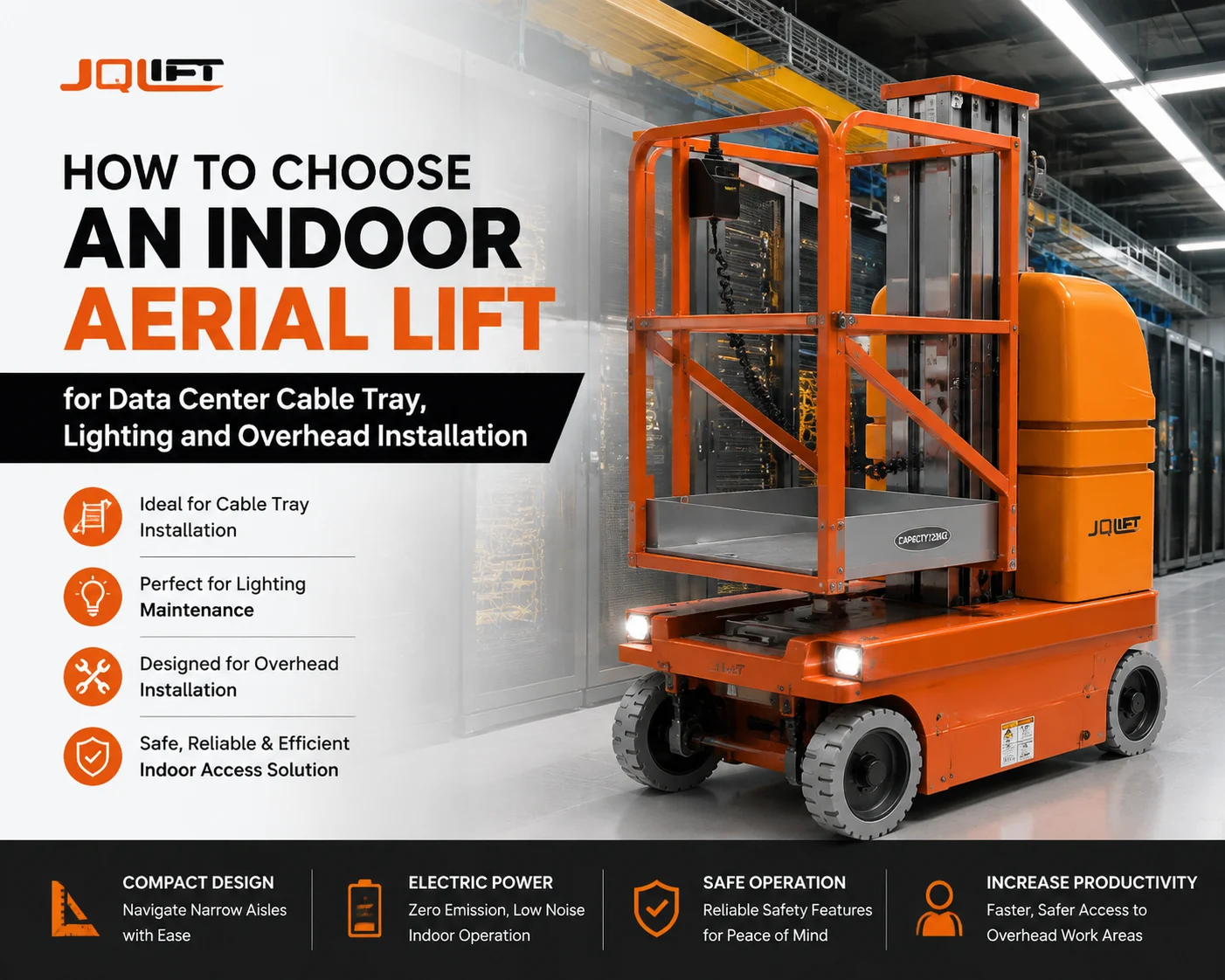
Selecting an aerial lift for data center installation requires more than matching a platform to the highest point in the room. Cable tray work, overhead lighting maintenance, electrical installation and facility repairs place different demands on height, load, platform space, aisle width and power supply. The right indoor aerial lift should fit the task, the access route and the operating environment at the same time.
A practical starting point is to separate data center overhead work from server-rack handling. A lift designed for positioning IT equipment is not automatically suitable for carrying personnel and tools during overhead installation. The equipment category, platform configuration and safety requirements must be reviewed against the actual job.
Match the Lift to the Data Center Task
The search for an aerial lift for data center installation usually begins when a maintenance or construction team needs safer access to overhead infrastructure. The first decision is the work being performed, not the brand or model.
Cable Tray Installation: Height, Reach and Tool Load
Cable tray installation often requires an operator to work overhead while carrying hand tools, fasteners, cable supports or small components. This makes platform load and usable platform space as important as maximum height.
A vertical mast lift may suit a task that requires straight vertical access in a narrow corridor. A compact scissor lift may be more practical when two workers need to stand together or when the work requires more platform room. Neither choice should be made from height alone. The required platform height, operator count, tool weight and material-handling method should be listed before requesting a quotation.
A lift may be unsuitable when the tray sections or materials must be raised separately, when the working aisle is too narrow for safe positioning, or when the floor conditions have not been confirmed.
Overhead Lighting and Electrical Maintenance
Lighting replacement and electrical maintenance often occur in occupied facilities where noise, emissions, floor protection and maneuverability matter. An electric vertical mast lift can be considered when the task requires compact movement and vertical access. A small scissor lift may be preferable when the operator needs more room for tools or a second technician.
The equipment should also be reviewed for charging access, emergency lowering, platform controls and the operating environment. A product described as an indoor lift still requires site-specific confirmation of floor condition, access route, working load and applicable safety procedures.
Vertical Mast Lift vs. Compact Scissor Lift
The comparison between a vertical mast lift and a scissor lift is one of the most useful parts of an indoor aerial lift selection process. The correct choice depends on the shape of the work area and the work that must be completed from the platform.
When a Vertical Mast Lift Is the Better Fit
A vertical mast lift is often considered for narrow aisles, corridors, service rooms and other locations where straight vertical access is more important than horizontal outreach. Its compact dimensions can simplify movement through restricted routes, but the actual width, turning radius and platform capacity must be checked against the building layout.
This type of lift may be appropriate for one-person inspection, lighting service or cable tray work with limited materials. It may be unsuitable when a larger team, bulky components or extensive platform movement is required. Buyers should confirm platform height, maximum machine height, rated load, overall width, length and turning radius in the product specification.
When a Compact Scissor Lift Is the Better Fit
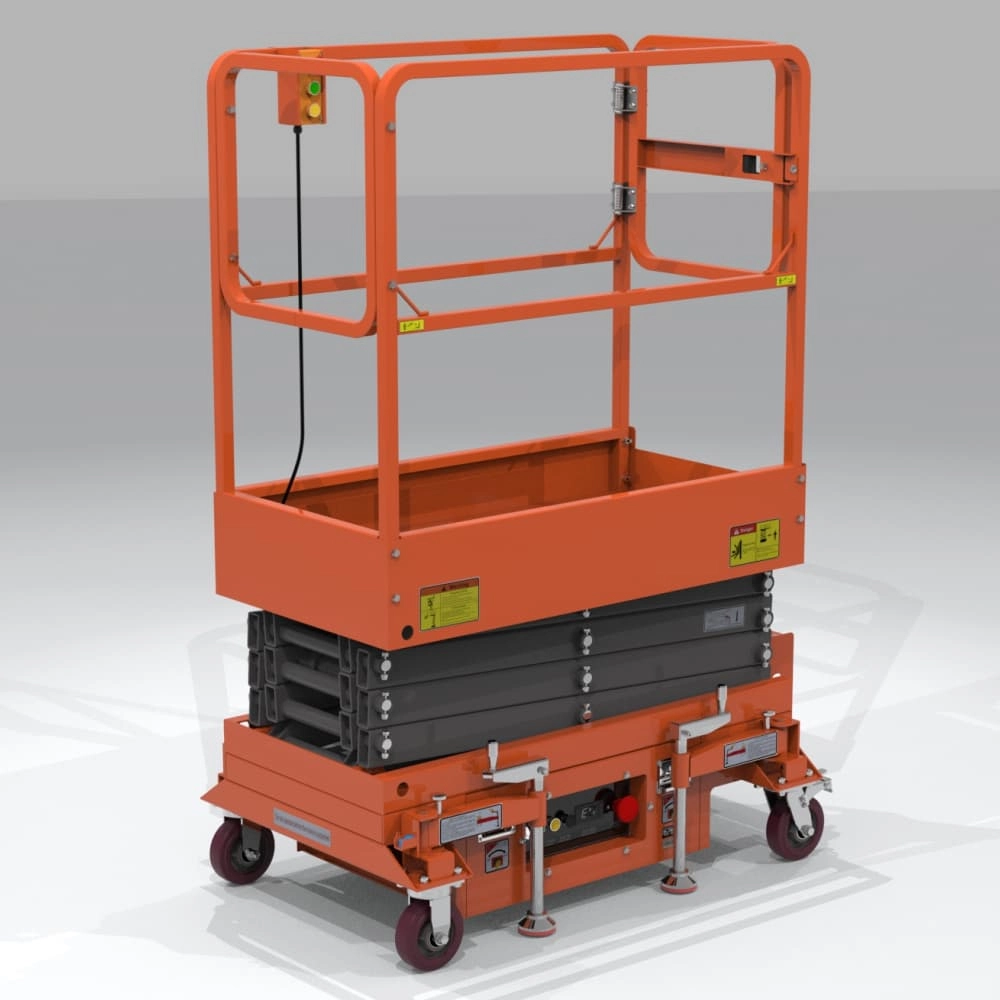
A compact scissor lift can be useful when the work requires a larger standing area, two workers or more tools on the platform. It may support indoor maintenance, electrical installation and facility upgrades where the floor is level and the lift can be positioned directly below the work area.
However, a scissor lift may not be the best choice for very narrow access routes or locations where the platform footprint prevents safe positioning. Before purchase, confirm the platform dimensions, rated load, overall width, support-leg requirements, emergency-lowering method and charging arrangement.
When Neither Option Is Appropriate
Some tasks require a different solution. A boom lift may be needed when the work requires outreach around an obstruction. A dedicated server lift may be more suitable for moving rack-mounted equipment. A custom platform or attachment may be necessary when the load shape, access route or installation method falls outside a standard configuration.
The important distinction is between an indoor overhead installation lift and a server-handling lift. Treating these as the same equipment category can result in incorrect load assumptions, unsuitable platform design or avoidable project delays.
The Specifications to Check Before Selecting a Lift
A supplier quotation should be based on a written specification rather than a general request for a “data center lift.”
Working Height, Platform Height and Rated Load
Platform height and working height are not interchangeable. The required platform elevation should be calculated from the actual installation point, while the rated load should include operators, tools and any materials carried on the platform.
For example, a lift selected for overhead lighting maintenance may need less capacity than one used for cable tray installation. The difference should be stated clearly in the RFQ. A supplier should verify the applicable configuration before confirming whether a model is suitable.
Overall Width, Turning Radius and Access Route
Measure doors, corridors, elevators, service passages and turning points before selecting a narrow aisle aerial lift. Overall width is only one part of the decision. Overall length, machine height, platform dimensions and turning radius can determine whether the equipment reaches the work area.
The route should also be checked for ramps, thresholds, floor transitions and restricted clearance. If the lift cannot be positioned directly below the work, the required machine type may change.
Floor, Raised-Floor and Tire Requirements
Data center floor conditions must be confirmed before ordering. This includes finished floors, raised-floor areas, load restrictions, floor transitions and tire requirements. Statements such as “floor-safe” or “non-marking” should be supported by the applicable product documentation and site conditions.
Jiequ Machinery’s published AL information includes an 820 mm overall width and a 1,600 mm turning radius. These figures can support an initial layout review, but they do not replace a site assessment or a confirmation of floor suitability.
Electric Drive, Charging and Duty Cycle
Indoor electric lifts should be evaluated according to the planned work cycle. Confirm whether the project requires powered travel, powered lifting, stationary AC operation, battery charging or a combination of these conditions.
Charging location, battery capacity, charger specification and expected daily use should be included in the purchase discussion. The appropriate configuration may vary by operating environment, duty cycle and project schedule.
Prevent Installation Delays and Safety Problems
Many equipment problems begin before the lift reaches the site. A short pre-purchase review can prevent an unsuitable machine from being delivered.
Pre-Job Checks for Access, Stability and Emergency Lowering
Before approving an indoor aerial lift, verify the working height, platform load, access route, floor condition, support-leg requirements and emergency-lowering method. Confirm that the operator controls and platform arrangement match the planned work.
The site team should also identify how materials will reach the platform, whether another person must work alongside the operator, and whether the lift can be removed from the area after installation. These checks help distinguish a suitable product from a model that only matches the required height.
Common Selection Mistakes
The most common mistake is selecting by maximum height alone. Other risks include insufficient load capacity, excessive width, inadequate platform space, an unsuitable turning radius and unavailable charging access.
Another mistake is using a generic server lift for personnel work or assuming that a scissor lift can replace a vertical mast lift in every narrow aisle. Clear task definitions and written supplier confirmation reduce these risks.
Build an RFQ for a Data Center Aerial Lift
A detailed RFQ helps suppliers recommend a configuration instead of sending a generic product list.
The Minimum RFQ Data to Send
Include:
- Required platform height and working height
- Number of operators
- Weight of tools and materials
- Required platform length and width
- Narrowest access point and turning area
- Floor and raised-floor conditions
- Indoor power and charging requirements
- Expected daily work cycle
- Required quantity and target delivery location
- Drawings, photographs or layout restrictions
This information is useful when comparing an electric vertical mast lift with a compact scissor lift or a higher-reach alternative.
Documents and Commercial Questions to Confirm
Ask for the exact model specification, operating instructions, configuration details, emergency-lowering information, available attachments, customization options, packaging, trade terms, spare parts and warranty conditions.
Certifications, regulatory documents and site approvals should be requested from the supplier and reviewed for the destination market. They should not be assumed from a general product description.
Jiequ Models to Review for Indoor High-Access Work
Jiequ Machinery manufactures aerial machinery and publishes product information for vertical mast lifts and scissor lifts. The broader vertical mast lift range can be reviewed when the required height or configuration is not yet fixed.
AL All-Electric Aluminum Alloy Lift
The AL series is published with 6 m and 7.5 m platform-height options, a 125 kg rated load, an 820 mm overall width, a 1,400 mm overall length and a 1,600 mm turning radius. The page also lists electric travel and lifting, battery and charger information, emergency lowering and support for selected customization.
These details make the AL all-electric vertical mast lift a practical starting point for indoor high-access screening. Final suitability still depends on the required load, access route, floor condition, platform arrangement and project documentation.
SF Semi-Electric Small Scissor Lift
The SF series is published with platform heights up to 4.8 m, model-dependent load ratings, a 760 mm overall width and options such as a platform power outlet or air-pipe connector. It may be considered when a lower working height and a larger standing platform are more important than vertical mast maneuverability.
The compact semi-electric scissor lift should be compared against the work area, operator count, platform load and support-leg requirements before selection.
How to Evaluate the Supplier
A qualified supplier should be able to connect the requested application with a specific model configuration, explain which data must be verified and provide documentation for the final equipment.
Jiequ Machinery’s published service information includes product selection support, non-standard customization and production based on samples or technical drawings. The product pages also provide model-specific specifications rather than only general equipment descriptions. Additional site conditions, certifications, delivery details and after-sales requirements should be confirmed during the quotation process.
The Jiequ Machinery website provides access to the product range and application information. A useful inquiry should include the required height, load, aisle width, floor condition, power preference, quantity and application photographs or drawings.
Conclusion
Choosing an aerial lift for data center cable tray, lighting and overhead installation starts with the work task, not the highest advertised platform height. Compare vertical mast and scissor lift options using platform height, rated load, platform space, width, turning radius, floor conditions, charging requirements and emergency-lowering provisions.
The AL all-electric vertical mast lift and SF semi-electric small scissor lift can serve as initial products for comparison, subject to configuration and site verification. For a more accurate recommendation, submit the application height, load, access dimensions, floor conditions, target quantity and available drawings through the request a product selection review channel.
FAQs
What lift is best for cable tray installation in a data center?
The suitable lift depends on platform height, operator count, tool and material load, aisle width and floor conditions. A vertical mast lift may suit narrow, straight-access work, while a scissor lift may provide more platform space.
Is a vertical mast lift better than a scissor lift for indoor overhead work?
Neither is universally better. A vertical mast lift may be easier to position in narrow areas, while a scissor lift may be more useful when two workers or more tools need to be on the platform.
Can an electric vertical mast lift be used for data center lighting maintenance?
It may be suitable when the platform height, load, access route, floor condition and operating configuration match the task. These conditions should be verified against the product specification and site requirements.
What should be included in a data center aerial lift RFQ?
Include platform height, working height, operator count, total load, platform dimensions, access-route measurements, floor conditions, power requirements, quantity, destination and relevant drawings or photographs.
How can a supplier recommend the correct indoor aerial lift?
Provide complete application information and request confirmation of the exact model configuration, documentation, customization, delivery terms, spare parts and after-sales requirements.


