
What Is a Personnel Lift and Where Is It Used?
A personnel lift is used when workers need stable elevated access for inspection, maintenance, installation, repair, or cleaning work. In warehouses, workshops, factories, hotels, shopping malls, schools, hospitals, and office buildings, many routine jobs happen above normal reach. Ceiling lights fail. HVAC units need checking. Overhead pipes, electrical wiring, storage racks, signage, and wall fixtures all require regular service.
In actual jobsite use, the challenge is often not only height. A ladder may be quick for a low, one-time task, but it becomes less efficient when the same team needs to handle repeated ceiling work across a large building. Scaffolding may provide access, yet setup and movement take time. Larger access equipment may be difficult to move through doors, elevators, corridors, and narrow warehouse aisles. For these cases, an indoor lift or compact aerial work platform can give maintenance teams a more practical way to work at height.
For B2B buyers, the main concern is whether the equipment fits the jobsite. Platform height, working height, rated load, machine width, floor condition, turning space, power type, and daily use frequency all affect the final choice.
What Is a Personnel Lift?
A personnel lift is an aerial work platform designed to raise workers to elevated work areas. It is used when a task requires steady access to ceilings, shelves, lighting systems, pipes, cables, ducts, signs, or building fixtures.
The term covers several types of equipment. In buyer searches, a personnel lift may also be called a single man lift, one man lift, vertical mast lift, indoor maintenance lift, manual personnel lift, electric personnel lift, or compact indoor lift. These names are often used in similar situations, but the right model depends on the actual work. A buyer handling ceiling inspection in an office building may need a different machine from a warehouse team repairing lighting above storage racks.
For indoor maintenance, the value of a personnel lift is straightforward. It gives the operator a stable platform while keeping the equipment footprint under control. This matters in commercial buildings, warehouses, workshops, and retail interiors where normal traffic and daily operations cannot be heavily interrupted.
Main Types of Personnel Lifts
Single Man Lift or One Man Lift
A single man lift is built for one operator. It is commonly used for ceiling inspection, lighting repair, electrical service, HVAC maintenance, wall fixture work, and basic facility service. Because the structure is usually compact, this type of lift is suitable for corridors, offices, hotels, schools, hospitals, libraries, and narrow indoor routes.
For buyers looking for a compact personnel lift for narrow spaces, a single man lift is often a practical starting point. It is not intended for carrying large parts or heavy materials. Its strength is one-person vertical access with light tools, especially where floor space is limited.
Vertical Mast Lift
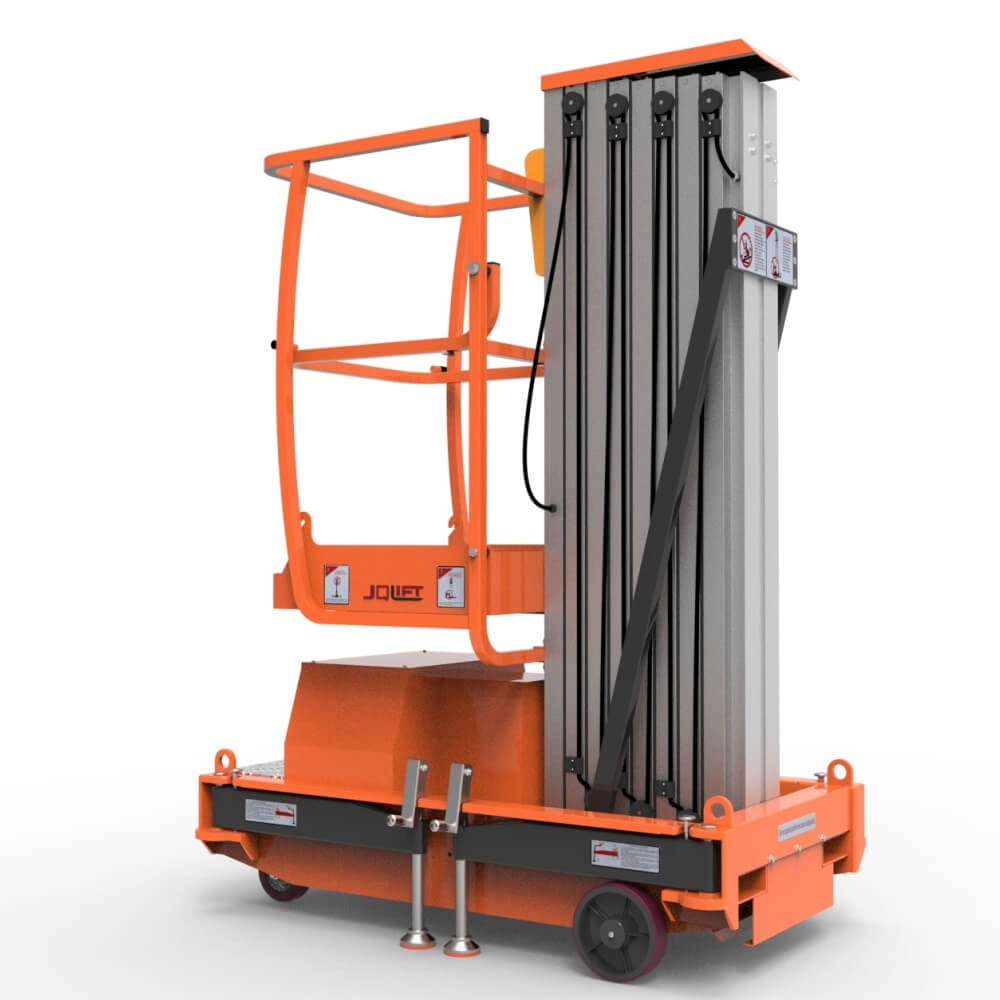
A vertical mast lift raises the platform straight upward through a mast structure. It is suitable for indoor locations where compact size and vertical reach are more important than a large platform area. Shopping malls, office buildings, hotels, warehouses, and public facilities often use this type of indoor personnel lift for overhead maintenance and inspection work.
JQLIFT’s vertical mastlift range includes single mast aluminum alloy lift, double mast aluminum alloy lift, and all-electric aluminum alloy models. These products fit applications where controlled movement, compact access, and efficient vertical lifting are needed in indoor or commercial environments.
Small Scissor Lift
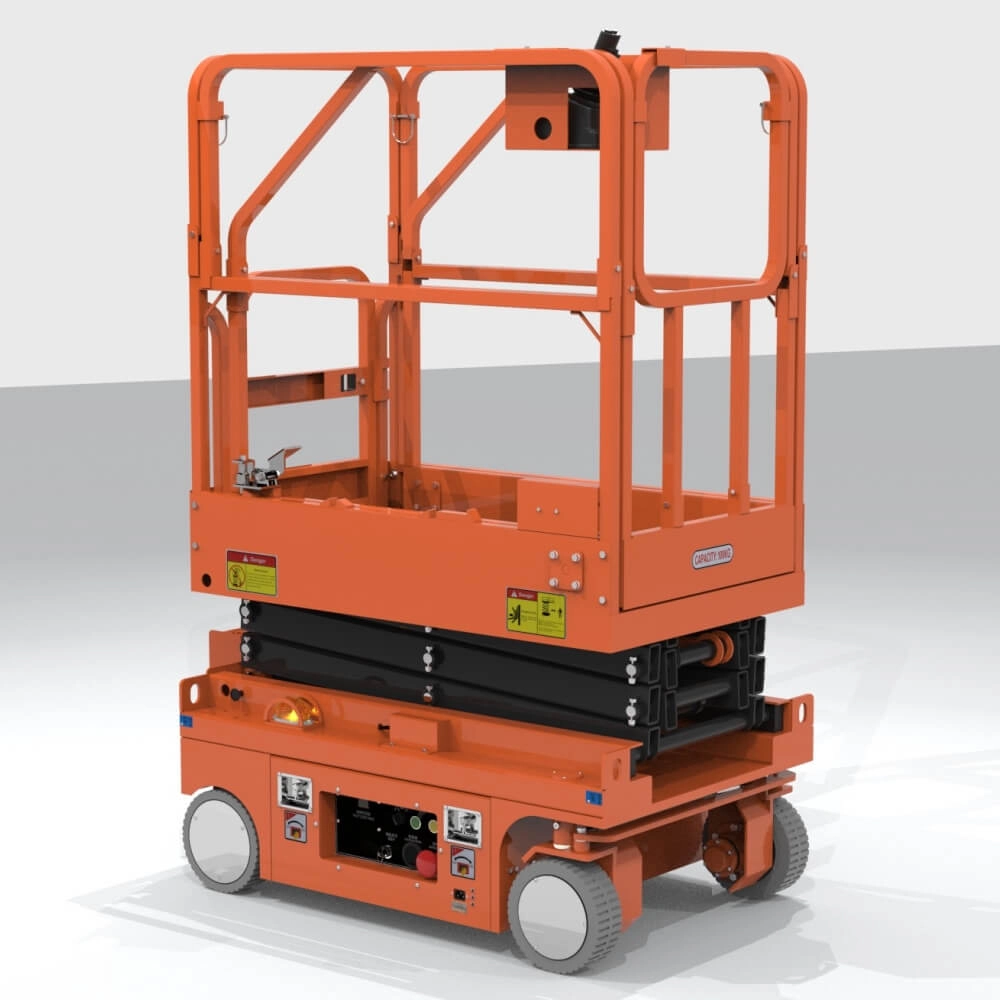
A scissor lift is also a common type of personnel lift. It raises a wider platform vertically through a crossed lifting structure. Compared with a single man lift, a small scissor lift usually provides more standing room, which helps when workers need tools, parts, testing devices, or more time at height.
JQLIFT’s scissor lift range includes hydraulic small scissors, ASF small scissors, and semi-electric small scissors. These machines are more suitable for warehouse maintenance, workshop service, factory facility repair, ceiling installation, and overhead inspection where the floor is flat and the work area is more open.
Where Is a Personnel Lift Used?
Warehouses and Logistics Centers
In warehouses, personnel lifts are used for lighting repair above storage aisles, shelf inspection, sprinkler system checks, cable maintenance, sign work, and general facility service. A warehouse personnel lift can help maintenance teams reach overhead points without setting up temporary platforms for every small task.
The choice depends on aisle layout and work style. Narrow aisles often suit a vertical mast lift or compact single man lift. Open warehouse floors, especially areas where workers need tools and parts on the platform, may suit a small scissor lift.
Factories and Workshops
Factories and workshops usually have overhead pipes, ventilation ducts, cable trays, lighting lines, and equipment that need regular inspection. A personnel lift for factory maintenance should be selected according to floor condition, platform height, rated load, and the route between machines or workstations.
A workshop scissor lift can be useful for longer repair tasks where tools need to stay on the platform. A vertical mast lift may work better when space between machines is limited and the operator only needs light tools.
Commercial Buildings and Public Facilities
Hotels, shopping malls, schools, hospitals, exhibition halls, and office buildings use personnel lifts for ceiling work, lighting replacement, HVAC inspection, sign installation, wall maintenance, and interior repair. In these locations, machine size is often as important as lifting height.
A lift that cannot pass through a doorway or enter an elevator may not be useful at the actual site. Buyers should check access routes before ordering, especially when the equipment will be used across several floors or inside finished commercial spaces.
Why Use a Personnel Lift Instead of a Ladder?
Compared with ladders, a personnel lift provides a more stable elevated working position for repeated indoor maintenance. Workers can stand on a platform, keep light tools nearby, and complete overhead tasks with fewer climbs up and down.
A ladder may still be suitable for short, low-height work. However, for repeated ceiling repair, lighting service, electrical maintenance, HVAC inspection, and warehouse facility work, a personnel lift can improve working comfort and reduce wasted movement. This is one reason facility managers, warehouse operators, and equipment buyers often review indoor lift options when maintenance work becomes more frequent.
How to Choose the Right Personnel Lift
Check Platform Height and Working Height
Platform height means the height of the platform from the ground. Working height means the height the operator can reach while standing on the platform. These two figures should not be confused. Before choosing a model, buyers should measure the highest work point, including ceiling lights, shelves, ducts, pipes, or signs.
Confirm Load Capacity
Rated load should include the operator, tools, small parts, testing equipment, and a safety margin. If the task requires heavier materials or two workers, a small scissor lift may be more suitable than a single man lift.
Measure Indoor Space
Doorway width, elevator size, aisle width, turning radius, floor condition, and storage area should be checked early. A compact aerial work platform must be able to reach the work point, not only meet the height requirement on paper.
Choose Manual or Electric Power
A manual personnel lift can suit occasional work, short travel distance, and budget-sensitive projects. An electric personnel lift is usually better for frequent movement, larger sites, and daily indoor maintenance. The final choice should follow work frequency, labor cost, floor condition, and travel route.
About Hangzhou Jiequ Machinery Manufacturing Co., Ltd.
Hangzhou Jiequ Machinery Manufacturing Co., Ltd. was established in 2015 and is located in Xinwan Street, Qiantang District, Hangzhou, China. The company covers more than 30 acres and focuses on building a modern manufacturing base for high-altitude machinery.
The company has more than ten R&D technicians and more than one hundred skilled workers. It has obtained dozens of software patents, utility model patents, and invention patents. It has also been recognized as a national high-tech enterprise, provincial high-tech enterprise, and specialized special new technology enterprise.
For procurement managers, this background carries practical value. A personnel lift supplier should not be judged only by price. Manufacturing capability, product consistency, customization support, technical response, and after-sales service all affect long-term equipment use.
Conclusion
A personnel lift is used for elevated maintenance, inspection, installation, repair, and facility service work. It can be applied in warehouses, factories, workshops, hotels, malls, schools, hospitals, and commercial buildings. The right equipment should be selected according to platform height, working height, load capacity, indoor space, floor condition, power type, and use frequency.
For B2B buyers, accurate site information leads to better model selection. JQLIFT provides vertical mastlift and scissor lift options for indoor maintenance, warehouse repair, workshop service, and commercial building access.
FAQs
Q1:What is a personnel lift used for?
A1:A personnel lift is used for elevated maintenance, inspection, repair, installation, and cleaning in warehouses, factories, workshops, and commercial buildings.
Q2:Is a personnel lift the same as a scissor lift?
A2:Not always. A scissor lift is one type of personnel lift. Personnel lift can also refer to a single man lift, one man lift, or vertical mast lift.
Q3:How do I choose the right personnel lift for indoor maintenance?
A3:Check platform height, working height, rated load, machine width, floor condition, power type, and the main application.
Q4:Can a personnel lift be used in a warehouse?
A4:Yes. It is commonly used for warehouse lighting repair, shelf inspection, overhead cable work, sprinkler checks, and facility maintenance.
Q5:Should I choose a manual or electric personnel lift?
A5:Manual models suit occasional use and short movement. Electric personnel lifts suit frequent maintenance, larger sites, and daily indoor operation.


