
How to Reduce High-Shelf Picking Time in Small Warehouses with Aerial Order Pickers
For many small and medium warehouses, high-shelf picking is one of the quietest drains on daily productivity. The issue usually does not come from worker effort. It comes from the way workers reach, identify, collect, and move goods stored above normal hand height. An aerial order picker for small warehouse operations can shorten this process by giving workers safer access to upper shelves, reducing repeated ladder movement, and making high-level stock handling more predictable.
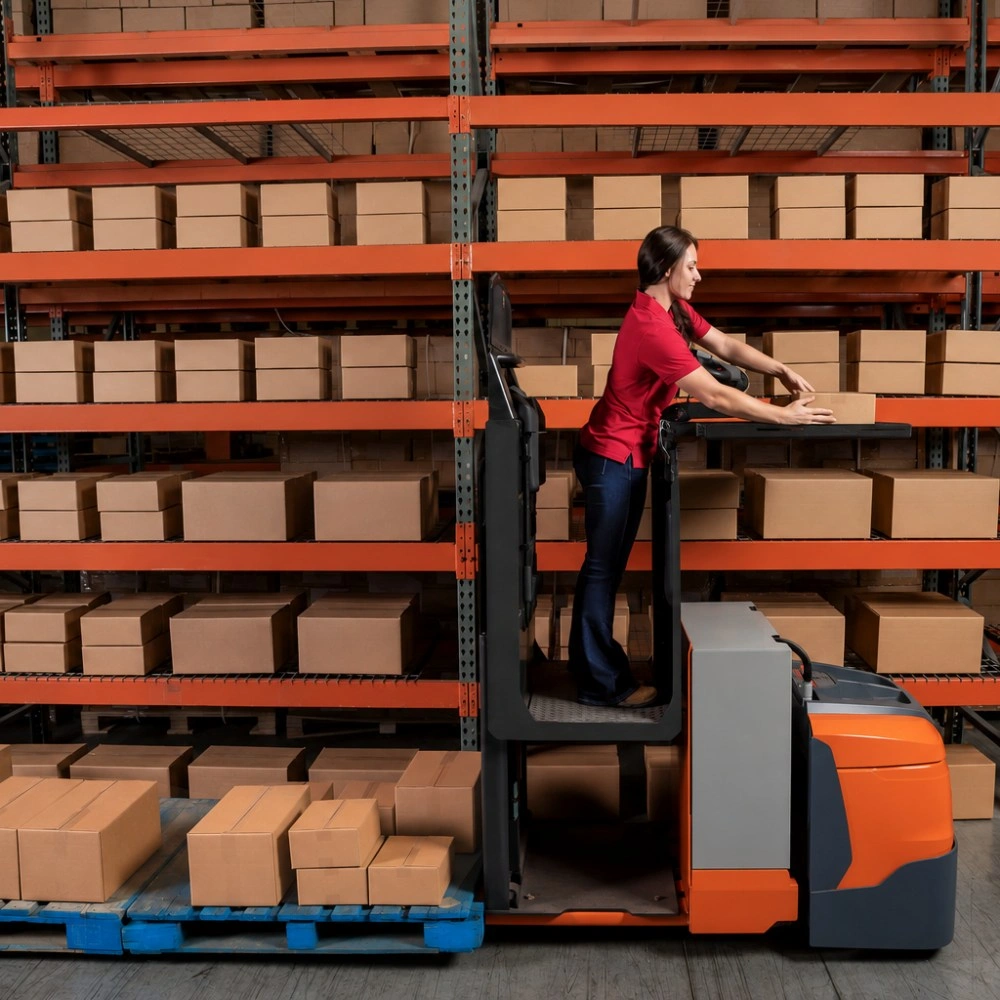
In compact warehouses, every square meter matters. Storage racks are often built upward to hold more SKUs without expanding the building footprint. That layout helps with inventory density, but it also creates a new problem: the higher the shelf, the slower the pick. When workers depend on ladders, step stools, or manual carts, each high-shelf order may involve walking, positioning, climbing, checking labels, carrying goods down, and repeating the same process several times in one aisle.
For B2B buyers, the real question is not whether high shelves save space. They often do. The better question is how to keep that storage strategy from slowing down order fulfillment.
Why High-Shelf Picking Takes Longer in Small Warehouses
Small warehouses usually handle a mix of palletized goods, cartons, spare parts, tools, retail stock, packaging materials, and fast-moving SKUs. In many operations, high-level shelves are used for slower-moving products or overflow inventory. Over time, however, these upper shelves become part of the daily picking route.
That creates delays. A worker may need to stop the picking route, find a ladder, move it to the correct bay, climb to the shelf, confirm the product code, take the goods down, and move the ladder again. In a warehouse with hundreds of small orders per day, these short delays pile up quickly.
High-shelf order picking is even harder in narrow aisles. Large equipment may not fit well, while manual picking forces workers to make more trips. In e-commerce warehouses, retail backrooms, spare parts storage areas, and small logistics centers, the result is often the same: slow picking, tired workers, and longer order processing time.
Why Ladders Are Not Built for Frequent Warehouse Picking
Ladders are simple, low-cost tools, but they are not designed for continuous warehouse order picking. They work for occasional access. They are less suitable when workers must retrieve goods from high shelves throughout the day.
The first issue is time. A ladder has to be moved, opened, positioned, and checked before use. The second issue is handling. When a worker climbs a ladder, both movement and carrying capacity are limited. Small cartons, tools, spare parts, and packaged goods may need to be handled one by one, especially when accuracy matters.
There is also a safety concern. High-shelf picking often requires workers to look at labels, scan SKUs, reach into storage positions, and carry items back down. These actions are awkward on a ladder. Even when workers are careful, frequent climbing increases fatigue and makes the process harder to control during busy shifts.
For warehouse managers, this creates a practical decision point. If high shelves are used every day, the access method should match daily operational demand.
How Aerial Order Pickers Reduce High-Shelf Picking Time
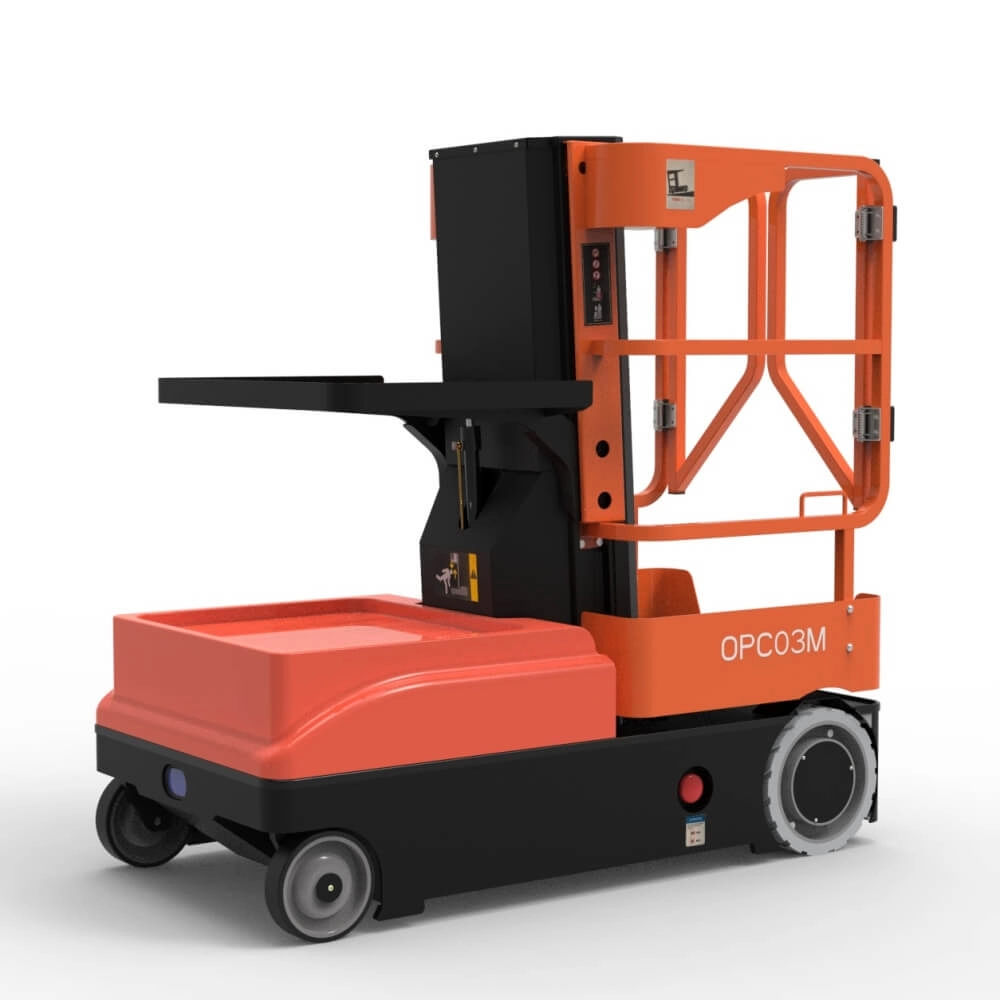
An aerial order picker helps workers reach elevated storage positions from a stable working platform. Instead of climbing up and down repeatedly, the operator can be raised to a suitable height, identify the product more clearly, retrieve the item, and move to the next picking point with less interruption.
This improves warehouse picking efficiency in several ways. Direct access to high shelves reduces the time spent positioning ladders. A stable platform gives workers a better view of product labels, shelf locations, and carton markings, which can help reduce picking errors. The ability to work at height with a more controlled posture also lowers fatigue during repetitive tasks.
For small warehouse order picking, the biggest benefit is workflow continuity. Workers can move through high-shelf picking tasks with fewer stops. This matters in real warehouse conditions, where the same worker may handle picking, replenishment, stock checking, and packing support during one shift.
JQLIFT’s aerial order picker range is designed for these high-place material handling needs. The OPC Picker is promoted for warehouse, logistics center, and retail space use, with a design that supports safe access and vertical goods movement for stacking and destacking. For operations that need stronger material handling capacity, the AT Fully Electric Reclaimer offers a maximum lift height of about 4.5 meters and a load capacity of about 300kg. For buyers seeking a practical semi-electric option, the T3 Semi-electric Reclaimer uses manual push-pull movement with electric lifting, reaching a platform height of about 4.5 meters and supporting about 200kg.
Why Compact Aerial Order Pickers Fit Small and Medium Warehouses
Small and medium warehouses rarely have unlimited aisle width. Many facilities use standard shelving, compact rack layouts, workbenches, packing tables, forklifts, and hand carts in the same space. This is why compact warehouse picking equipment is often more useful than oversized machinery.
A compact aerial order picker can support high-shelf picking without requiring a major warehouse redesign. It is especially useful for facilities where workers need to access upper shelves but do not need a large industrial lift for every task. In retail stockrooms, the equipment can support high-level replenishment. In spare parts warehouses, it can help workers retrieve small and medium components from labeled bins. In factory storage areas, it can assist with tools, packaging materials, light production parts, and maintenance supplies.
Electric and semi-electric options also give buyers more flexibility. A fully electric order picker is better suited for frequent picking routes and daily material handling. A semi-electric order picker can be a cost-conscious choice for warehouses that need powered lifting but do not require full electric travel for every shift.
How to Choose the Right Order Picker for High Shelves
Before purchasing high-shelf picking equipment, warehouse buyers should start with the actual picking environment. The first factor is shelf height. The machine should reach the working height needed for the highest regular picking position, not only the total rack height.
The second factor is load capacity. A warehouse handling small cartons may need less capacity than one handling tools, spare parts, packaged hardware, or multiple items per trip. The third factor is aisle width. The equipment must move comfortably through the picking route without blocking nearby workers or packing areas.
Operation frequency also matters. If high-level picking happens all day, a fully electric model may reduce worker effort and improve route efficiency. If high-shelf access is needed several times per shift, a semi-electric model may provide a more balanced return on investment.
Buyers should also consider after-sales support, product consistency, and manufacturing background. Hangzhou Jiequ Machinery Manufacturing Co., Ltd., the company behind JQLIFT, has been rooted in Hangzhou since 2015 and operates a modern high-altitude machinery manufacturing base covering more than 30 acres. With R&D technicians, skilled workers, patents, and high-tech enterprise recognition, JQLIFT presents itself as a manufacturer focused on aerial machinery, practical product engineering, and tailored aerial work solutions for global customers.
Conclusion
High-shelf picking time is not only a labor issue. It is a workflow issue. When workers rely on ladders for daily warehouse picking, time is lost in movement, positioning, climbing, checking, and repeated handling. Aerial order pickers give small and medium warehouses a more practical way to reach upper shelves, reduce manual delays, and support safer order fulfillment.
For warehouse managers, distributors, facility buyers, and OEM procurement teams, the right solution depends on picking height, load capacity, aisle space, operation frequency, and budget. JQLIFT’s aerial order pickers and reclaimers provide compact options for warehouses, logistics centers, retail stockrooms, and industrial storage areas that need faster and safer high-place material handling.
FAQs
Q1: Why does high-shelf picking take so long in a small warehouse?
A1: High-shelf picking takes longer because workers often need to move ladders, climb repeatedly, check product labels at height, carry goods down, and reposition equipment for the next item. In a small warehouse with narrow aisles and many SKUs, these steps can slow down the entire picking route.
Q2: How can an aerial order picker reduce warehouse picking time?
A2: An aerial order picker reduces warehouse picking time by raising the operator directly to the shelf level, giving better access to high storage positions, and reducing repeated ladder movement. It also provides a more stable platform for checking SKUs, handling cartons, and moving through high-shelf picking tasks.
Q3: What type of aerial order picker is suitable for small warehouse order picking?
A3: A compact aerial order picker is usually suitable for small warehouse order picking because it can work in tighter spaces and support frequent access to upper shelves. A fully electric model is better for high-frequency picking, while a semi-electric model can be suitable for lower-frequency tasks or cost-sensitive buyers.
Q4: Is a semi-electric order picker enough for high-shelf picking?
A4: A semi-electric order picker can be enough when the warehouse needs powered lifting but does not require full electric travel throughout the day. For example, JQLIFT’s T3 Semi-electric Reclaimer uses manual push-pull movement with electric lifting, making it a practical option for many small and medium warehouses.
Q5: When should a warehouse replace ladders with aerial order pickers?
A5: A warehouse should consider replacing ladders with aerial order pickers when high-shelf picking becomes a daily task, when workers spend too much time moving and climbing ladders, or when safety and picking efficiency need improvement. Frequent high-level stock picking is usually a strong sign that better warehouse picking equipment is needed.


