
Small Scissor Lift Buying Guide for Warehouses and Workshops
Buying a small scissor lift for a warehouse or workshop is not only about reaching a higher point. In daily maintenance, the equipment must fit narrow aisles, pass through working zones, carry tools safely, and support workers without slowing down nearby operations. A lift used for warehouse lighting repair has different requirements from a lift used for workshop equipment maintenance or overhead pipe inspection.
For B2B buyers, the real question is practical: which compact scissor lift can handle the worksite without becoming oversized, underpowered, or difficult to move? A warehouse manager may need an indoor scissor lift for paved floors. A factory maintenance team may need a mini scissor lift for workshop use. A distributor may need a model that suits several end users, including warehouses, workshops, retail interiors, and commercial service areas.
JQLIFT lists scissor lifts as one of its main product categories, alongside vertical mastlifts, aerial order pickers, vegetable pickers, and scissor lift tables. Its scissor lift range includes ZSF hydraulic small scissors, ASF small scissors, and SF semi-electric small scissors.
What Is a Small Scissor Lift?
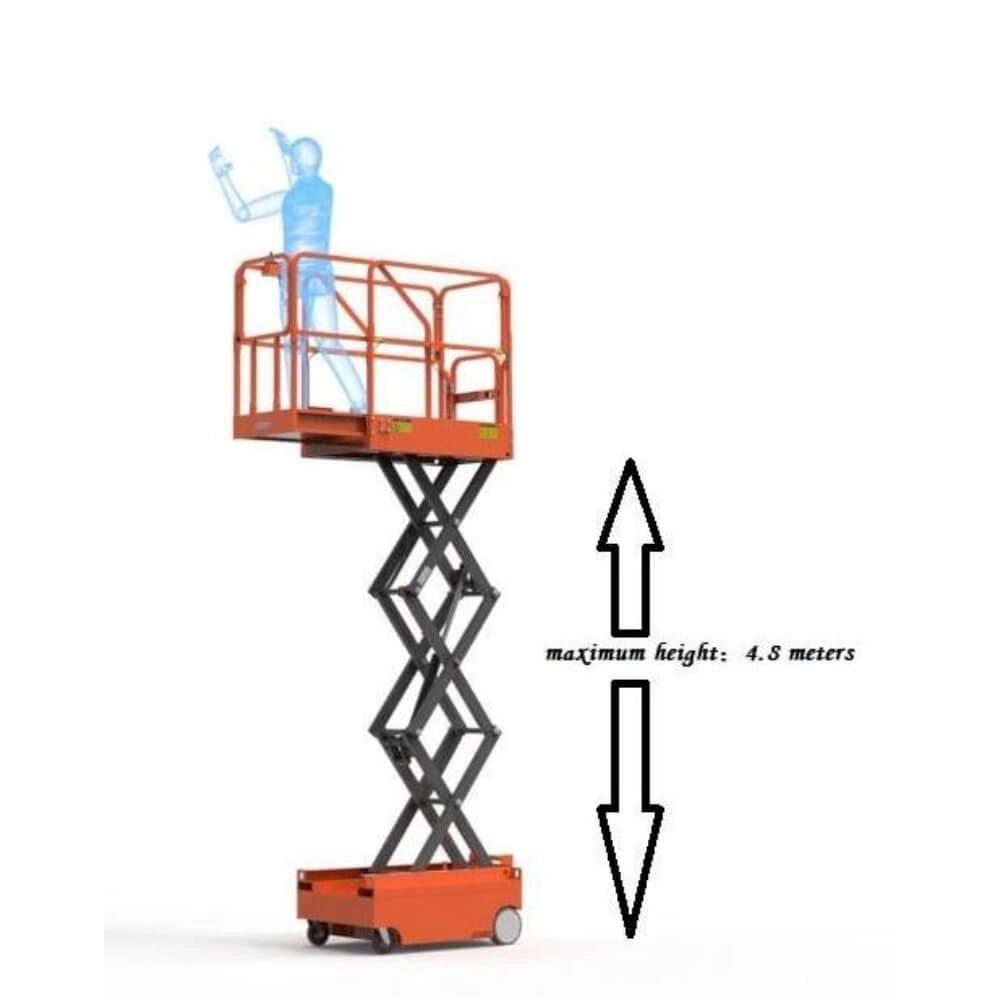
A small scissor lift is a compact aerial work platform that raises a work platform vertically through a crossed scissor structure. Compared with a single-person mast lift, it generally provides more standing room. Compared with a large scissor lift, it is better suited for indoor maintenance, warehouse repair, workshop service, and factory facility work where space is limited.
This type of equipment is commonly searched as a mini scissor lift, compact scissor lift, warehouse scissor lift, workshop scissor lift, electric scissor lift, hydraulic scissor lift, or semi-electric scissor lift. The names vary, but the buying logic is similar. The lift should match platform height, rated load, platform size, floor condition, and daily use frequency.
For warehouses and workshops, a compact scissor lift is often selected when workers need a stable elevated platform for lighting repair, shelf inspection, machine servicing, ceiling installation, or overhead cable checks. The value comes from safer access and better working space, especially when tools and parts must be kept close to the operator.
Check Platform Height Before Choosing a Model
Platform Height Is Different from Working Height
Platform height is the height of the platform from the floor. Working height is the approximate height a worker can reach while standing on that platform. This difference matters because many buyers focus only on the highest number shown in a product name or specification sheet.
In a warehouse, the required height may depend on storage rack levels, ceiling lights, sprinkler pipes, ventilation ducts, or overhead cables. In a workshop, the work point may be above machines, service platforms, wall fixtures, or production lines. Before asking for a price, buyers should measure the highest work point and confirm whether the platform height allows a safe working posture.
JQLIFT’s ZSF hydraulic small scissors provides platform height options from 1,800 mm to 4,800 mm, with an overall width of 760 mm and platform size of 1,155 mm by 600 mm. These figures are useful for buyers comparing a small scissor lift for warehouse maintenance or a compact scissor lift for indoor work.
Do Not Oversize the Equipment
More height is not always better. A lift that is too large may block aisles, reduce maneuverability, or take up valuable storage space. For lower to medium-height indoor tasks, a smaller model may provide a better fit. For higher fixtures or warehouse ceilings, platform height should be chosen with enough margin, but not at the cost of site access.
Load Capacity and Platform Size Affect Daily Use
Calculate the Real Working Load
Load capacity should include more than worker weight. In real warehouse and workshop maintenance, the platform may carry hand tools, lamps, meters, cable parts, fasteners, small components, and safety equipment. A warehouse team replacing overhead lights may bring spare fixtures and testing tools. A workshop technician checking overhead pipes may need wrenches, fittings, and inspection devices.
JQLIFT’s ZSF hydraulic small scissors lists a maximum load of 300 kg and an extended platform load of 100 kg. The same page also notes a 550 mm outward extension for the inner platform, which helps expand the working area. For buyers, these details matter because platform extension and rated load are not cosmetic features. They affect how the machine performs during real maintenance work.
Consider One-Worker or Two-Worker Jobs
Some warehouse and workshop tasks can be handled by one operator. Others may require two workers or a larger tool setup. JQLIFT’s ASF small scissors is described as a compact aerial work platform for confined spaces, with a maximum platform height of 4.8 meters and the ability to accommodate two operators simultaneously. It is also specified for paved surfaces.
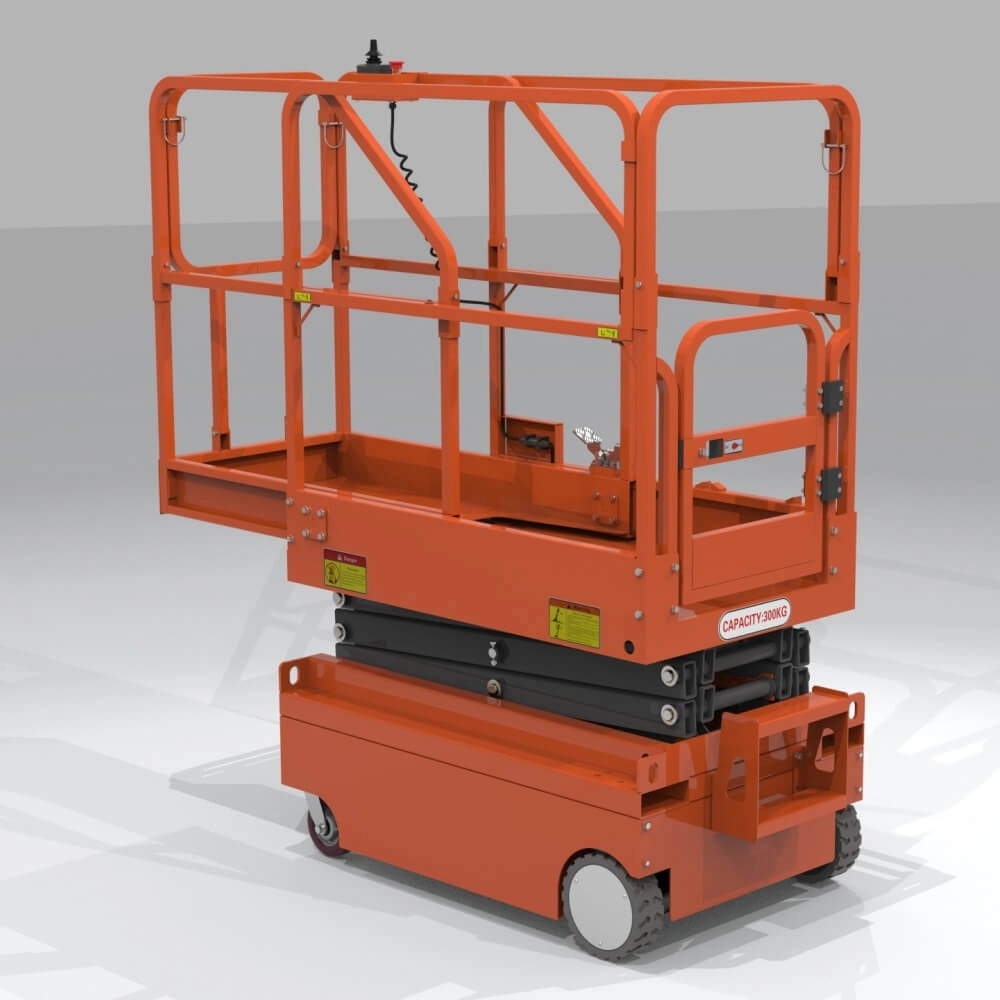
This makes floor condition and operator number essential purchasing questions. If a buyer needs a small scissor lift for narrow spaces, the machine width and turning radius should be checked. If two operators will use the lift, rated load and platform size should be confirmed before ordering.
Choose the Right Power Type
Hydraulic and Electric Options
A hydraulic small scissor lift can be suitable for buyers who need compact access, steady lifting, and practical use in confined indoor areas. JQLIFT’s ZSF model uses rear-wheel drive, while the front wheels steer through hydraulic cylinders. The product page also mentions an electronic level and hydraulic hose explosion-proof valve designed to prevent unsafe lifting and sudden drops during aerial work.
An electric scissor lift may be a better match for frequent warehouse use, especially when the lift must move between several work points. JQLIFT’s ASF small scissors includes dual-driven wheels and motor differential steering for flexible movement, and its chassis control section includes emergency lowering and battery level display.
Semi-Electric Scissor Lift for Moderate Use
A semi-electric scissor lift often fits buyers who need powered lifting but still want a simpler and lighter machine. JQLIFT’s SF semi-electric small scissors is described as compact, lightweight, easy to push and pull, and suitable for high-altitude operations in confined spaces. Its specifications include platform height options from 1,800 mm to 4,800 mm, with a 1,155 mm by 600 mm platform.
For purchasing teams, the right power type depends on travel distance, labor cost, daily use frequency, and floor condition. Occasional indoor repair may not require the same configuration as daily warehouse maintenance.
Floor Conditions and Aisle Space Must Be Checked
A small scissor lift for warehouse maintenance should be matched with the actual floor. Smooth concrete is usually more suitable than uneven floors, soft ground, steep slopes, or damaged surfaces. Narrow aisles require careful attention to overall width, turning radius, and whether the lift will interfere with forklifts, pallet trucks, storage racks, or worker traffic.
The ASF small scissors page states that the equipment is only suitable for paved surfaces. This is an important reminder for buyers. A lift may have the right platform height and load capacity, but if the floor is not suitable, performance and safety can be affected.
About Hangzhou Jiequ Machinery Manufacturing Co., Ltd.
Hangzhou Jiequ Machinery Manufacturing Co., Ltd. was established in 2015 and is located in Xinwan Street, Qiantang District, Hangzhou, China. The company covers more than 30 acres and is building a modern high-altitude machinery manufacturing base.
The company has more than ten R&D technicians and more than one hundred skilled workers. It has obtained dozens of software patents, utility model patents, and invention patents, and has been recognized as a national high-tech enterprise, provincial high-tech enterprise, and specialized special new technology enterprise. Its products are sold worldwide, and the company maintains cooperation with domestic OEM partners.
For B2B buyers, this background supports more than brand awareness. It reflects manufacturing capacity, technical development, product customization, and service response, all of which matter in wholesale purchasing and long-term equipment supply.
Conclusion
Choosing a small scissor lift for warehouses and workshops should start with actual working conditions. Platform height decides whether the work point can be reached. Load capacity and platform size decide whether workers can carry tools and parts safely. Power type affects movement efficiency and labor cost. Floor condition and aisle width determine whether the lift can be used smoothly at the site.
JQLIFT provides hydraulic, electric, and semi-electric small scissor lift options for indoor maintenance, warehouse repair, workshop service, and factory facility work. For buyers comparing models, accurate site measurements and application details will lead to a better recommendation and a more reliable purchase.
FAQs
Q1:What platform height do I need for a small scissor lift?
A1:Measure the highest work point first. Then choose a platform height that allows workers to reach the task area safely without overextending.
Q2:How much load capacity should a small scissor lift have?
A2:Add worker weight, tools, parts, materials, and a safety margin. The rated load should match real jobsite use.
Q3:Is a small scissor lift suitable for warehouse maintenance?
A3:Yes. It is suitable for lighting repair, rack inspection, overhead service, and indoor facility maintenance on flat paved floors.
Q4:Should I choose a hydraulic, semi-electric, or electric scissor lift?
A4:Hydraulic models suit practical compact access. Semi-electric models suit moderate use. Electric models suit frequent warehouse or workshop operation.
Q5:Can a small scissor lift work in narrow warehouse aisles?
A5:It depends on machine width, turning radius, platform size, and aisle layout. Buyers should measure the site before ordering.


