
How to Choose a Single Man Lift: Platform Height, Load Capacity, and Power Options
A single man lift is often purchased when ladders become too slow, too limited, or too risky for repeated indoor maintenance work. In warehouses, shopping malls, hotels, offices, schools, hospitals, and factory workshops, technicians may need to repair ceiling lights, inspect HVAC systems, service electrical wiring, check overhead pipes, or reach storage areas without bringing in large access equipment.
For B2B buyers, the right decision is rarely based on height alone. A practical indoor man lift must match the platform height, working height, load capacity, machine width, power option, floor condition, and daily use frequency. A facility maintenance team working in narrow corridors has different needs from a warehouse operator repairing lighting above racks. A distributor or rental company also needs a compact aerial work platform that can serve several common indoor applications.
JQLIFT’s product range includes vertical mastlifts, scissor lifts, aerial order pickers, vegetable pickers, and scissor lift tables, giving buyers multiple choices for high-place access and material handling applications.
What Is a Single Man Lift?
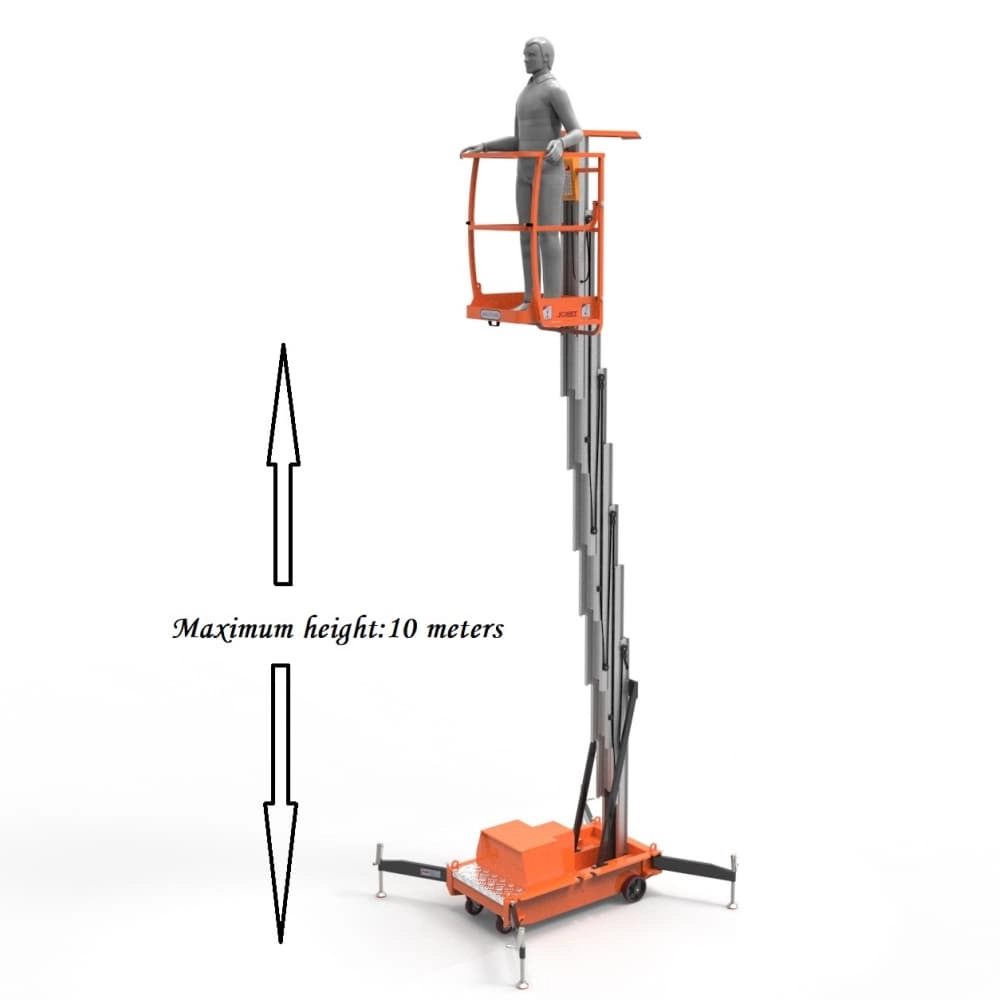
A single man lift is a compact lifting machine designed for one operator to work safely at height. It is also commonly searched as a one man lift, personnel lift, vertical mast lift, indoor maintenance lift, or compact indoor lift. In most indoor maintenance projects, this type of equipment is selected when the operator needs vertical access but does not need a wide platform.
Compared with larger aerial work platforms, a single man lift is easier to move through building interiors. It can be useful for ceiling inspection, lighting repair, wall maintenance, sign installation, electrical service, and warehouse aisle work. The main value is simple: it gives one worker a more stable elevated working position without taking up unnecessary floor space.
JQLIFT’s vertical mastlift category includes L single mast aluminum alloy lift, DL double mast aluminum alloy lift, and AL all-electric aluminum alloy models. These products are listed under the company’s vertical mastlift line for compact elevated work applications.
Platform Height and Working Height Should Be Checked First
Platform Height Is Not the Same as Working Height
The first mistake many buyers make is choosing by maximum height without checking the actual work point. Platform height refers to the height of the standing platform from the ground. Working height refers to the height the operator can reach while standing on the platform. The working height is usually higher than the platform height, but the safe reach depends on the task, operator posture, and whether tools are being used.
For example, ceiling light replacement in an office building may require less height than HVAC service in a warehouse. Shelf inspection in a logistics center may need a different platform height from overhead wiring repair in a workshop. Before requesting a quote, the buyer should measure the highest work point and confirm whether the machine can reach it without forcing the operator to stretch.
Match Height to Daily Applications
A single man lift for indoor maintenance should be selected according to the real job pattern. If most work happens below medium-height ceilings, an overly tall model may add cost and size without improving productivity. If the site includes high warehouse ceilings, a higher vertical mast lift may be necessary.
JQLIFT’s AL all-electric aluminum alloy lift reaches a maximum height of 7.5 meters with a 125 kg load capacity, and its compact design allows access via elevators for use in malls, offices, and warehouses. The company’s DL double mast aluminum alloy lift reaches up to 14 meters and supports a 200 kg load, making it relevant for higher access work in warehouses, hotels, factories, and exterior wall cleaning.
Load Capacity Is More Than Operator Weight
Calculate the Full Working Load
Load capacity should never be calculated by operator weight alone. In real maintenance work, the platform may also carry hand tools, lamps, cables, inspection meters, replacement parts, safety gear, and small repair materials. These items may seem light one by one, but they can quickly add up during daily service work.
A practical calculation should include the operator’s weight, tool weight, material weight, and a reasonable safety margin. If a facility team often carries parts or works for long periods at height, the buyer should avoid choosing the minimum rated load. A higher load capacity may improve both safety and working comfort.
Know When a Larger Platform May Be Needed
A single man lift is suitable for one-person work with light tools. If the job requires two workers, heavy components, or a large amount of material on the platform, a small scissor lift may be a better option. This is a common decision point for warehouse maintenance, factory installation, and workshop repair.
For distributors and importers, this distinction matters because customers may use similar words when describing different needs. Some buyers ask for a personnel lift but actually need more standing room. Others search for a compact aerial work platform but only need one-person vertical access. Clear load and platform questions help avoid mismatched equipment.
Choosing the Right Power Option
Manual or Push-Around Single Man Lift
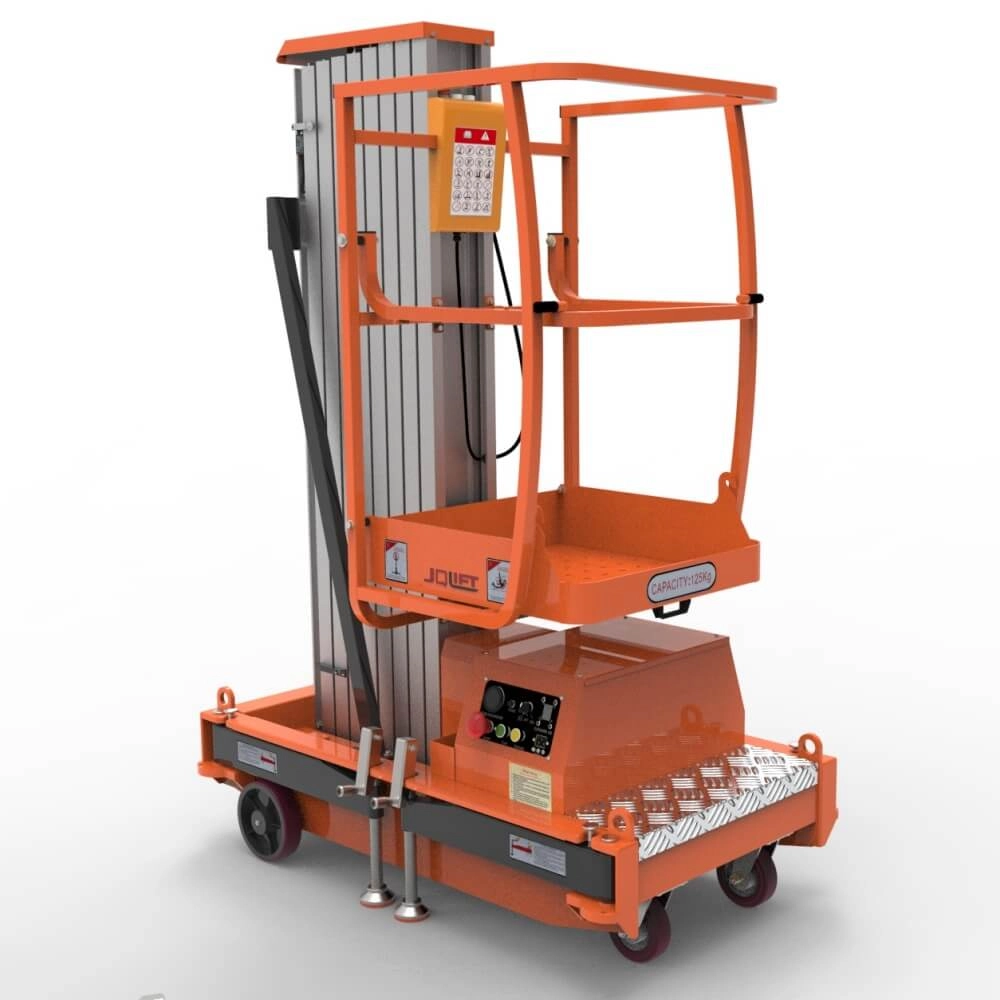
A manual personnel lift or push-around lift is usually suitable for occasional indoor work, short travel distances, and budget-sensitive projects. It may fit schools, small workshops, retail stores, and building service teams that only use the equipment from time to time. The structure is generally simple, and the purchase cost may be easier to control.
However, manual movement can become inefficient when the operator must travel across a large warehouse or service many points in one shift. In that situation, lower initial cost may not lead to better long-term value.
Electric Single Man Lift
An electric single man lift is better suited for frequent movement and repeated indoor maintenance. Warehouses, malls, offices, and factories often need equipment that can move between work points with less manual effort. Electric mobility and electric lifting can save time, especially when the lift is used daily.
Power choice should follow site conditions. Smooth indoor floors, longer travel distances, and repeated service tasks often support the case for an electric model. For occasional work in a limited area, a simpler model may still be enough.
Semi-Electric Options
A semi-electric lift can be a middle choice between budget and efficiency. It may use manual movement with powered lifting, which suits customers who do not need full self-propelled travel but still want easier vertical operation. For B2B purchasing, this option can serve maintenance teams that work indoors at moderate frequency and need practical cost control.
Doorways, Elevators, and Floor Conditions Matter
Machine width can be just as important as platform height. A lift that cannot pass through a doorway, enter an elevator, or turn in a corridor may not be useful at the actual worksite. Before placing an order, buyers should confirm doorway width, elevator size, aisle width, turning space, and storage location.
Floor condition is also important. Indoor man lifts are commonly used on flat, solid surfaces. Uneven floors, ramps, slopes, thresholds, and sensitive flooring should be discussed with the supplier before purchase. A compact lift for narrow aisles must not only reach the required height; it must also move safely through the route to the work point.
About Hangzhou Jiequ Machinery Manufacturing Co., Ltd.
Hangzhou Jiequ Machinery Manufacturing Co., Ltd. was established in 2015 and is located in Xinwan Street, Qiantang District, Hangzhou, China. The company covers more than 30 acres and is building a modern high-altitude machinery manufacturing base.
The company has more than ten R&D technicians and more than one hundred skilled workers. It has obtained dozens of software patents, utility model patents, and invention patents, and has been recognized as a national high-tech enterprise, provincial high-tech enterprise, and specialized special new technology enterprise.
For B2B buyers, this background is relevant. A single man lift purchase is not only a price comparison. Manufacturing capability, product consistency, technical support, customization ability, and service response all affect long-term equipment value.
Conclusion
Choosing a single man lift should start with real worksite data. Platform height decides whether the operator can reach the work point. Load capacity decides whether the machine can carry the operator, tools, and materials safely. Power option decides how efficient the equipment will be in daily use. Doorway access, elevator size, floor condition, and turning space decide whether the lift can actually reach the job area.
For facility maintenance, warehouse repair, commercial building service, and indoor aerial work, JQLIFT provides compact vertical mast lift options for buyers who need safe, practical, and space-saving elevated access solutions.
FAQs
Q1:What platform height do I need for a single man lift?
A1:Measure the highest work point first. Then choose a platform height that allows safe reach without stretching or unstable working posture.
Q2:How much load capacity should a single man lift have?
A2:Load capacity should include the operator, tools, small parts, and a safety margin. Do not calculate by body weight only.
Q3:Should I choose a manual or electric single man lift?
A3:Manual models suit occasional work and short movement. Electric models suit daily maintenance, larger sites, and frequent movement.
Q4:Can a single man lift fit through standard doorways?
A4:It depends on machine width and height. Buyers should check doorway width, elevator size, and indoor route dimensions before ordering.
Q5:Is a single man lift suitable for warehouse maintenance?
A5:Yes. It is suitable for lighting repair, shelf inspection, electrical service, ceiling checks, and narrow aisle maintenance.


