
Solving Tight and High Challenges with a Vertical Mast Lift
Today’s factory and building spots often need safe and quick ways to reach high work areas in small spaces. Storage areas, production sites, moving centers, and trade buildings usually face two main issues at once: limited maneuvering space and vertical height requirements.
A vertical mast lift gets made to fix these issues. Its small base, straight-up raise setup, and easy guide make it a good choice for upkeep, setup, and stock jobs in tight paths and high work zones.
This piece looks at how vertical mast lifts handle tight and high reach problems. It covers their main build pluses, usual uses, and run notes.
What Is a Vertical Mast Lift?
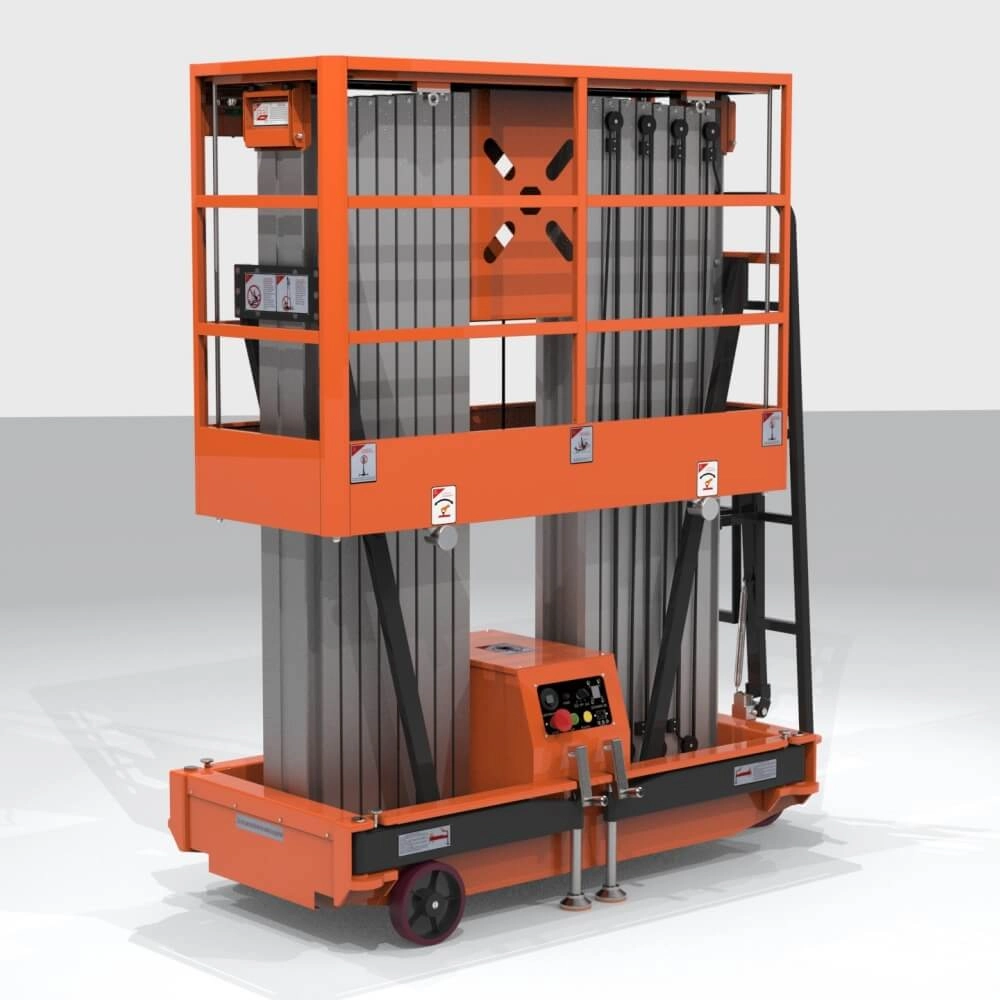
A vertical mast lift is a kind of raised work platform made to lift workers and tools right up with a telescopic or multi-stage mast structure. It differs from scissor lifts or boom lifts. It does not need big side stretch or wide turn space. This makes it perfect for inside and tight space spots.
Key build traits include:
- Small base build for tight path guide
- Many-stage straight mast for tall-reach jobs
- Little turn space for exact spot place
- Platform stretch for better reach power
These parts let workers do jobs safely at height. They take up very little floor area.
Vertical mast lifts often serve in spots where old raise gear is too big or not useful.
Navigating Tight Spaces with a Vertical Mast Lift
One big plus of a vertical mast lift is its skill to work in extremely narrow or obstructed environments. Sites often hold shelves, machines, pipe setups, and build blocks that cut gear move.
A vertical mast lift fixes these limits with:
Compact footprint design
Its thin base lets it go through normal doors, close paths, and storage halls. It does this without stopping nearby work.
Precision maneuverability
The lift gets built for even steer and held move. This lets workers place the platform right in crowded spots.
Zero or minimal turning radius capability
This part cuts the need for big turn paths. It fits thick storage plans and factory spots.
Platform extension for hard-to-reach areas
In some ways, the lift can stretch past its base area. This lets reach over blocks like shelf units or gear setups.
These build parts let upkeep and setup work go on well. They do this without changing site plans.
Reaching High Work Areas Safely and Efficiently
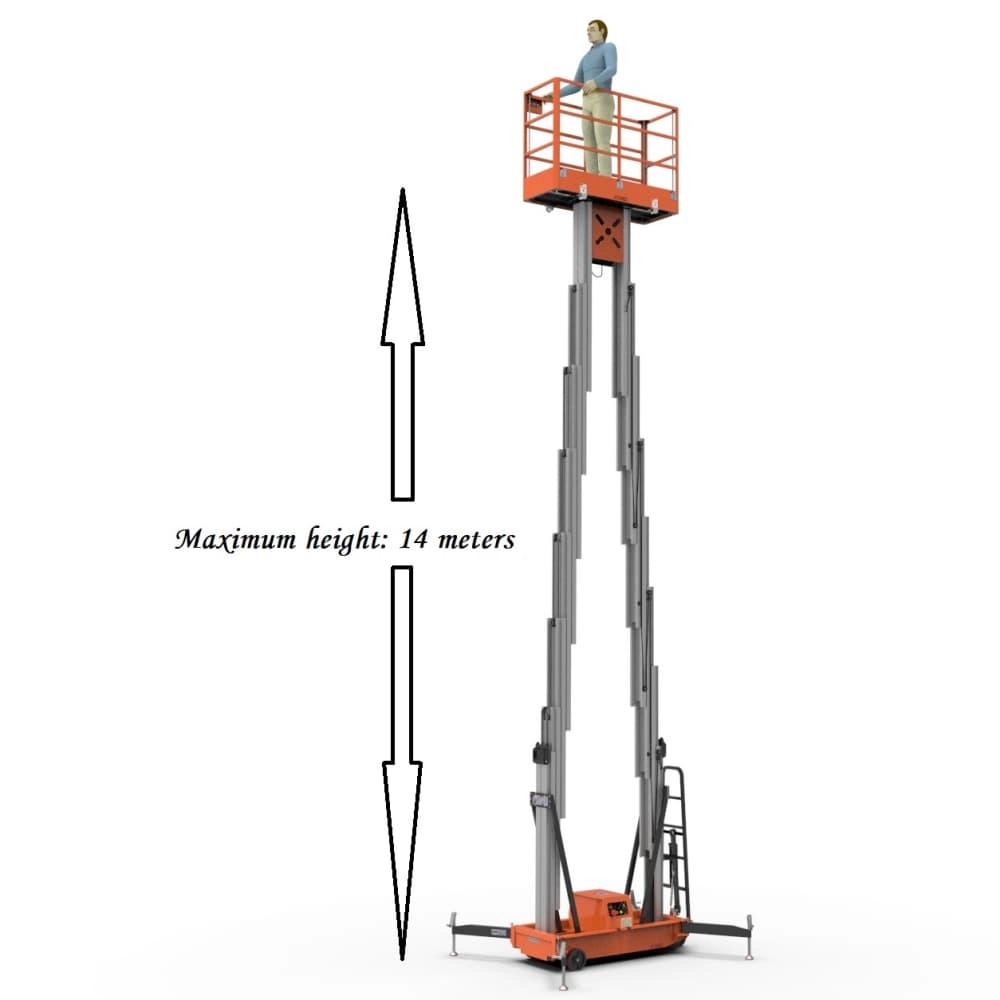
Besides tight space guide, vertical mast lifts get made for elevated access tasks. Height work often covers light upkeep, power setups, air heat parts, and top setups.
Vertical lifting mechanism
The mast setup gives even straight lift. It lets held reach to high points without side shake.
Stable working platform
Unlike steps or frame builds, the platform gives a firm stand spot with side bars for worker guard.
Controlled elevation system
The lift setup makes sure of even up and down shifts. This cuts quick moves and boosts run safety.
Suitable for repetitive height tasks
For jobs that need often height changes, vertical mast lifts give quick pluses over old setup gear.
These skills make them a sure fix for daily upkeep and setup plans.
Integrating Vertical Mast Lifts into Industrial Operations
Vertical mast lifts see wide use in fields due to their fit skill. Their build backs join into busy work flows where space and time quickness matter.
Warehouse operations
They serve for stock reach, shelf upkeep, and top label or light work.
Manufacturing facilities
They back machine upkeep, power care, and line changes.
Facility management
They let air heat care, roof checks, and general build upkeep.
Retail and commercial buildings
They help in light setup, sign upkeep, and base fixes.
Since they run quiet and small, vertical mast lifts can work in busy spots. They do not stop ongoing work much.
Working Principle of Vertical Mast Lifts
Vertical mast lifts often run through a hydraulic or electric drive system. This setup guides mast stretch and pull back.
Hydraulic lifting system
Fluid push moves the mast up in held steps. It makes sure of even straight action.
Controlled lowering mechanism
The down shift gets ruled by flow guide valves. This makes sure of safe and slow lower.
Stability systems
Safety links, load guard, and platform hold setups help keep safe run at height.
Energy-efficient operation
Many kinds get made for inside use with low power use and less noise out.
This mix of machine exact and safety guide makes sure of sure work in factory uses.
Safety and Maintenance Considerations
Safe run is a key part of vertical mast lift use. Right upkeep and use rules help make sure of long-term sure hold.
Pre-operation inspection
Before run, workers usually check:
- Hydraulic or electrical system integrity
- Tire and wheel condition
- Guardrail stability
- Control responsiveness
- Load capacity compliance
Load management
Going over set load power can hurt steady hold and setup work.
Surface conditions
The lift should run on flat and firm lands to stop unbalance or tip risks.
Routine maintenance
Regular oil add, fluid checks, and setup looks help grow gear life and keep safety work.
Operational discipline
Cutting quick moves, too-far reach, or wrong spot place is key for safe use.
These steps make sure of worker safety and gear last.
Advantages of Vertical Mast Lifts Over Traditional Access Equipment
Next to steps, frame builds, or bigger raised platforms, vertical mast lifts give some run pluses:
- Faster setup and deployment
- Improved operator safety through enclosed platforms
- Reduced space requirements
- Greater mobility within facilities
- Higher efficiency for repetitive height tasks
These gains make them very useful in today’s factory spots where quick work and safety must go together.
Industrial Value of Vertical Mast Lifts
As fields move to more auto and space best use, gear that mixes small build with straight reach gets more key.
Vertical mast lifts back:
- Improved workflow efficiency
- Reduced labor time for elevated tasks
- Safer maintenance operations
- Better utilization of facility space
Their part keeps growing in moving, making, and site upkeep fields.
FAQ
1. What is a vertical mast lift mainly used for?
It mainly serves for inside upkeep, storage runs, and high reach jobs in tight or small spaces.
2. How is a vertical mast lift different from a scissor lift?
A vertical mast lift goes straight up with a tinier base. A scissor lift gives a bigger platform with more side steady but needs more area.
3. Can vertical mast lifts be used outdoors?
Some kinds can work outside on firm lands. But they mostly get best for inside spots.
4. What industries commonly use vertical mast lifts?
They see wide use in storage, making, moving, shop upkeep, and site care.
5. What safety features are included in vertical mast lifts?
Usual parts hold side bars, load guard setups, quick lower acts, and steady guide tools.
Industrial Vertical Mast Lift Manufacturer & Supplier Solutions
As factory spots keep needing safer and quicker high reach gear, sure raised work platforms have become key for today’s runs. A professional manufacturer specializing in aerial work platforms (AWP) gives built fixes for storage, upkeep, and factory uses.
JQLIFT is a professional manufacturer specializing in aerial work platforms (AWP) and mobile elevated equipment, including scissor lifts, vertical mast lifts, and order pickers for warehouse, maintenance, and industrial applications.
With a focus on structural reliability, operational safety, and application versatility, JQLIFT supports industrial users with equipment designed for confined-space maneuverability and high-reach performance. Its product range and engineering capability are built to meet evolving demands in logistics, production, and facility maintenance environments. Contact JQLIFT today.


