
Vegetable Harvesting Equipment for Commercial Growers: How to Choose Picking Carts and Dump Trucks
Choosing the right vegetable harvesting equipment is no longer a small purchasing decision for commercial growers. In greenhouse farms, vegetable production bases, and large agricultural operations, harvesting is not only about cutting or picking crops. It also includes collecting, moving, transferring, unloading, and sending produce toward sorting or packing with as little delay as possible.
When this process depends too much on hand carrying, the real cost shows up quickly. Workers spend time walking instead of harvesting. Full baskets sit in aisles. Packing areas wait for supply. Fresh produce may be handled more times than necessary, which can affect appearance and market value.
For growers, distributors, and wholesale equipment buyers, the practical goal is simple: select equipment that fits crop type, aisle width, harvest volume, labor structure, and the distance between the growing area and the packing area.
Why Commercial Growers Need Dedicated Vegetable Harvesting Equipment
Commercial vegetable farms work under tighter schedules than small gardens or seasonal plots. During peak harvest days, several rows or greenhouse sections may be ready at the same time. A crew may pick leafy greens in one zone, cucumbers or peppers in another, while the packing team waits for a steady flow of produce.
In this setting, manual vegetable harvesting can become slow even when workers are experienced. The issue is usually not the picking motion itself. The larger problem is movement. Workers must carry full containers, clear paths, return empty baskets, and repeat the same routine throughout the day.
Dedicated farm harvesting equipment helps reduce this back-and-forth work. Picking carts, driving picking vehicles, and picking dump trucks can turn scattered manual handling into a cleaner harvest flow. That matters for farms trying to reduce harvesting labor cost without lowering output.
Common Harvesting Problems in Greenhouse and Vegetable Farms
Greenhouse harvesting problems often start in narrow aisles. A full basket placed in the wrong spot can block workers or slow down a cart. If the packing area is far from the growing zone, workers lose time moving crops instead of staying near the plants. When produce is transferred from basket to cart, then from cart to another container, each extra touch increases the chance of bruising or pressure damage.
These issues become more serious when harvest volume rises. A farm may add temporary workers, but if the transport process remains unchanged, the bottleneck simply moves from picking to crop movement. The result is a busy site that still feels slow.
A better vegetable harvesting workflow keeps the picking area, transfer points, and packing area connected. Good equipment does not only carry produce. It helps keep the work moving in the right direction.
Main Types of Vegetable Harvesting Equipment for Commercial Growers
Picking Carts for Short-Distance Harvest Collection
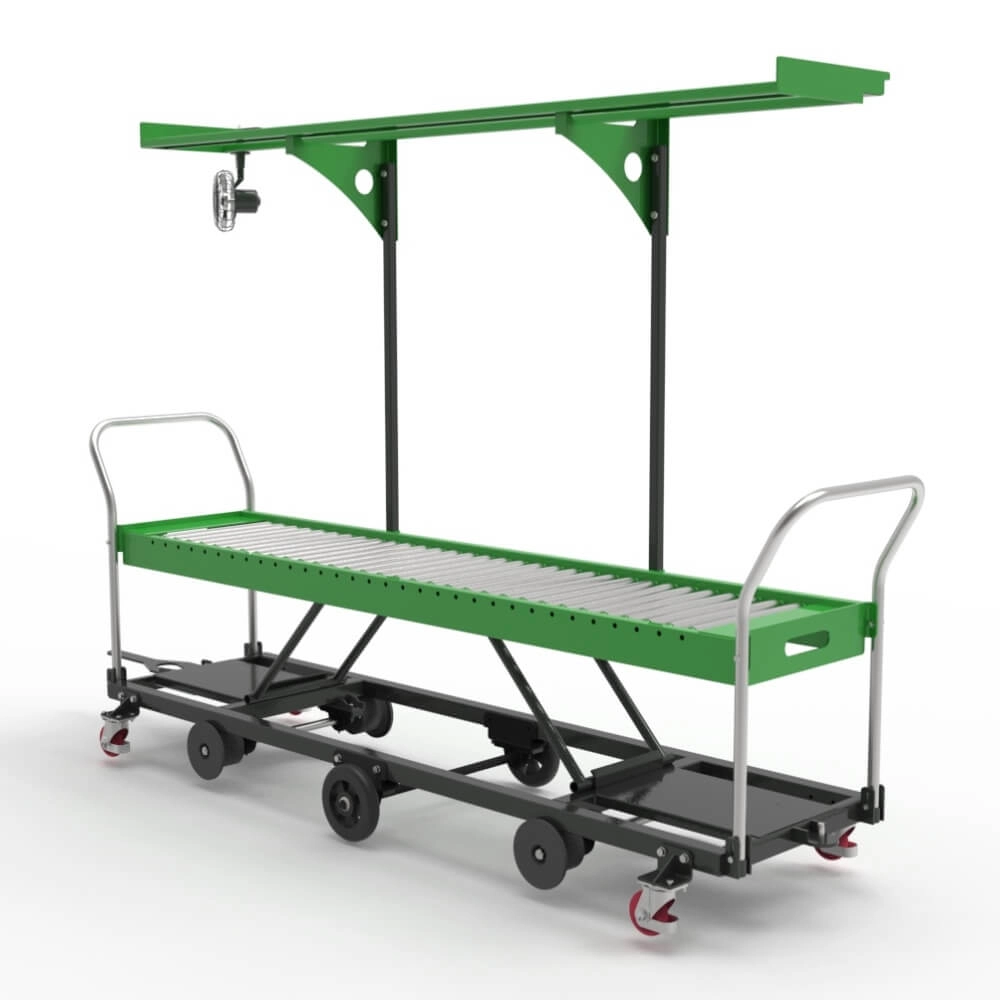
A picking cart for vegetable harvesting is usually the first equipment upgrade for many farms. It gives workers a nearby mobile collection point and helps reduce walking distance inside the greenhouse or field area.
A greenhouse picking cart is especially useful where produce is collected row by row. Workers can place harvested vegetables directly onto the cart rather than setting baskets on the floor or along the aisle. This keeps the path cleaner and reduces repeated lifting.
JQLIFT’s vegetable picker range includes the WSH-GL Picking Car and SWS-HGL Manual Picking Cart, which fit this type of short-distance collection need. These products are part of the company’s Vegetable Pickers category, built for agricultural picking and handling applications.
Driving Picking Vehicles for Larger Growing Areas
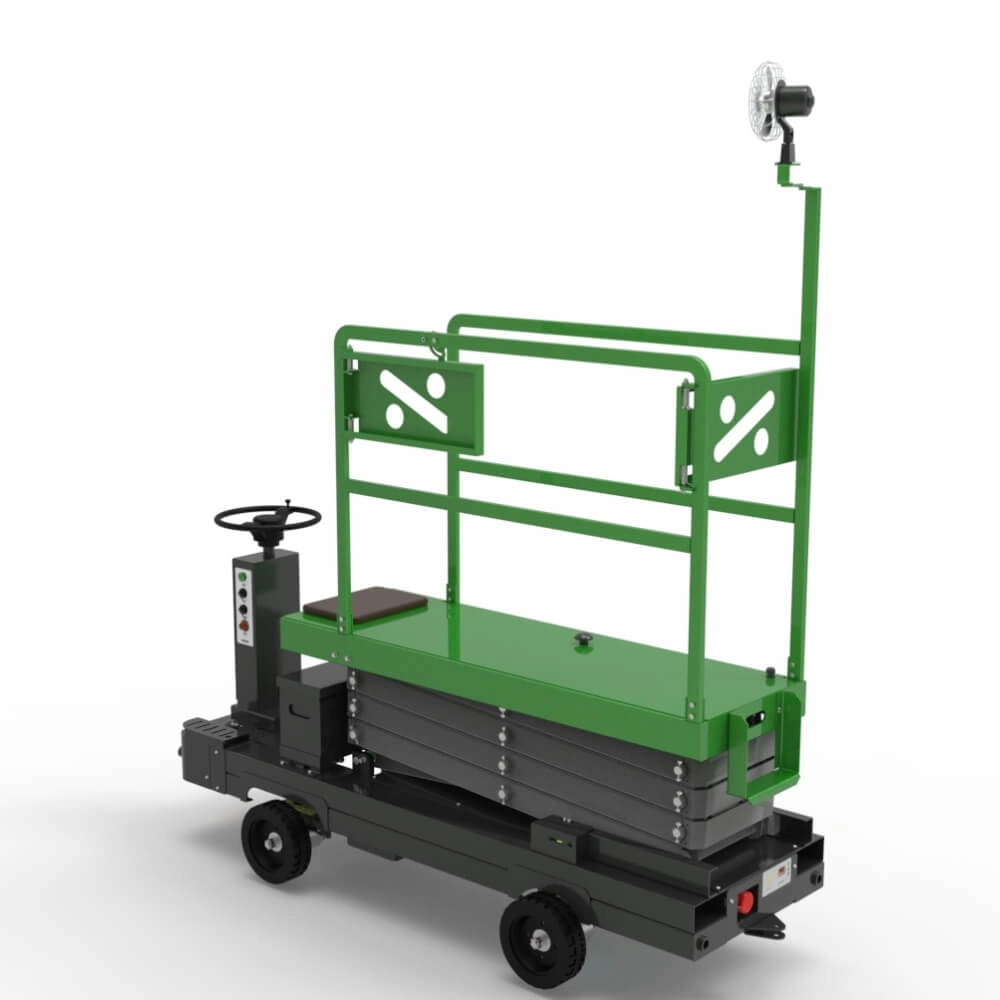
For larger greenhouse farms or vegetable bases, walking distance becomes a bigger issue. A driving picking vehicle can help reduce worker fatigue when harvest zones are spread across longer paths or multiple sections.
A driving picking vehicle is useful when the team needs to move between rows, collect produce at different points, and reduce empty walking. In this case, the equipment supports not only picking but also labor planning. JQLIFT lists the WSH-GGL Driving Picking Vehicle under its Vegetable Pickers category, giving buyers another option for farms with wider movement needs.
Picking Dump Trucks for Crop Transport and Unloading
A picking dump truck serves a different role. It is more suitable for bulk crop transfer from the collection point to the packing area, sorting zone, or temporary storage area. In vegetable harvesting, this type of equipment should be understood as agricultural crop transport equipment, not a construction truck.
Its main value is unloading. When workers unload every container by hand, each trip takes time and energy. A picking dump truck helps reduce manual unloading work and can make crop transport from greenhouse to packing area more steady. JQLIFT’s WSH-ZGL Picking Dump Truck fits this part of the harvest workflow.
Sprayers for Crop Care Support
Sprayers are not harvesting machines in the strict sense, but they support the crop care side of commercial vegetable production. For buyers building a broader vegetable farm equipment package, a sprayer can be part of the same agricultural handling system. JQLIFT also lists the WSH-YGL sprayer in its Vegetable Pickers category.
How to Choose the Right Equipment for Different Harvesting Workflows
Crop Type and Handling Sensitivity
Different vegetables need different handling methods. Leafy greens, tomatoes, cucumbers, peppers, and other fresh crops can react differently to pressure, stacking, and repeated transfer. Crops with delicate skins or high appearance value should move through fewer handling steps.
Greenhouse Aisle Width and Turning Space
Equipment must fit the real site. A cart that works well in a wide greenhouse may become a problem in a narrow path. Buyers should check aisle width, turning space, surface condition, and where workers need to pass each other during harvest.
Daily Harvest Volume
A smaller farm may only need manual picking carts. A larger greenhouse may need driving picking vehicles to reduce travel time. Farms with higher daily volume often need picking dump trucks for bulk transfer and faster unloading.
Distance to Packing or Sorting Area
If the packing area is close to the greenhouse, short-distance carts may be enough. If produce travels farther, crop transport equipment becomes more important. The longer the route, the more costly manual carrying becomes.
Labor Availability and Cost
When labor is limited or expensive, equipment should help workers spend more time harvesting and less time carrying. This is where commercial vegetable harvesting equipment can bring steady value over many seasons.
Picking Cart vs Picking Dump Truck: Which One Should Buyers Choose?
A picking cart and a picking dump truck solve different parts of the same problem. A picking cart works near the crop. It helps collect vegetables, reduce aisle clutter, and keep workers close to the picking area. A picking dump truck works between zones. It moves larger quantities from collection points to packing, sorting, or storage.
For many commercial farms, the best choice is not one or the other. A practical setup may use picking carts in the rows and a picking dump truck for bulk transfer. This combination can reduce idle time, lower repeated lifting, and create a smoother greenhouse harvest logistics process.
When Should Commercial Growers Upgrade Their Harvesting Equipment?
Growers should consider upgrading when manual handling begins to limit output. Common signs include workers leaving the crop area too often, full baskets waiting in aisles, packing teams waiting for produce, and visible crop damage from repeated transfer.
Another clear sign is expansion. When greenhouse area grows but the labor team remains nearly the same size, the old workflow often struggles. Better harvesting equipment can help the same crew cover more area with less strain.
How JQLIFT Supports Commercial Vegetable Harvesting Operations
JQLIFT is the brand of Hangzhou Jiequ Machinery Manufacturing Co., Ltd., a manufacturer based in Xinwan Street, Qiantang District, Hangzhou, China. Since its establishment in 2015, the company has developed a manufacturing base covering more than 30 acres. Its team includes more than ten R&D technicians and more than one hundred skilled workers, supporting product development and production.
The company has obtained software patents, utility model patents, and invention patents. It has also received honors including national high-tech enterprise, provincial high-tech enterprise, and specialized special new technology enterprise recognition. Its products are sold worldwide, and it maintains cooperation with OEM partners in the domestic market.
For commercial growers and agricultural equipment buyers, JQLIFT’s vegetable picker line covers WSH-ZGL Picking Dump Truck, WSH-YGL sprayer, WSH-GL Picking Car, WSH-GGL Driving Picking Vehicle, and SWS-HGL Manual Picking Cart. This range supports picking, movement, transport, unloading, and crop care within vegetable farm operations.
Conclusion
The best vegetable harvesting equipment is chosen by workflow, not by product name alone. Commercial growers need to consider crop type, aisle layout, harvest volume, labor cost, and the distance between picking and packing. Picking carts improve short-distance harvest collection, while picking dump trucks support larger-volume transfer and unloading.
For greenhouse farms, vegetable production bases, distributors, and wholesale buyers, JQLIFT provides practical equipment options backed by manufacturing experience, product variety, and a clear focus on agricultural handling needs.
FAQs
Q1: How do commercial growers choose vegetable harvesting equipment?
A1: Commercial growers should choose vegetable harvesting equipment based on crop type, aisle width, daily harvest volume, labor availability, and the distance from the growing area to the packing or sorting area. Picking carts suit short-distance collection, while picking dump trucks help with bulk transfer and unloading.
Q2: What is the best picking cart for vegetable harvesting?
A2: The best picking cart for vegetable harvesting depends on the farm layout and crop handling needs. A manual picking cart can work well in smaller greenhouse areas, while a driving picking vehicle may be more suitable for larger sites with longer travel distances.
Q3: When should a farm use a picking dump truck instead of a picking cart?
A3: A farm should use a picking dump truck when harvested crops need to move in larger batches from collection points to the packing area. Picking carts are better near the crop, while picking dump trucks are better for transfer and unloading.
Q4: How can vegetable harvesting equipment reduce labor cost?
A4: Vegetable harvesting equipment can reduce labor cost by cutting unnecessary walking, repeated lifting, hand carrying, and unloading time. This allows workers to spend more time harvesting and less time moving crops through the farm.
Q5: What equipment is useful for greenhouse vegetable harvesting?
A5: Useful greenhouse vegetable harvesting equipment may include picking carts, manual picking carts, driving picking vehicles, picking dump trucks, crop transport equipment, and sprayers. The right mix depends on greenhouse size, crop type, aisle width, and harvest volume.


