
Order Picker vs Ladder: Which Is Safer for Picking Inventory from High Racks?
In warehouse work, the question of order picker vs ladder is rarely just about the purchase price. It touches picking speed, worker safety, inventory accuracy, and the daily rhythm of high-rack storage. For small and medium warehouses, retail stockrooms, logistics centers, and industrial storage areas, ladders may look convenient at first. They are simple, inexpensive, and familiar to most workers. Yet once high-rack inventory picking becomes a regular task, a ladder can quietly slow down the whole operation.
High shelves help warehouses make better use of limited floor space. Many facilities store cartons, spare parts, packaging materials, tools, and slower-moving SKUs on upper rack levels. The layout is practical. The difficulty appears when workers need to reach those shelves many times during a shift. A single pick may involve moving a ladder, setting it in the right spot, climbing up, checking the label, handling the item, climbing down, and then doing the same thing in the next aisle.
For B2B buyers, the real question is straightforward: when does a ladder stop being a useful access tool and start becoming a drag on warehouse productivity?
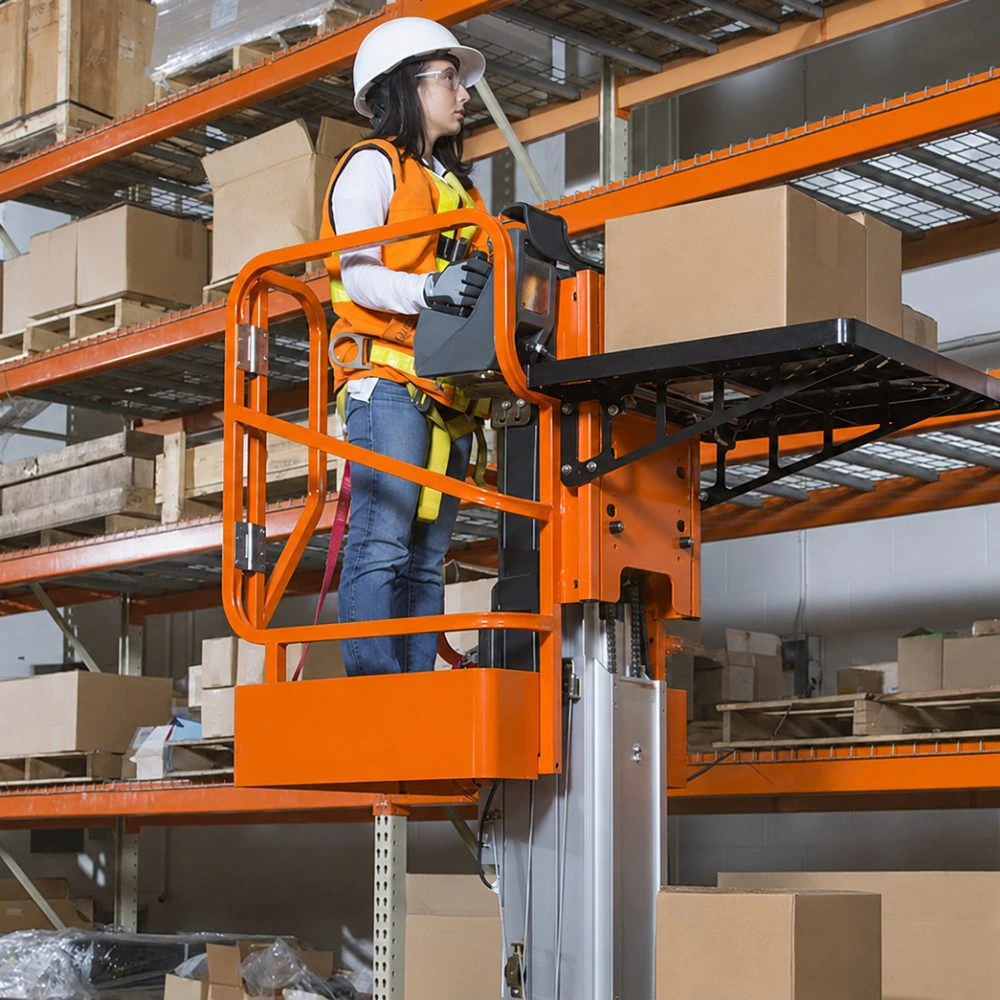
Why High-Rack Inventory Picking Creates Daily Warehouse Problems
High-rack inventory picking is demanding because it combines height, movement, product identification, and manual handling. In a busy warehouse, workers are not usually taking one item from one shelf. They may be filling several orders, replenishing stock, checking SKU labels, and moving between aisles while the packing area waits for inventory.
A ladder interrupts this flow. Workers have to stop, move it, climb, reach, carry, and reposition it again. Each delay may seem small. Across a full shift, however, those minutes add up. In a compact warehouse with narrow aisles, the ladder may also block carts, pallets, or other workers. That creates extra congestion at the exact time when the warehouse needs smoother movement.
Safety adds another layer of concern. Picking inventory from high shelves often requires workers to look sideways, read labels, reach into rack positions, and bring goods down by hand. These movements are harder to manage on a ladder, especially when the item is bulky, awkward, or stored behind other cartons. A ladder may be acceptable for occasional access. It is less suitable when high-shelf picking becomes part of the daily routine.
When a Ladder Still Makes Sense in a Warehouse
A ladder is not always the wrong choice. For light, occasional, and low-frequency access, it can still be useful. A warehouse may use one to check a shelf label, inspect a rarely used storage location, or retrieve a small item outside the regular picking route.
Frequency changes the decision. Once workers use ladders every day for high-shelf order picking, the ladder becomes part of the material handling process. At that stage, warehouse managers should look beyond the low upfront cost. The real cost may appear in slower picking, tired workers, limited carrying ability, greater safety pressure, and less predictable order fulfillment.
That is where an aerial order picker becomes a more practical warehouse picking equipment choice.
What Is an Order Picker for High Shelves?
An order picker is warehouse equipment designed to lift the operator to a suitable working height for picking, replenishment, stock checking, and high-place material handling. Unlike a ladder, an order picker provides a more stable elevated working position. It also supports a more controlled picking process.
For high racks, an aerial order picker helps workers reach shelf levels directly instead of climbing again and again. It is often used in warehouses, logistics centers, retail storage areas, spare parts rooms, and industrial stock zones where goods are stored above normal hand height.
JQLIFT supplies aerial order pickers and reclaimers for high-place material handling. Its aerial order picker category includes the OPC Picker, T3 Semi-electric Reclaimer, ZAT Liquid Transfer Reclaimer, DT semi-electric reclaimer, DAT Fully Electric Reclaimer, and AT Fully Electric Reclaimer. This range covers different warehouse needs, from budget-conscious semi-electric lifting to fully electric high-frequency material handling.
Order Picker vs Ladder: Key Differences for High-Rack Picking
The clearest difference between an order picker and a ladder is workflow control. A ladder depends heavily on worker balance, manual positioning, and repeated climbing. An order picker supports the worker from a platform and brings the task closer to shelf level.
For occasional access, a ladder may be enough. For daily high-rack picking, a warehouse order picker can reduce wasted movement and make the process more consistent. Workers can view product labels more clearly, handle cartons from a better position, and avoid the repeated climb-down cycle that slows manual picking.
Load handling is another important difference. A worker on a ladder is limited by balance and posture. Even a light carton can feel difficult to manage when the worker must reach outward or turn carefully on steps. An order picker for high shelves offers a steadier working position for cartons, packaged goods, spare parts, and multiple small items.
From a safety management perspective, the decision is also clear. Ladders place more pressure on individual movement and body position. Aerial order pickers are built for repeated elevated access, which makes them better suited to daily high-rack inventory picking.
When Should a Warehouse Replace Ladders with an Order Picker?
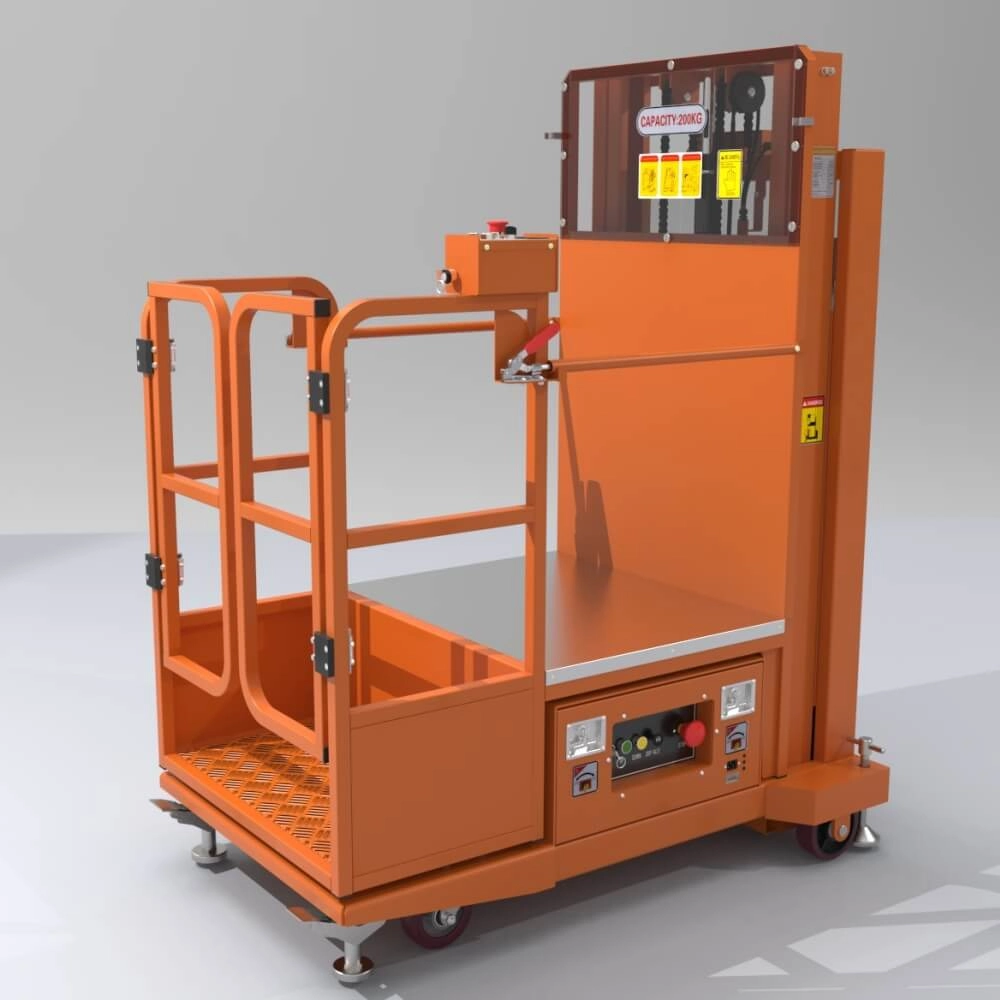
A warehouse should consider replacing ladders when high-rack picking begins to affect speed, safety, or labor efficiency. If workers pick from upper shelves several times per day, move ladders across aisles, carry cartons down manually, or struggle to read SKU labels at height, the operation may already need a better method.
The need is even stronger in e-commerce warehouses, retail backrooms, spare parts warehouses, factory storage areas, and small logistics centers. These facilities often manage many SKUs in limited space. High shelves are valuable, but access must keep pace with the storage layout.
A compact order picker is especially useful where larger equipment is not practical. Narrow aisles, mixed packing zones, and smaller warehouse footprints require equipment that can work close to racks without forcing a major facility redesign.
How JQLIFT Supports Safer High-Rack Inventory Picking
JQLIFT, the brand of Hangzhou Jiequ Machinery Manufacturing Co., Ltd., focuses on aerial work platforms, mobile lifts, and material handling equipment. The company was established in 2015 in Qiantang District, Hangzhou, China. Its manufacturing base covers more than 30 acres. The team includes more than ten R&D technicians and more than one hundred skilled workers. Patents and high-tech enterprise honors further support its manufacturing background.
For warehouse buyers, this foundation matters. Equipment used for high-rack picking must be practical, durable, and suited to real working conditions. JQLIFT’s OPC Picker is designed for warehouses, logistics centers, and retail spaces. It helps workers reach up to about 4 meters for safer access and goods retrieval. The AT Fully Electric Reclaimer offers a maximum lift height of about 4.5 meters and a load capacity of about 300kg, making it suitable for higher-frequency material handling. The T3 Semi-electric Reclaimer uses manual push-pull travel with electric lifting. It reaches a platform height of about 4.5 meters and supports about 200kg, giving cost-conscious warehouses a practical alternative to ladders.
How to Choose the Right Order Picker Instead of a Ladder
Match the Equipment to Picking Height
The selected order picker should match the working height used in daily operations, not just the total rack height. Buyers should measure the highest regular picking level and consider how workers access labels, cartons, and storage bins.
Consider Load Capacity and Item Type
Cartons, tools, spare parts, and packaged goods place different demands on equipment. A warehouse that handles multiple items per trip may need more capacity than one that only picks small lightweight products.
Review Aisle Width and Daily Use Frequency
In small and medium warehouses, aisle width can decide whether a model fits the operation. Fully electric order pickers are better for frequent use. Semi-electric order pickers may suit lower-frequency picking where budget control is important.
Conclusion
Ladders are useful for occasional warehouse access, but they are not the best tool for daily high-rack inventory picking. When workers repeatedly climb, reach, carry, and reposition ladders, the hidden cost appears in slower picking, more fatigue, and higher safety pressure.
An aerial order picker provides a safer and more efficient way to pick inventory from high racks, especially in warehouses where space is limited and upper shelves are part of everyday work. For B2B buyers looking for warehouse ladder alternatives, JQLIFT offers practical aerial order picker solutions backed by manufacturing experience, product variety, and a clear focus on high-place material handling.
FAQs
Q1: Is an order picker safer than a ladder for warehouse picking?
A1: An order picker is generally more suitable for frequent high-rack warehouse picking because it gives workers a stable elevated working position. A ladder may be acceptable for occasional access, but repeated climbing and carrying can increase safety pressure during daily inventory picking.
Q2: When should a warehouse stop using ladders for high shelves?
A2: A warehouse should consider replacing ladders when workers pick from high shelves every day, move ladders across aisles often, experience slow picking routes, or handle cartons and spare parts at height. These signs usually mean the facility needs dedicated high rack picking equipment.
Q3: What is the best ladder alternative for high-rack inventory picking?
A3: An aerial order picker is a practical ladder alternative for warehouse workers who need to pick, replenish, or check inventory from high racks. It helps reduce repeated climbing and supports safer access to upper shelf levels.
Q4: Is a semi-electric order picker enough for a small warehouse?
A4: A semi-electric order picker can be enough for a small warehouse when high-shelf access is needed regularly but not continuously throughout the day. JQLIFT’s T3 Semi-electric Reclaimer combines manual push-pull movement with electric lifting for cost-conscious material handling.
Q5: How do buyers choose between a semi-electric and fully electric order picker?
A5: Buyers should compare picking frequency, aisle layout, labor effort, load capacity, and budget. Semi-electric models suit moderate use and lower investment needs, while fully electric order pickers are better for frequent high-rack picking and daily warehouse movement.


