
How to Improve Greenhouse Harvesting Efficiency with Picking Carts and Dump Trucks
Improving greenhouse harvesting efficiency is rarely solved by adding more hands alone. In many commercial vegetable farms, the real delay appears after the crop is picked. Workers collect produce, place it into baskets or boxes, move it through narrow greenhouse paths, wait for transport, unload it again, and then send it toward sorting or packing. When those steps depend mainly on hand carrying, even a skilled crew can lose a large part of the day to movement instead of harvesting.
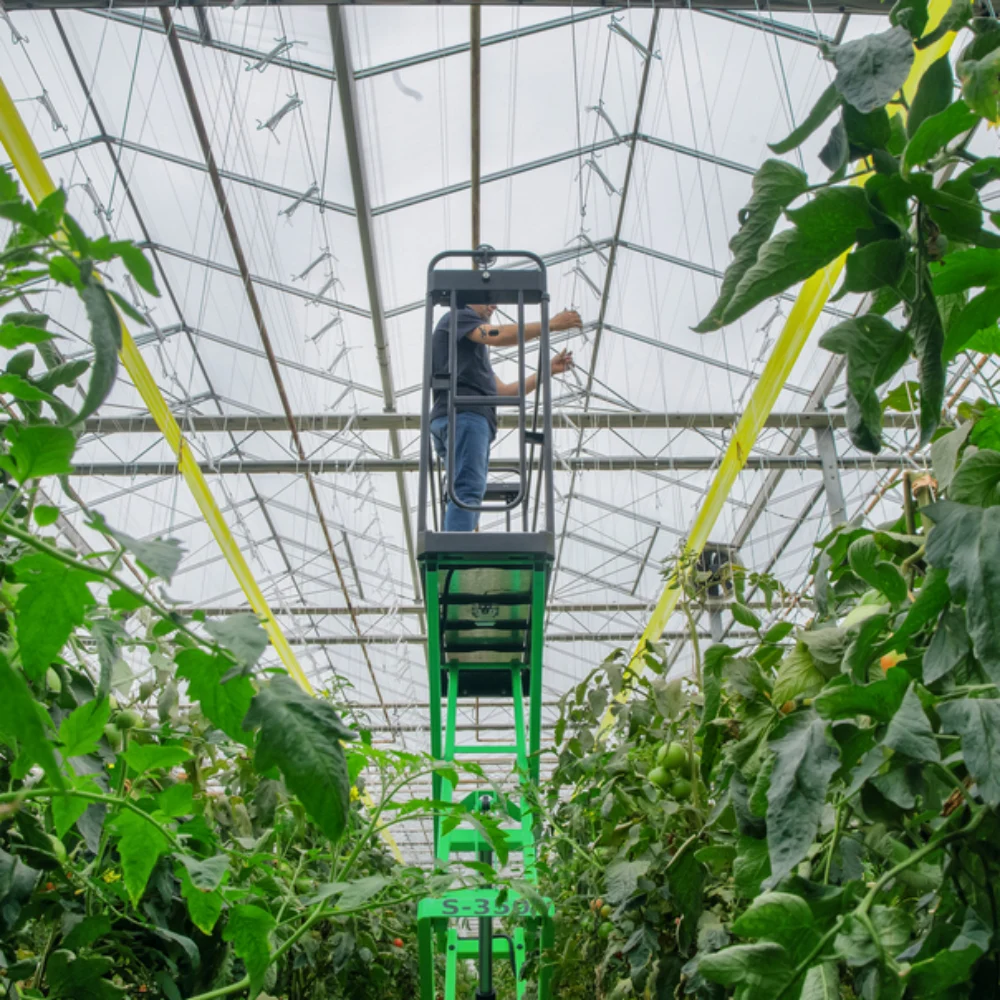
That is why picking carts and picking dump trucks have become useful choices for greenhouse farms, vegetable production bases, and agricultural handling operations. They help turn harvesting from a series of scattered tasks into a steadier process. Picking, temporary loading, short-distance movement, bulk transfer, and unloading can work together instead of fighting each other.
For growers, equipment distributors, and wholesale buyers, the purpose is simple: reduce manual crop handling, cut transport time, and keep harvested vegetables moving from the growing area to the packing line with fewer delays.
Why Greenhouse Harvesting Slows Down During Peak Seasons
Greenhouse harvesting may look straightforward. Workers pick vegetables, place them into containers, and send the crop to the next area. On a busy harvest day, however, the work becomes more complicated.
Crops may be ready in several rows at once. Workers must move through narrow aisles, avoid damaging plants, collect produce carefully, and keep filled containers from blocking the path. If the right cart is not nearby, workers leave the crop area to carry baskets. If transport is late, full containers sit in the aisle while the packing team waits.
These problems are common in vegetable farms that rely too heavily on manual movement. The picking task itself is often not the weakest point. The slower part is the handoff from the picking area to the transport route.
The Hidden Bottlenecks in Manual Vegetable Harvesting
Manual vegetable harvesting brings hidden costs that do not always appear in a labor schedule. A worker may harvest quickly for several minutes, then stop to move a full basket. Another person may need to clear containers from the aisle before the next group can pass. In a long greenhouse, this back-and-forth travel wears down the crew and stretches the workday.
Crop quality may also be affected. Vegetables handled too many times can be bruised, pressed, scratched, or left waiting too long before sorting and packing. Even small damage can reduce appearance and market value, especially for fresh produce sold by look and consistency.
For commercial farms, the bigger issue is flow. A strong harvesting workflow keeps people close to the crop and keeps produce moving forward. When workers spend too much time carrying, waiting, or clearing paths, labor is being spent on transport instead of harvest output.
How Picking Carts Improve the Harvesting Workflow
Picking carts bring more order to greenhouse harvesting. A greenhouse picking cart can move with workers through the growing area, giving them a nearby place to load fresh produce. This shortens walking distance and helps the picking team stay focused on the crop.
For row-based vegetable production, a picking cart for vegetable harvesting also helps keep aisles cleaner. Instead of setting baskets along the path, workers can load produce directly onto a mobile cart. The cart becomes a clear collection point. This is useful for leafy greens, cucumbers, peppers, tomatoes, and other crops that need careful handling after picking.
JQLIFT’s vegetable picker category includes the WSH-GL Picking Car, WSH-GGL Driving Picking Vehicle, and SWS-HGL Manual Picking Cart. These machines are built for agricultural picking and greenhouse handling needs. They give buyers several choices for manual movement, driving operation, and different harvest conditions. The same product category also includes the WSH-YGL sprayer, which supports crop care work in greenhouse and farm settings.
How Picking Dump Trucks Reduce Transport and Unloading Time
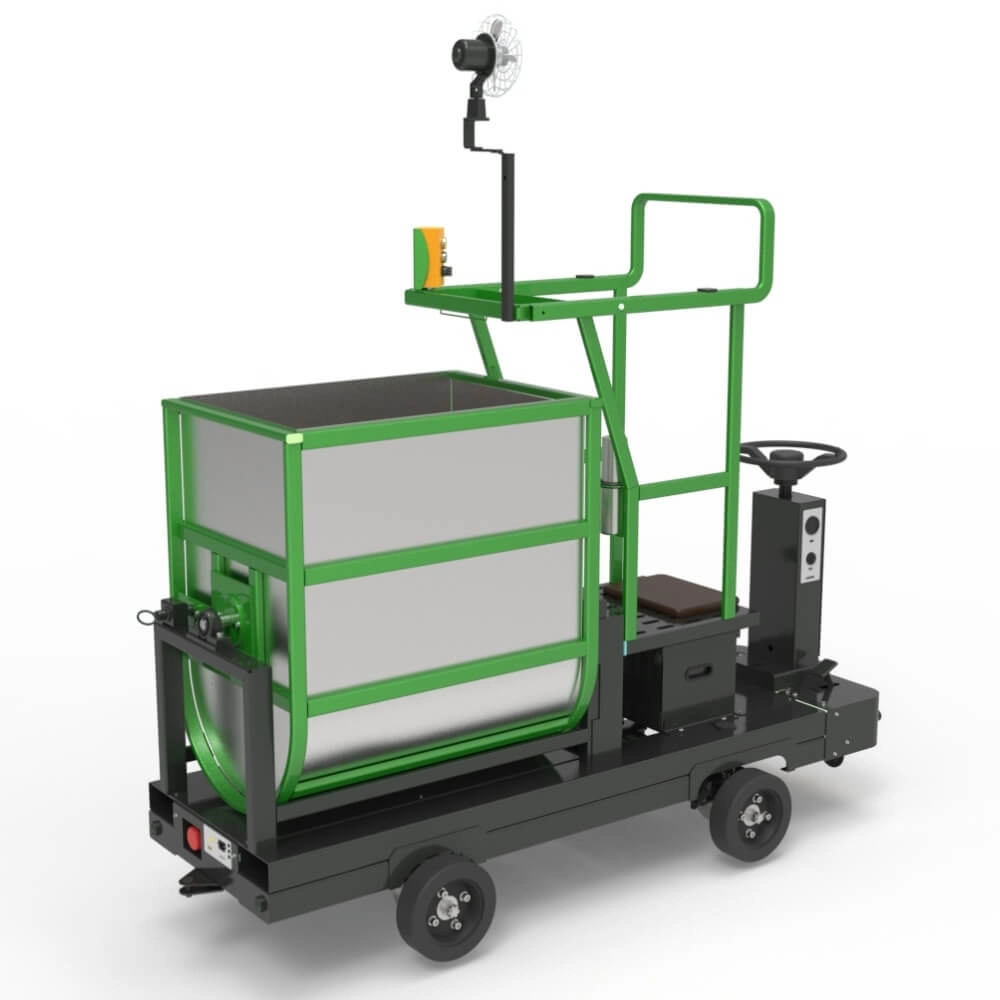
As daily harvest volume grows, picking carts may not be enough on their own. A farm also needs a practical way to move larger amounts from collection points to the packing area, sorting zone, or temporary storage space. This is where a picking dump truck becomes important.
A picking dump truck in vegetable harvesting is not a large construction vehicle. It is crop transfer equipment for agricultural use. Its job is to collect harvested produce from different points and move it to the next stage with less repeated lifting.
The main advantage is unloading speed. When workers unload everything by hand, each full load takes extra labor and time. A picking dump truck can reduce that manual unloading step and shorten the gap between harvest and packing. For farms with higher daily volume, this can affect the entire schedule, not just one task.
JQLIFT lists the WSH-ZGL Picking Dump Truck under its vegetable pickers product category. It is suitable for farms that want to connect picking carts with larger-capacity transport and unloading equipment.
Picking Cart vs Picking Dump Truck: Which One Does a Farm Need?
Short-Distance Collection
A picking cart is mainly used near the crop. It works well in greenhouse aisles, row planting areas, and smaller harvest zones where workers need a mobile loading point close by. For farms trying to reduce walking and carrying, picking carts are often the first equipment upgrade.
Larger-Volume Transfer
A picking dump truck is better for moving larger harvest batches from the greenhouse to the packing or sorting area. It supports a steadier greenhouse harvest logistics system, especially when several picking crews work at the same time.
In many commercial vegetable farms, the answer is not one machine or the other. Picking carts help at the harvesting side. Picking dump trucks handle crop transport from greenhouse to packing area. Together, they reduce idle time and make the vegetable harvesting workflow more predictable.
How to Build a More Efficient Greenhouse Harvesting Workflow
A better workflow starts with the greenhouse layout. Growers should map where workers begin harvesting, where filled carts gather, and how crops travel toward packing. The route should be simple enough to avoid crossing paths, blocked aisles, and unnecessary turns.
Picking carts should stay close to the crop. This keeps harvested vegetables off the floor and reduces hand carrying. Once carts are full, they should move to fixed transfer points rather than stopping at random places in the aisle. From those points, picking dump trucks can carry larger loads to the packing area.
The unloading area also deserves attention. If the dump truck stops far from sorting or packing, the bottleneck simply moves downstream. A better arrangement places unloading close to the next process. That reduces second handling and keeps fresh produce moving.
Equipment choice should match crop type, daily harvest volume, worker count, and aisle width. A manual picking cart may be enough for a smaller greenhouse or lighter crop. A driving picking vehicle may be more suitable for larger sites where long travel distances take too much labor. A picking dump truck becomes more useful when harvested crops need repeated bulk transfer during the day.
When Should Growers Upgrade from Manual Handling to Harvesting Equipment?
Growers should consider upgrading when manual crop handling starts to hurt labor output, crop quality, or delivery speed to the packing area. Common signs include workers leaving the picking zone too often, full baskets waiting in aisles, repeated lifting during unloading, and packing teams waiting for harvested produce.
An upgrade also makes sense when the greenhouse area grows but the labor team stays nearly the same size. In that case, better farm harvesting equipment can help workers cover more ground without adding the same level of physical strain.
For agricultural equipment distributors and wholesale buyers, this topic also has strong sales value. Picking carts, driving picking vehicles, manual picking carts, sprayers, and picking dump trucks can be presented as part of a full greenhouse harvest logistics solution, rather than separate machines with narrow uses.
How JQLIFT Supports Greenhouse and Vegetable Harvesting Operations
JQLIFT is the brand of Hangzhou Jiequ Machinery Manufacturing Co., Ltd., a manufacturer based in Xinwan Street, Qiantang District, Hangzhou, China. Since its establishment in 2015, the company has developed a manufacturing base covering more than 30 acres. Its team includes more than ten R&D technicians and more than one hundred skilled workers, supporting product development and production for high-altitude machinery and related equipment.
The company has obtained software patents, utility model patents, and invention patents. It has also received honors such as national high-tech enterprise, provincial high-tech enterprise, and specialized special new technology enterprise recognition. Its products are sold worldwide, and the company maintains cooperation with OEM partners in the domestic market.
For growers and equipment buyers, JQLIFT’s vegetable picker line gives a practical base for building a more efficient harvesting workflow. The range includes WSH-ZGL Picking Dump Truck, WSH-YGL sprayer, WSH-GL Picking Car, WSH-GGL Driving Picking Vehicle, and SWS-HGL Manual Picking Cart. These products support crop picking, movement, transport, unloading, and crop care in greenhouse and vegetable farm operations.
Conclusion
Better greenhouse harvesting efficiency comes from a cleaner workflow, not simply from more labor. Picking carts help workers collect vegetables near the crop. Picking dump trucks support faster crop transfer and unloading between the greenhouse and the packing area. When these tools match crop type, aisle layout, harvest volume, and labor capacity, farms can reduce manual handling, shorten transport time, and create a more stable harvest routine.
For commercial vegetable farms, greenhouse growers, agricultural equipment distributors, and wholesale buyers, JQLIFT offers vegetable harvesting equipment designed for practical field use, smoother crop movement, and more organized harvest logistics.
FAQs
Q1: How can a greenhouse improve harvesting efficiency during peak season?
A1: A greenhouse can improve harvesting efficiency by reducing walking distance, keeping picking carts near workers, setting fixed transfer points, and using picking dump trucks to move harvested crops toward the packing area. This helps cut waiting time and repeated manual handling.
Q2: What is the best picking cart for vegetable harvesting?
A2: The best picking cart for vegetable harvesting depends on crop type, aisle width, daily harvest volume, and worker movement. A manual picking cart may suit smaller greenhouse areas, while a driving picking vehicle may be better for larger farms with longer travel distances.
Q3: When should a farm use a picking dump truck for harvesting?
A3: A farm should use a picking dump truck when harvested crops need to move in larger batches from the greenhouse to the sorting or packing area. It is especially helpful when hand unloading slows the workflow or several picking teams are working at the same time.
Q4: How do picking carts reduce harvesting labor?
A4: Picking carts reduce harvesting labor by keeping a mobile loading point near the crop. Workers spend less time carrying full containers across the greenhouse and more time harvesting, which can improve daily output and reduce fatigue.
Q5: What equipment is needed for a better vegetable harvesting workflow?
A5: A better vegetable harvesting workflow may include greenhouse picking carts, manual picking carts, driving picking vehicles, crop transport equipment, picking dump trucks, and sprayers. The right mix depends on the farm layout, crop type, and harvest volume.


