
Scissor Lift Working Height vs Platform Height: Which Figure Matters?
A product grid might put “working height: 5 m” beside “platform height: 3 m.” It is easy to read the first as where the deck goes, especially when comparing several models at once. It is not: one number is the deck’s maximum position, the other a reach figure assigned by the manufacturer. The distinction matters at a high maintenance point and again when the lowered lift has to clear a doorway.
Write down the job height before opening the catalogue. Platform height answers how high the deck can go; working height is intended to describe reach from the deck. Since makers do not always calculate it on the same basis, the specification for the exact model needs to spell out what the figure means.
What scissor lift platform height measures
Platform height is measured from the supporting surface to the work deck. A model specification may show both a maximum and a minimum. The maximum is the highest listed deck position; the minimum is the lowered position. Neither one describes the full machine.
That distinction becomes practical at a doorway. The railings, controls or other parts can extend above the platform, so a machine’s travel height is a separate check. Look for the stated overall or machine height in the configuration that will pass through the route. If the catalogue lists more than one height, ask which applies with the guardrails folded or installed, as relevant to that model.
The SF0.3-3.0 entry in JQLIFT’s catalogue puts the distinction in one row: 3,000 mm maximum platform height, 5,000 mm maximum working height, 4,060 mm maximum machine height and 1,725 mm overall height when stowed. For this model, the published working-height figure sits 2,000 mm above the platform-height figure. That relationship is shown in this model’s row; it should not be carried over as a formula for every lift. The stowed dimension answers a separate route or storage question.
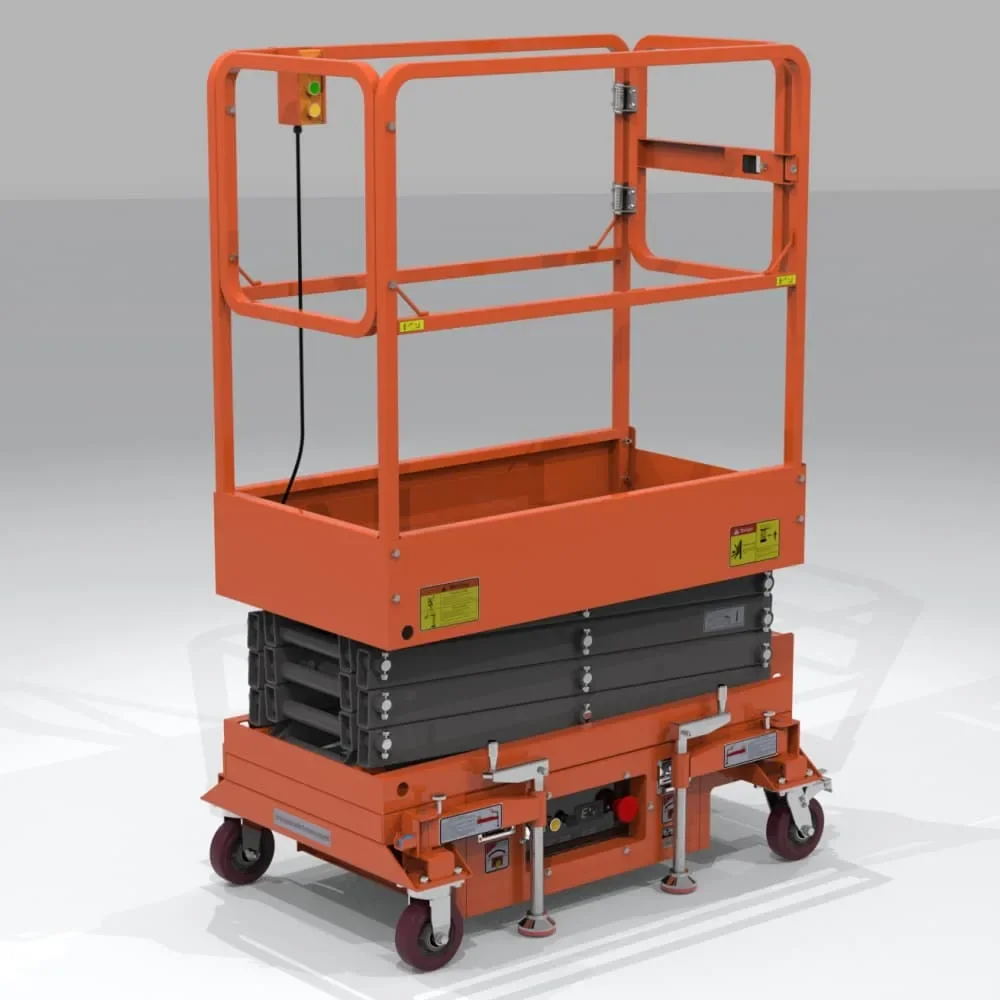
What scissor lift working height means
Manufacturers use working height as a reach figure for someone on the platform. One catalogue may add an assumed operator reach to platform height; another may apply a different convention. Short catalogue entries often leave the method unstated. A comparison can look exact while pairing unlike figures, so the model documentation should travel with the number.
A 5 m reach figure says nothing about the path from the deck to the work point. A cable tray between the operator and a ceiling fitting can rule out a position that looks reachable in a catalogue. Check the room needed for the person and tools as well. The lift can raise the deck, but it cannot slide sideways around a beam or guardrail.
Suppose a light fitting sits 4.7 m above the floor. Note whether the job is an inspection or fastening work; the operator and tools may need different clearance. Then compare the task with the model’s two published figures. A fixed 2 m allowance should not be added to platform height unless that manufacturer documents it for the model.
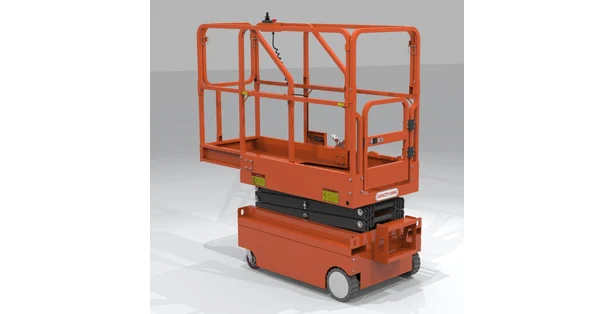
Which figure should a buyer compare?
For a quote comparison, keep these checks on separate lines:
- Maximum platform heightfor the deck position, with the supporting surface and model instructions in mind.
- Working heightfor the stated operator reach, alongside the manufacturer’s definition and the actual position of the task.
- Lowered overall heightfor a doorway or storage check, matched to the travel configuration and guardrail arrangement.
- Maximum machine or overall heightwhen the equipment is elevated, using the catalogue’s definition of what is included.
On a comparison sheet, keep like fields together. A competitor’s 5 m working height and JQLIFT’s 3 m platform height do not describe the same point. When a listing shortens both to “lift height,” request the full field name before ranking the models.
The route deserves a separate check. A lift could suit the work point and still fail at the warehouse entrance when lowered, or need more turning room than the aisle provides. Check the dimensions for the travel configuration; platform height tells nothing about the route.
A practical height check before requesting a quote
A supplier can compare models more accurately when the enquiry includes:
- Work-point measurement.Floor to task, taken where the lift will stand. Note a floor slope or a change in ceiling height along the route.
- The job itself.Inspection, fastening and installation may call for different clearance. Mention whether the target is overhead or off to one side.
- Named height fields.Maximum platform height and working height, with the definition for the latter. Keep overall machine height separate.
- Route and operating conditions.Door clearance, floor condition, load and platform dimensions can change the shortlist. Use the model instructions to confirm operating limits.
JQLIFT’s ASF small scissor lift range and SF semi-electric mini scissor lift range pages show platform and machine dimensions by model. They do not list working-height figures alongside those entries for every model, so check the exact specification sheet before comparing reach. The small scissor lift buying guide covers broader checks such as dimensions and access.
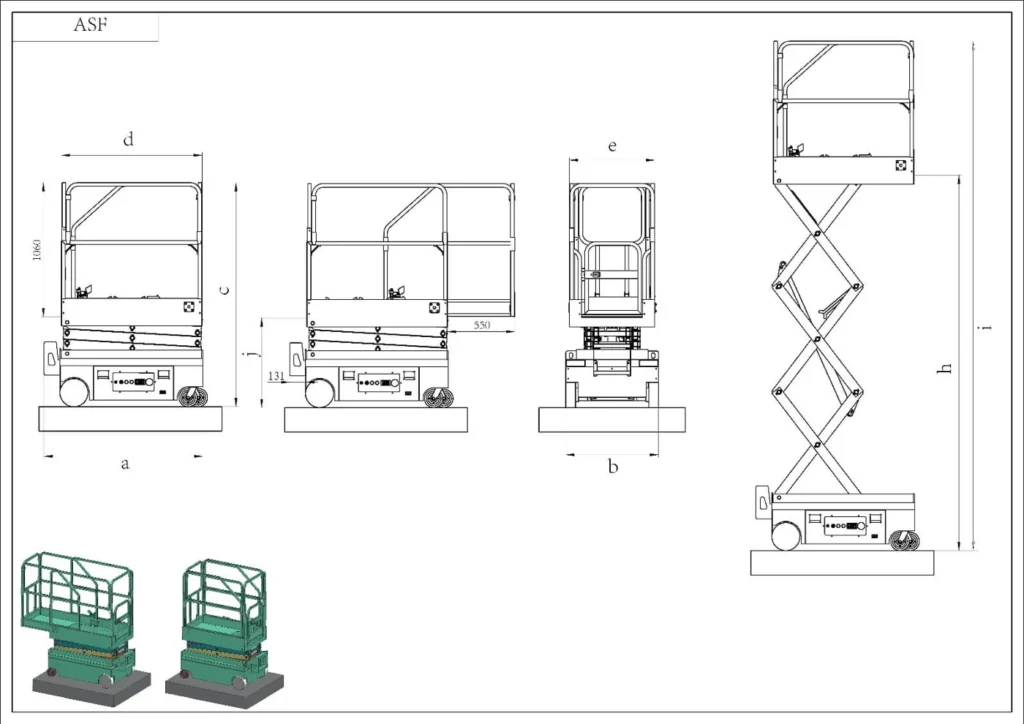
A simple example
Consider a maintenance point 4.4 m above the floor. JQLIFT’s ASF0.3-3.9 row shows 3,900 mm maximum platform height and 5,900 mm maximum working height. The second number is larger, but the row alone cannot confirm the work is suitable.
A pipe may cross the work point. The operator may need a tool that changes the required clearance, or the fitting may be off to one side. Check the working-height definition, model instructions, platform load and the space at the task. If the doorway is restricted, the lowered machine height and the route width become part of the same decision.
Putting the figures into a quote request
Send the measured work point with a short description of the task and any beam, pipe or doorway that limits access. Add the exact model if a shortlist already exists. The reply should identify maximum platform height, working height and its definition; a restricted route also calls for the applicable lowered overall height. This gives procurement a direct basis for comparing quotations without treating one headline number as the whole answer.


