
Scissor Lift Safety Checklist Daily Inspection & Operation Guide
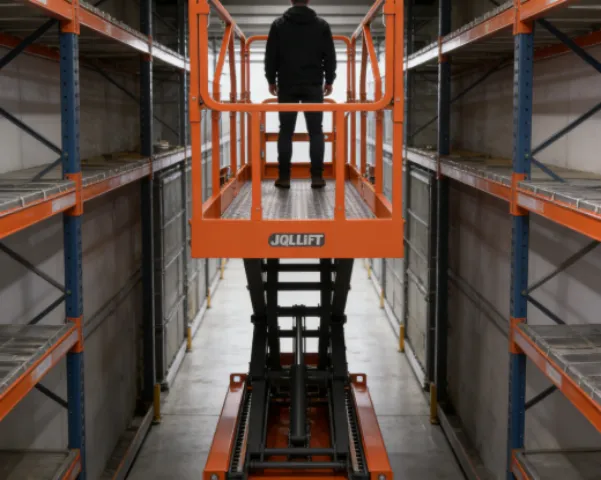
If you manage EHS, projects, or equipment on site, the real worry is not just a machine breaking down. It is the missed check, the loose rail, the battery issue nobody logged, the operator who says “it looked fine” after the shift already started. A solid scissor lift safety checklist helps you catch those problems before the platform goes up. It also gives you something practical, not theoretical, when an audit or incident review lands on your desk.
That is also why JQLIFT is worth a quick look if you are comparing suppliers with a safety-first mindset. The company says it has been building aerial machinery in Hangzhou since 2015, operates on a site of more than 30 acres, and has a team with over ten R&D technicians and more than one hundred skilled workers. Its official profile also highlights patent work, global sales, and pre sale plus after sale support. That kind of background does not replace safe operation, of course. Still, it usually tells you whether a manufacturer treats build quality and field service as real issues or just brochure talk.
Why Does a Scissor Lift Safety Checklist Matter?
A scissor lift safety checklist matters because most site problems start small. A bad emergency stop. A damaged gate. Low battery. A missing manual. None of that looks dramatic at first glance. Then the lift enters service, traffic picks up, and a small issue becomes a stop-work issue. A consistent checklist gives you the same inspection rhythm across operators and shifts, which is exactly what managers need when they are trying to reduce accidents, violations, and missed defects.
A Daily Routine Catches Small Problems Early
A daily scissor lift safety checklist should happen before the first use of the day or shift. That timing matters. Once the work starts, shortcuts creep in. People are waiting. A lane is blocked. Someone says they only need five minutes. That is usually when basics get skipped.
It Gives You a Clear Go or No-Go Call
A checklist is also a decision tool. If defects show up, the lift should not stay in service just because the task looks minor. The record should note the defect, trigger maintenance, and show who signed off. That paper trail is not glamorous, but it saves a lot of trouble later.
What Should Be Included in a Scissor Lift Inspection Checklist?
A good scissor lift inspection checklist should be plain enough for operators to use and detailed enough for supervisors to trust. The goal is not to make the form longer. The goal is to cover the parts that fail, loosen, drain, crack, or get ignored in day-to-day work. A pre use scissor lift inspection checklist should always match the manufacturer’s manual, but some items show up again and again on serious sites.
Controls and Emergency Functions
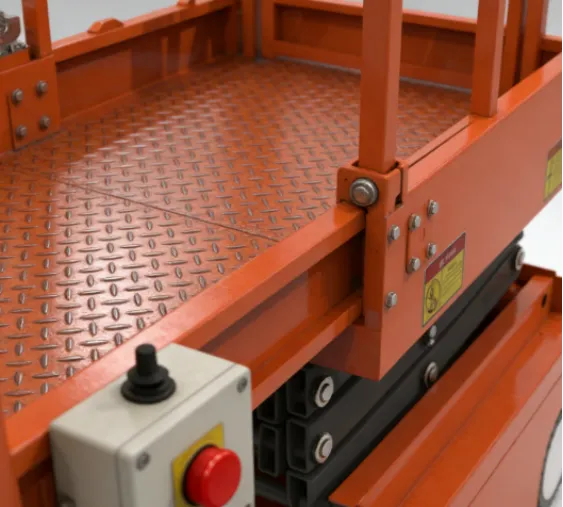
Start with ground and platform controls. Lift, lower, steering, brakes, and emergency stop all need to work as intended. If the machine has an emergency lowering device, check that too. On the ASF small scissors product page, the chassis electrical control section includes an emergency lowering device and a battery level display. Those are not small details. They belong on a real scissor lift safety inspection because they affect both operation and recovery when something goes wrong.
Guardrails, Gates, and Platform Surface
This is where scissor lift guardrail safety gets real. Rails must be present, secure, and complete. Gates or access points should close properly. The platform surface should be clean and not slick. On the same compact electric model, the stairs use checkered steel plates to help prevent slipping, and the platform surface is made with checkered plate as well. That kind of surface detail is easy to overlook until boots are wet and the shift is running late.
Battery, Hydraulic, Wheels, and Structure
A proper scissor lift daily inspection should also cover hydraulic hoses and fittings, battery and wiring connections, tire condition, frame integrity, and pivot pins. If the machine feels different during travel, do not brush that off. A slow turn, a rough stop, or a weak rise usually means something needs attention.
Manuals, Labels, and Sign-Off
The operator’s manual should be on board, labels should be readable, and defects should be logged before the lift goes back into service. This is where a scissor lift operator safety checklist helps. It ties the machine condition to the operator’s basic duty to inspect, report, and stop work when something is off.
Why Does Guardrail Use Need Special Attention?
Guardrails cause more trouble than many teams admit. People see rails and assume the fall hazard is handled. It is not that simple. Good rails protect you only when they are complete, intact, and used the right way. The basic rule is very blunt: stay on the platform floor, not on the rails, and keep the task within easy reach so you do not lean out.
Stay on the Platform Floor
Safe work starts with boring habits. Stand on the work platform. Do not sit on the rails. Do not climb them to gain a few extra inches. On busy sites, that bad habit shows up more often than people like to admit.
Keep the Job Within Easy Reach
If you need to stretch, the lift is in the wrong spot. Reposition it. That takes an extra minute, sure, but it is better than leaning away from the platform and making a stable machine unstable for a very avoidable reason.
When Should You Run a Scissor Lift Safety Checklist?
A scissor lift safety checklist should be completed before first use, after maintenance, and any time the machine has taken a hit or starts acting strangely. If the lift moves to a new area, check the site again. Conditions change. One end of a warehouse floor may be smooth and clear. The other end may have debris, traffic, slopes, or overhead hazards near a door frame.
Before the First Use of the Shift
This is the simplest rule, and one of the most skipped. Run the check before the shift starts, not halfway through the first job. That is how a scissor lift inspection checklist stays useful instead of becoming paperwork after the fact.
When the Work Area Changes
If the lift goes near traffic, fixed objects, or electrical hazards, reassess the area. Safe movement normally follows the manufacturer’s instructions, and safe positioning means firm, level surfaces and clearance from overhead hazards and power sources.
What Safe Operation Basics Are Easy to Miss?
Most scissor lift safety rules are not complicated. People just stop respecting them when the task feels routine. That is when incidents happen.
Check the Ground and Load Limits
Use the lift on suitable ground. Do not exceed the load rating. On the compact electric model mentioned above, the max load is 300 kg, the extended platform load is 100 kg, and the inner platform can extend 550 mm with a foot-operated locking mechanism. It is also stated to be suitable only for paved surfaces. Those numbers matter because safe use starts with the actual machine in front of you, not a guess.
Do Not Keep Working With Known Defects
If inspection finds a problem, tag the lift out, report it, and hold it out of service until it is cleared. That is the short answer to how to inspect a scissor lift responsibly. Find the issue, write it down, and stop pretending it will fix itself by the next shift.
FAQ
Q1: What should be included in a scissor lift safety checklist?
A: A scissor lift safety checklist should cover controls, emergency stop functions, guardrails, gates, platform condition, hydraulic parts, battery and wiring, wheels, frame integrity, labels, manuals, and defect sign-off.
Q2: How often should a scissor lift inspection checklist be completed?
A: A scissor lift inspection checklist should be completed before the first use of the day or shift, and again after maintenance, impact, or major changes in the work area.
Q3: Are guardrails enough for scissor lift fall protection?
A: Guardrails are a primary protection measure, but they only work when the system is in place and the operator stays on the platform floor and keeps work within easy reach.
Q4: What should an operator do if a scissor lift fails inspection?
A: The operator should report the defect, request maintenance, and keep the machine out of service until it is repaired and cleared for use.
Q5: Who is responsible for daily scissor lift inspections?
A: The operator carries out the pre-use check, while supervisors and site managers are responsible for training, records, and making sure unsafe equipment does not stay in service.


