
Vertical Mast Lift vs Scissor Lift: Which Is Better for Indoor Maintenance?
The comparison of vertical mast lift vs scissor lift usually appears when a maintenance team needs safer and more efficient access for indoor overhead work. In real projects, the challenge is rarely just height. A warehouse aisle may be too narrow for wide equipment. A hotel corridor may need to remain open during service hours. A workshop may require enough platform space for tools, spare parts, and longer repair work. These site details often decide which indoor maintenance lift is more suitable.
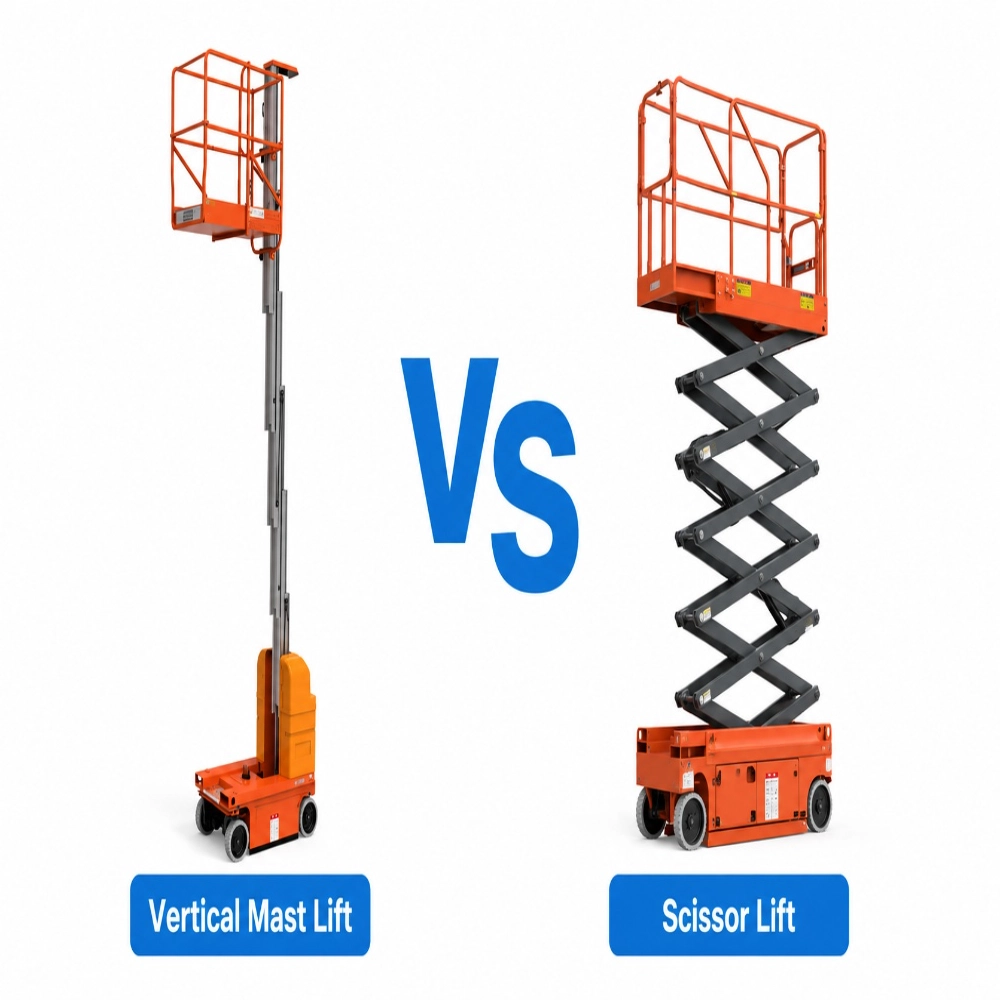
For B2B buyers, the purchase decision should begin with the jobsite. Platform height, working height, rated load, machine width, turning space, floor condition, operator number, and daily use frequency all affect equipment selection. A compact aerial work platform for ceiling inspection is different from a small scissor lift used for factory installation. A distributor or rental supplier also needs equipment that can match common customer applications, not only one special project.
JQLIFT provides both vertical mast lifts and scissor lift solutions for indoor aerial work. The product range covers single mast aluminum alloy lifts, double mast aluminum alloy lifts, all-electric aluminum alloy lifts, hydraulic small scissors, all-electric small scissors, and semi-electric small scissors for warehouses, workshops, commercial buildings, and facility maintenance.
What Is a Vertical Mast Lift?
A vertical mast lift is a compact aerial work platform designed to raise an operator vertically while keeping the machine footprint small. In search behavior, buyers may also use terms such as single man lift, one man lift, personnel lift, indoor man lift, compact indoor lift, and vertical personnel platform.
This type of equipment is commonly selected for narrow indoor spaces where frequent movement is required. Office buildings, schools, hospitals, hotels, shopping malls, libraries, and warehouse aisles are typical use cases. The machine often needs to pass through doorways, move close to walls, work beside shelves, and reach ceiling fixtures without blocking the surrounding area.
JQLIFT’s vertical mast lift series includes single mast, double mast, and all-electric aluminum alloy lift models. These machines are built for indoor maintenance tasks where compact size, vertical reach, and controlled positioning are more important than a wide working platform.
What Is a Scissor Lift?
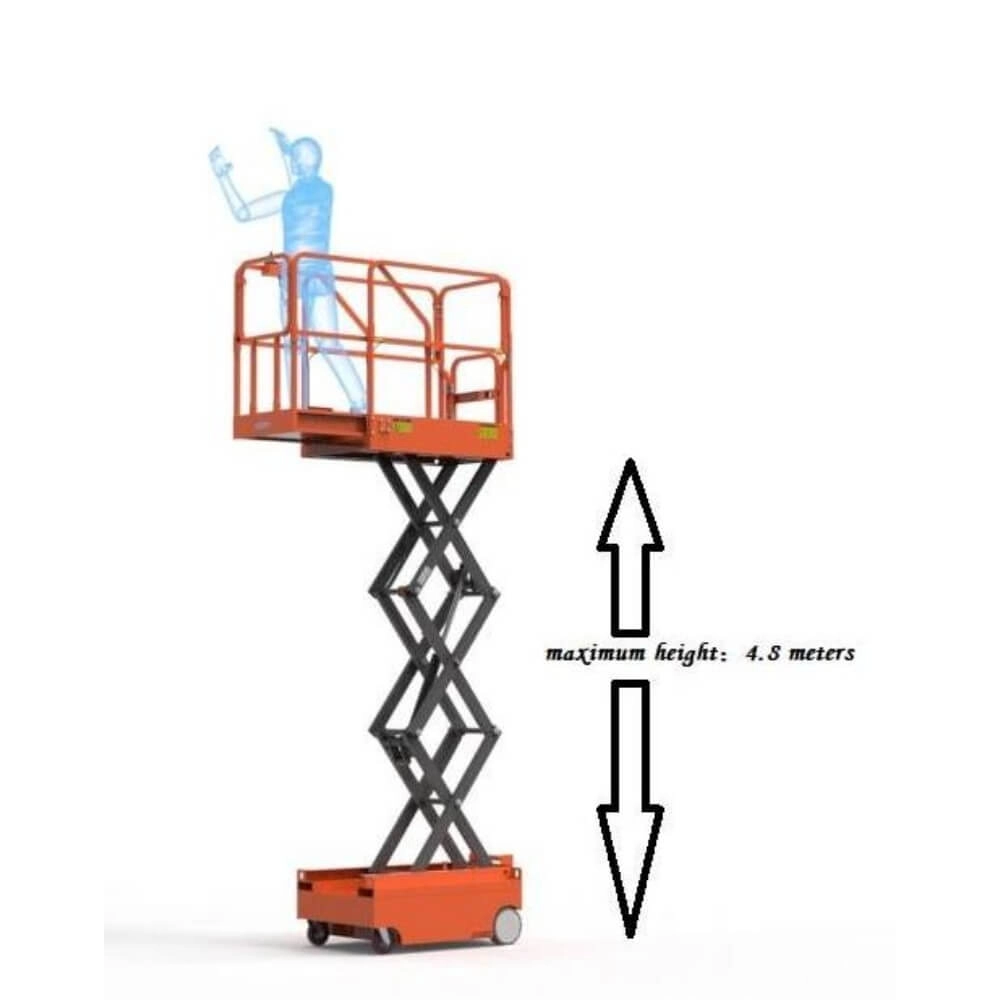
A scissor lift uses a crossed lifting structure to raise a platform vertically. Compared with many vertical mast lifts, a small scissor lift usually provides more standing room. This larger platform area is useful when the operator needs to carry tools, replacement parts, inspection devices, or installation materials.
In indoor maintenance, scissor lifts are often used in warehouses, factories, workshops, retail interiors, equipment rooms, and service areas. They are suitable for flat indoor floors where the machine has enough space to move and position safely. For ceiling installation, lighting repair, overhead pipe inspection, and warehouse maintenance, a small scissor lift can provide steadier support than a ladder.
From a procurement perspective, the advantage is practical. A scissor lift gives workers more room to operate and helps reduce repeated climbing during longer jobs. A vertical mast lift fits tighter routes, while a scissor lift fits open indoor areas that require more platform space.
Key Differences for Indoor Lift Selection
Space, Width, and Access Route
Space is usually the first point checked by experienced buyers. A vertical mast lift is more suitable for narrow indoor routes because of its upright and compact structure. It works well for ceiling checks, lighting repair, HVAC inspection, electrical service, wall maintenance, signage work, and aisle operation.
A scissor lift needs more surrounding space. This does not make it less useful. It simply fits a different work condition. In a warehouse bay, workshop, factory floor, assembly area, or open retail space, the larger platform can make the job more stable and less restrictive. The operator can stand more comfortably, adjust position more easily, and keep tools within reach.
Platform Area and Rated Load
Platform area directly affects work efficiency. A vertical mast lift is commonly chosen for one-person maintenance with light tools. It suits short repair tasks, repeated inspections, and indoor jobs that require movement between several work points.
A scissor lift becomes more practical when the operator needs extra room for tools or components. For example, a warehouse technician repairing overhead lights may need spare lamps, testing tools, and hand tools on the platform. A factory maintenance worker servicing cable trays or ceiling ducts may need more body movement during installation. In these cases, a compact scissor lift can reduce unnecessary up-and-down movement.
Working Height and Application Range
Working height should be confirmed before placing an order. Product names such as mini scissor lift, single man lift, or indoor personnel lift are not enough for selection. Buyers should check platform height, working height, rated load, machine width, access route size, and floor condition.
For higher indoor access, a double mast aluminum alloy lift can be a suitable option because it provides vertical reach while keeping the structure relatively compact. For lower to medium-height maintenance, a small scissor lift may be enough, especially when platform space is more important than maximum height.
When a Vertical Mast Lift Is More Suitable
A vertical mast lift is usually the better match when the work area is narrow, the task is handled by one operator, and the equipment needs to move frequently. It is suitable for ceiling inspection, light replacement, electrical repair, HVAC maintenance, signage installation, and general facility service.
This type of personnel lift is also useful when the machine must move through corridors, doorways, or elevators. Many commercial buildings cannot use oversized equipment without disturbing normal operation. A compact indoor lift helps the maintenance team reach the work point, complete the task, and leave the area with less disruption.
For distributors, rental companies, and importers, vertical mast lifts cover a wide customer base. Many end users need a safer alternative to ladders, but they do not always require a large platform or heavy-duty capacity.
When a Scissor Lift Is More Suitable
A scissor lift is often the better choice when the task requires more standing room, heavier tools, or longer work at height. It is suitable for warehouse maintenance, workshop repair, indoor installation, factory service, ceiling work, and overhead inspection.
If the floor is flat and the work area is open, a small scissor lift can make maintenance work more efficient. The operator has more space to stand, place tools, and handle small parts. The platform also reduces repeated climbing, which is important in daily repair and installation work.
For B2B buyers comparing manual, semi-electric, and electric scissor lifts, the final choice should follow actual use conditions. Occasional indoor repair may only need a simple model. Daily maintenance in a warehouse or factory may require powered lifting, easier movement, and a more comfortable platform layout.
About Hangzhou Jiequ Machinery Manufacturing Co., Ltd.
Hangzhou Jiequ Machinery Manufacturing Co., Ltd. was established in 2015 and is located in Xinwan Street, Qiantang District, Hangzhou, China. The company covers more than 30 acres and focuses on aerial machinery manufacturing. Its team includes more than ten R&D technicians and more than one hundred skilled workers.
The company has obtained dozens of software patents, utility model patents, and invention patents. It has also been recognized as a national high-tech enterprise, provincial high-tech enterprise, and specialized special new technology enterprise. Its products are sold to global markets, and the company also works with domestic OEM partners.
For procurement managers, this background is important. A reliable indoor lift supplier should not be judged only by price. Manufacturing experience, technical capability, product consistency, customization support, and service response all affect long-term equipment value.
Conclusion
There is no single answer in the vertical mast lift vs scissor lift decision. A vertical mast lift is usually better for narrow indoor spaces, single-person maintenance, frequent movement, and compact building access. A scissor lift is often more suitable for wider work areas, larger platform needs, heavier tools, and longer tasks at height.
Before purchasing an indoor maintenance lift, buyers should confirm platform height, working height, rated load, aisle width, doorway size, floor condition, operator number, and use frequency. With both vertical mast lifts and scissor lift solutions in its product range, JQLIFT provides practical choices for facility maintenance, warehouse repair, factory service, and indoor aerial work.
FAQs
Q1:Which is better for indoor maintenance, a vertical mast lift or a scissor lift?
A1:A vertical mast lift suits narrow spaces and one-person work. A scissor lift suits larger platforms and heavier tool needs.
Q2:How do I choose the right indoor lift for warehouse maintenance?
A2:Check aisle width, shelf height, floor condition, rated load, and task type. Narrow aisles usually fit vertical mast lifts. Open floors often fit small scissor lifts.
Q3:Why is a vertical mast lift useful for facility maintenance?
A3:It is compact, easy to position, and suitable for lighting repair, HVAC inspection, ceiling checks, and electrical service.
Q4:When should a business choose a small scissor lift instead of a single man lift?
A4:Choose a small scissor lift when the work needs more standing room, heavier tools, or longer operation at height.
Q5:What details are needed before requesting a quote for a vertical mast lift or scissor lift?
A5:Prepare platform height, working height, rated load, doorway size, aisle width, floor condition, power type, and main application.


