
How to Improve E-commerce Warehouse Picking Efficiency for Small, Frequent Orders
Efficiency in e-commerce warehouse picking has become a major issue for distributors, online retailers, 3PL fulfillment centers, and small warehouses that process large numbers of low-volume orders every day. Unlike pallet-based shipping, where picking may involve placing a pallet of cartons on a stock picker or on the floor, e-commerce picking often requires retrieving a single carton, tool, accessory, or packaged item as part of a small order. Although the order itself may be small in terms of product quantity, the movement required to pick and complete the order is not.
A typical e-commerce warehouse picking process involves operators walking down aisles, reading SKU labels at picking locations, reaching for items above shoulder height, placing products on a picking cart, and repeating these actions hundreds of times during a shift. Simple carts, ladders, and large pallet equipment can create hidden delays in this process. Longer aisle travel, fatigue caused by picking from high shelves, and increased traffic in the aisles all slow down order fulfillment for B2B buyers.
Therefore, improving picking speed is a key function in an e-commerce warehouse. However, the greater challenge is building a picking process that can remain efficient and consistent as daily order volume continues to grow.
Understand Where Picking Time Is Lost
Poor SKU Placement
One of the first causes of delay is often found in the warehouse picking layout. Fast-moving SKUs may be stored in any available space in the warehouse instead of being placed in the most efficient picking locations. As a result, small orders require long travel paths, and operators spend more time walking between shelves than picking products.
High-volume products should be assigned to locations nearest to the packing area. Related products should be placed in nearby zones, while the slowest-selling items should be moved away from the main picking path. For an e-commerce warehouse that stores many seasonal SKUs, reviewing SKU slotting only once per year may not be effective. The review should be carried out whenever order patterns change.
Too Much Walking and Climbing
Even when a warehouse processes small orders, the physical work does not necessarily become easier. Picking still involves bending, stretching, climbing, and searching for products. In warehouses with medium to high shelving, using ladders to pick products may appear inexpensive at first, but it can reduce productivity and create safety hazards. Large forklifts are typically designed for pallet handling and are not well suited for frequent carton picking or order picking in very narrow aisles.
The right warehouse order picking equipment can help reduce unnecessary walking, climbing, and repositioning when stock is stored above normal reach height. A compact electric order picker is suitable for these types of stock locations.
Use Better Picking Methods for Small Orders
Batch Picking for Repeated SKUs
Batch picking is a method used for e-commerce orders that often contain similar or repeated items. Similar to a production workflow, multiple orders are picked in one batch, and the operator separates the individual orders on the way to, or at, the packing area. This can significantly reduce picking time because the operator does not need to walk to the same shelf location for every single order.
For small warehouses, such as a 5,000 sq. ft. facility, a simple batch picking process may be enough at the beginning. Order grouping rules such as picking similar items stored close together, picking larger items before smaller items, or picking items with earlier packing deadlines first can provide meaningful improvements in picking productivity.
Zone Picking for Larger Storage Areas
When inventory is spread across several aisles or storage sections, zone picking can help control movement. Each operator works in a fixed zone, and orders move from one area to another as needed. This method is especially suitable for warehouses handling many SKUs, spare parts, accessories, or mixed retail goods.
Selecting the right picking method for the right building is important. A narrow stockroom, a wholesale parts warehouse, and a large e-commerce fulfillment center each require different types of picking solutions for e-commerce operations.
Match Equipment to the Real Picking Environment
Choose Compact Equipment for Narrow Aisles
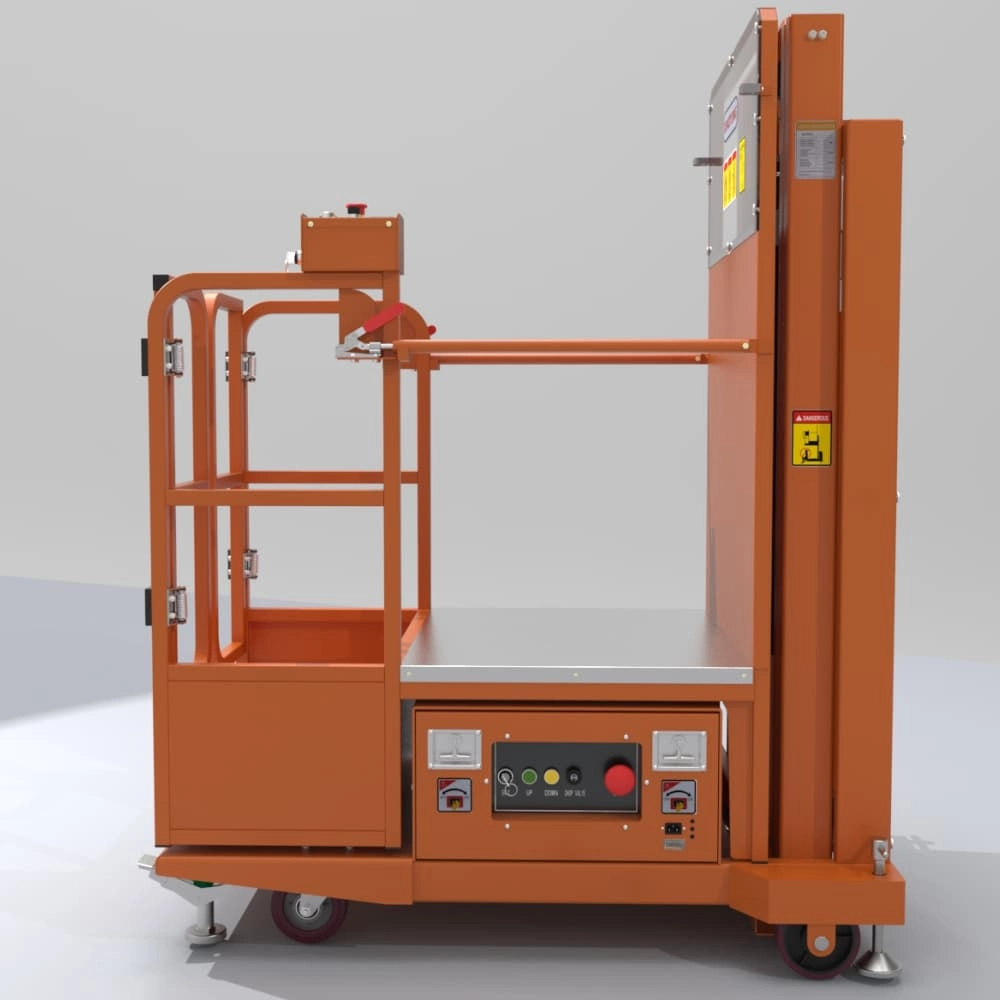
For small and frequent order picking, the size of the picking equipment is critical. Large picking units can block aisles and require wide turning spaces to move around other workers in the warehouse. JQLIFT’s OPC Picker features a small footprint, double drive wheels, and 360° in-situ steering. The various models in the OPC series have an overall width of 750 mm and a minimum turning radius of 1700 mm. This makes the equipment suitable for typical rack warehouses where space is limited.
When comparing compact warehouse picking equipment, specifications such as body size, turning radius, lift height, and platform size are often more relevant to a buyer’s needs than the highest lift height offered by a model. A narrow body, smooth controlled turning, stable lifting, and a practical platform are key factors in improving daily picking productivity.
Improve High-Shelf Picking
E-commerce warehouses often store products from floor to ceiling in order to maximize storage capacity. Because these products are usually small to moderate in size, picking them from high shelves can become slow and inefficient when ladders are used.
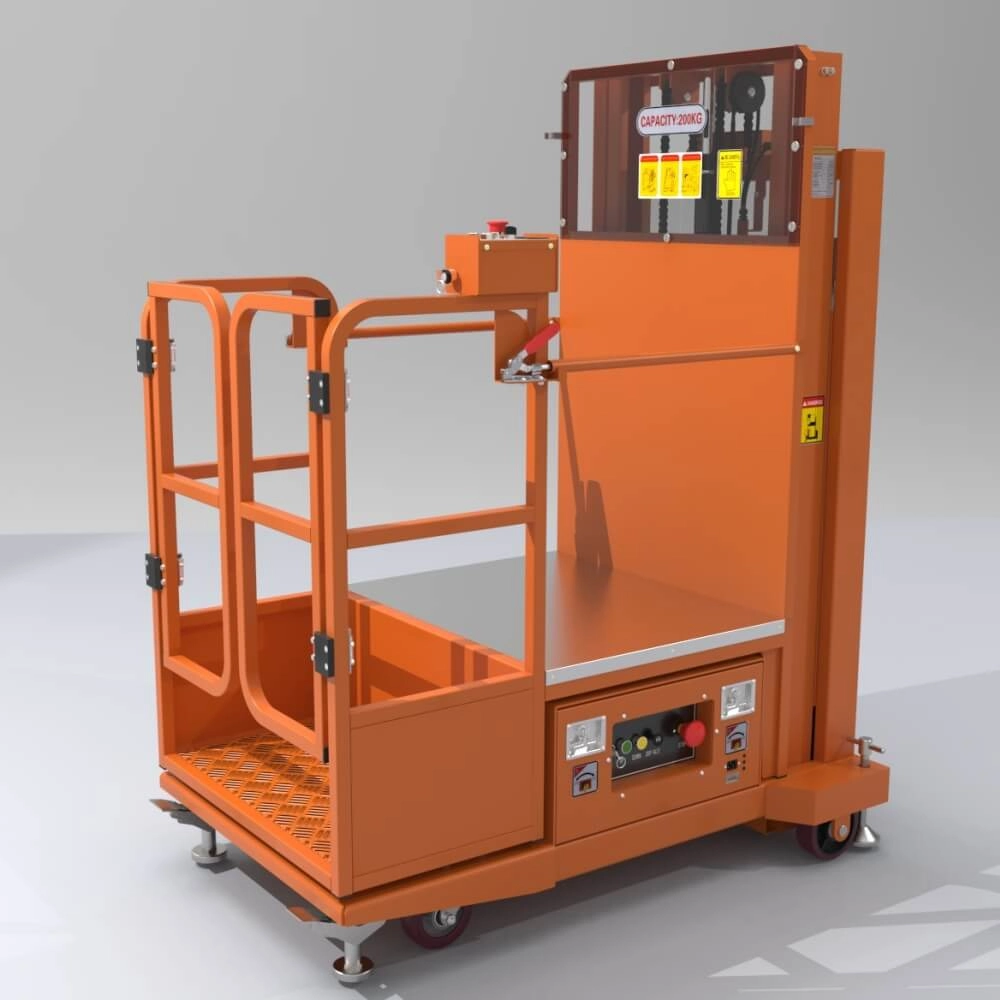
The JQLIFT OPC03M Order Picker has a working height of up to 3000 mm and is suitable for picking from high shelves. The OPC04M is also available with a working height of up to 4000 mm. Both forklifts are designed with safety in mind, and the cargo platform and man-carrying platform can be operated from two separate areas, making high-shelf picking more practical.
For warehouses with higher access requirements, JQLIFT also offers aerial order pickers, including the T3 Semi-electric Reclaimer and the DAT Fully Electric Reclaimer. T3 models can reach up to 4,500 mm while carrying a load of 200 kg. The DAT series can also reach up to 4,500 mm, with a maximum load of 300 kg. Small order picking, retail stockrooms, warehouse replenishment, and high-position goods handling are examples of applications where these lift trucks can add value.
When selecting warehouse order picking equipment from JQLIFT, buyers should compare shelf height, aisle width, platform height, rated load, pick speed, floor type, and average picking transactions per day to select the correct product.
Build Safety Into the Picking Process
Safety and efficiency are often viewed as separate goals. In warehouse picking, however, they are closely connected. Unsafe climbing, unstable reaching, and heavy traffic from pallet equipment used for put-away tasks all take time and slow down the picking process. A smoother picking process helps operators work more efficiently, especially when they feel safe and can pick goods at a proper working height.
JQLIFT order picker forklifts are equipped with a variety of features to support operator and pedestrian safety in indoor warehouses, supermarkets, stockrooms, and distribution centers. Depending on the model, JQLIFT forklifts are equipped with practical safety features such as emergency stop, mechanical emergency descent, guardrail locking, anti-slip standing surfaces, blue guiding lights, hazard lights, electronic level protection, and tilt-up prevention while traveling upward.
Why JQLIFT Fits B2B Warehouse Projects
Procurement teams usually need more than a machine catalog. They require a supplier with manufacturing background, a variety of products and services, and the ability to help address the practical challenges of real warehouse operations.
Hangzhou Jiequ Machinery Manufacturing Co., Ltd. is a China-based manufacturer founded in 2015 and headquartered in Hangzhou, China. The company has a land base of more than 30 acres and has established a modern high-altitude machinery manufacturing base. It has more than 10 R&D personnel and over 100 manufacturing workers.
JQLIFT holds software patents, utility model patents, invention patents, and honors such as recognition as a National High-tech Enterprise. These factors demonstrate JQLIFT’s product development capability and production capacity for overseas distributors, warehouse equipment dealers, supermarkets, and e-commerce operators.
As a mobile lift and aerial work platform manufacturer, JQLIFT offers a range of products to support warehouse access, including aerial order pickers, vegetable pickers, scissor lifts, vertical mast lifts, and scissor lift tables. This makes JQLIFT a relevant brand reference for buyers seeking practical warehouse access equipment rather than machines designed for a single task.
Conclusion
The growth of small, frequent orders in online retail requires improvements in SKU placement, picking methods, high-shelf access, and material handling equipment. Methods such as batch picking and zone picking can reduce unnecessary travel, while compact electric order pickers can help operators pick faster and access products on narrow aisles and high racks more efficiently.
For B2B buyers, choosing the correct picking tool is best achieved by matching warehouse conditions with equipment features. Aisle width, platform height, load capacity, turning radius, travel speed, battery power, and shift frequency should all be considered. A warehouse that needs support in selecting the proper model or customized picking tool can benefit from a warehouse picking equipment consultation to review application details.
FAQs
Q1: Why is small order picking slow in an e-commerce warehouse?
A: Small order picking in e-commerce warehouses is often slow because operators spend too much time walking, searching for products, climbing, and moving between different shelf locations to pick only a few items. This can be caused by poor SKU placement, high shelf locations, narrow aisles, and unsuitable picking equipment.
Q2: How can a warehouse reduce picking time for frequent small orders?
A: A warehouse can reduce picking time by keeping fast-moving products closest to packing points, storing related products near each other, and using batch picking, zone picking, and suitable warehouse order picking equipment. By selecting the right picking equipment, companies can reduce walking distance and improve access to products stored at height.
Q3: Is a compact electric order picker useful for e-commerce warehouses?
A: A compact electric order picker is suitable for e-commerce warehouses that pick many small online orders stored on middle or upper shelves. The order picker allows operators to pick products at a safer working height. Its compact structure also helps it move through narrow aisles and reduces the need for ladders or large pallet equipment during picking.
Q4: What equipment should buyers choose for high-shelf picking?
A: When selecting equipment for high-shelf picking, buyers should compare platform height, rated load, turning radius, machine width, travel speed, safety features, and battery capacity. JQLIFT’s OPC Picker is designed as a practical picking unit for high-rack warehouse picking. The T3 Semi-electric Reclaimer and DAT Fully Electric Reclaimer are also options for high-ceiling supermarket stockrooms and frequent small-load handling.
Q5: How do buyers know which warehouse order picking equipment is suitable?
A: Buyers should check warehouse aisle width, shelf height, average order size, the number of SKUs on the shelf, floor condition, picking frequency, and required load capacity. Equipment that fits the actual picking route will usually be more effective than equipment selected based only on maximum lift height.


