
The Aluminum Alloy Lift 7 Advantages of Aluminum Mast Lifts to Facilitate Aerial Jobs
Aluminum alloy lifts act as small aerial work platforms made from strong aluminum alloy. These units mix a nice look with tiny size, light weight, good movement, and fine reach. Their light body build gives solid lift power even in tight areas. Places like factories, hotels, restaurants, stations, theaters, and show halls often use these platforms for high tasks such as machine fix, paint and decor, light swap, and electric item clean.
Lightweight Structure
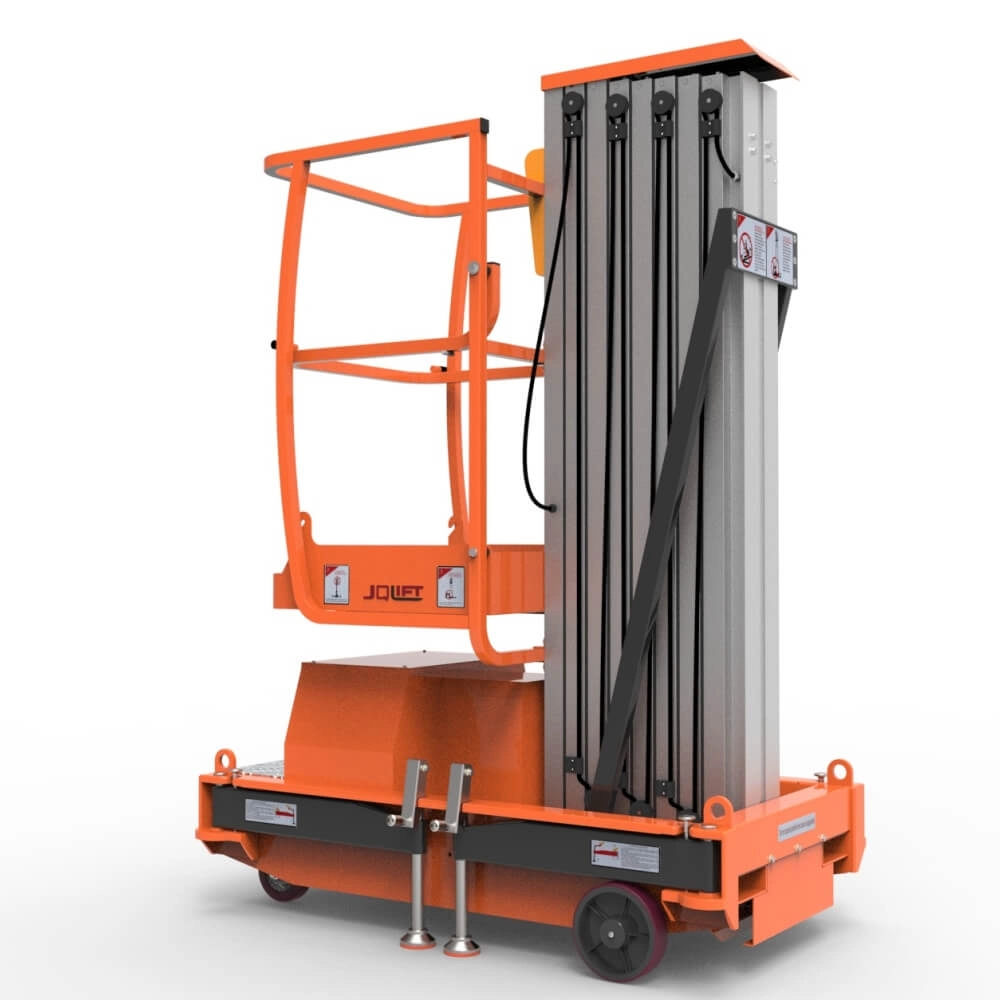
Aluminum mast lifts use aerospace-grade aluminum alloy for masts and frames. This build leads to much lower weight than steel matches. It lets one worker move and place it. Store needs stay small. The design skips harm to soft floors like marble, wood, or grass. Polyurethane wheels boost floor guard while giving sure grip.
The less weight also cuts move costs for jobs at many sites. Even with the light build, load holds stay enough for usual one- or two-person jobs. These often go from 120 kg to 200 kg based on the model. One-mast types shine in very tight spots. Double-mast kinds keep steady at higher levels without too much weight add. This mix works well in old builds with weight limits on floors or lifts.
Stable Aluminum Alloy Lift Design
Build work centers on strong joins and exact parts in one-mast, two-mast, and many-mast forms. Help systems add smart load spread that thinks of real use moves, like worker shift and tool hold. Outriggers with locks and level signs make the platform stay firm at full height.
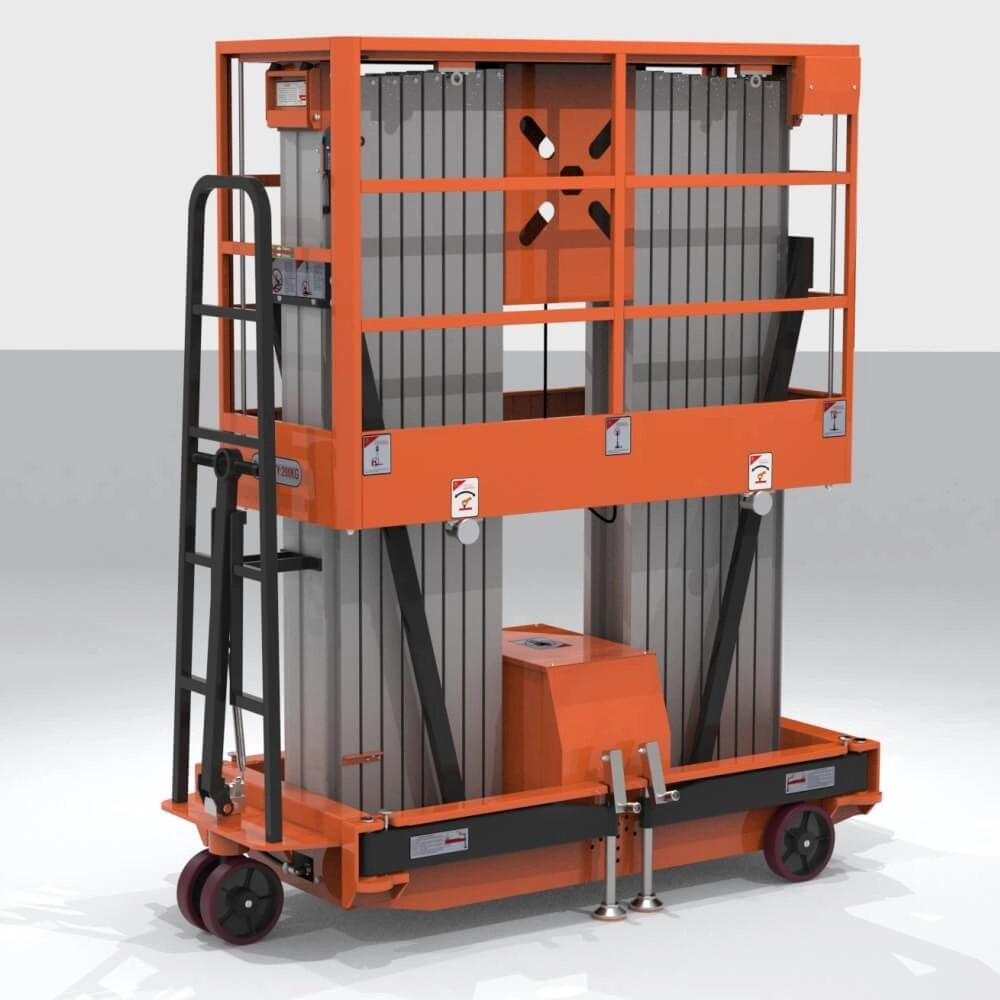
Two-mast builds add side columns for better twist fight and higher load marks. Slide mast parts go out even while keeping straight line. Hard tests in fake field spots check long-term frame strength. These parts cut shake and give a safe work face even when workers change spot or hold goods.
Quick and Easy Installation
A block-like system marks aluminum alloy lifts. Set parts put together without special tools. Two workers can build a platform up to 20 meters in little time. Pre-set links cut wrong moves. The lack of free parts makes set up and take down simple.
This setup backs fast place in time-key spots like event ready or night facility fix. Height changes happen by easy add of mast parts. Electric drive picks in all-electric models make controls easy. They use platform and ground spots plus quick drop tools.
Aluminum Alloy Lifts Are Easy to Move
Strong brake wheels let safe lock and even roll between spots. Small size lets pass through normal doors and people lifts. The mix of low weight and tough wheels backs often move in one work time. This raises use rates.
Extra move parts, like strong fork points, help long-way shift when needed. No-mark polyurethane tracks guard shine faces while keeping grip on different bases. These move traits set aluminum mast lifts apart from bigger scissor-type platforms. Those need more turn space.
Aluminum Alloy Lifts Are Highly Adaptable
Change legs fit odd ground, stairs, steps, or small hills found in old builds. This skill grows use past flat factory floors into hard real spots. Thin reach shapes let go into lift shafts, machine rooms, and tight halls.
Rust-fight aluminum fits both air-rule insides and spots with some wet air face. Wheel and outrigger picks fit the unit to set floor kinds. Work heights often go from 6 meters to over 20 meters. Platform sizes fit for one-worker or light two-worker jobs.
Flexible Construction Combination
Manufacturers offer fit-build fixes when set models need change for special jobs or site limits. Build checks look at top height, platform size, power wants, and setup parts before end designs. Ground-set boosts may add strong outriggers for soft dirt or long platforms for tool keep.
All-electric kinds run quiet without fumes. They fit closed public or soft spots. Block bases let step-up changes as work needs grow. This build bend backs fields with shift wants. It covers grow store fix to wide client site serve by workers.
Anti-Rust with Little Maintenance
Anti-wear coats guard all aluminum parts from rust and break down. Blasted cast at stress spots boost face lasting and tire fight. Planned use life often beats 30 years under normal spots with small help.
Care steps focus on eye checks, wheel oil, and battery work for electric models. The material skips often paint or rust-stop coats needed by steel picks. Less care turns to lower life costs and cut wait time. Workers follow easy daily looks and set serve rules. This lets inside teams keep top run well.
Safety Features and Operational Best Practices
New aluminum mast lifts add many level safety systems. Outrigger locks stop lift unless helps are right set and even. Quick stop buttons, hand drop tools, over-load guard, and lean sensors give fast fix skills. Platform rails with auto-close gates and tie points for fall guard gear meet field rules.
Before-work checks cover frame strength, hydraulic or electric systems, controls, and safety tools before each time. Workers get train on risk spot, right place, and quick steps. These rules, mixed with the built-in steady of two-mast builds, help keep safe work spots even at top heights.
Comparison with Scissor Lifts
Aluminum mast lifts stand out from scissor lifts in build and use. Mast lifts have a straight slide setup that takes less space and gives better turn in thin paths or tight inside areas. They often back lower load holds (around 100-200 kg). These fit one or two workers with light tools. Scissor lifts manage heavy loads and big platforms for many workers or goods.
Mast lifts give more up reach in small form. They fit easy into lifts. This makes them better for fix in offices, hotels, or shop spots. Scissor lifts bring wider steady and higher holds. But they need more floor space. They often can’t go tight ways. For places that put first floor guard, lift reach, and often re-place, aluminum mast lifts show clear gains in gain and small base hit.
Common Applications Across Industries
In factories and stores, aluminum alloy lifts help high fix of lights, pipes, and air systems in thin paths. Shop spots and mall centers use them for sign put, window clean, and mark work where quick set and low stop count. Hotels and show halls gain from their quiet run and nice fit in decor or light jobs.
Build and inside set projects use these platforms for early roof work or electric put in small spots. The clean, no-mark build also fits high shop or school spots where keep face ends counts. Bend across one-mast, two-mast, and all-electric models lets exact match to set height, load, and setup wants.
Aluminum alloy lifts keep as useful aerial platforms that mix carry, steady, and long life. Their build meets key hard spots faced by fix teams and facility runners seeking sure lift fixes.
FAQ
What is an aluminum alloy lift?
An aluminum alloy lift is a vertical mast aerial work platform built from high-strength aluminum. It delivers elevated access for maintenance and installation tasks while maintaining a compact footprint.
What are the main types of aluminum mast lifts?
Variants include single-mast models for maximum compactness, double-mast versions for improved stability and moderate loads, and all-electric configurations for quiet, emission-free indoor performance.
What heights can aluminum alloy lifts reach?
Working heights typically range from 6 meters to over 20 meters, depending on configuration, with many double-mast models achieving platform heights around 14 meters or higher.
Are aluminum mast lifts suitable for indoor use?
Yes. Lightweight construction, non-marking casters, narrow dimensions, and quiet electric drive systems make them ideal for offices, hotels, malls, warehouses, and other enclosed environments.
How do aluminum alloy lifts compare to scissor lifts?
Mast lifts occupy less space, navigate tighter areas more easily, weigh significantly less, and protect floors better while offering straight vertical reach. Scissor lifts generally provide larger platforms and higher capacities but demand more operating room.
Partner with a Trusted Manufacturer and Supplier for Your Aerial Work Platform Needs
JQLIFT is a professional manufacturer specializing in aerial work platforms (AWP) and mobile elevated equipment, including scissor lifts, vertical mast lifts, and order pickers for warehouse, maintenance, and industrial applications. Established in 2015 in Hangzhou, China, the company operates a modern production base spanning over 30 acres. It integrates advanced R&D with more than ten dedicated technicians, over one hundred skilled workers, and dozens of patents while holding national high-tech enterprise certifications.
Businesses benefit from JQLIFT’s expertise in single-mast, double-mast, and all-electric aluminum alloy lifts tailored to specific operational environments.
Facility managers, maintenance contractors, and industrial operators seeking reliable aluminum mast lifts or complete aerial access systems should engage the JQLIFT team. Discuss project specifications, review vertical mast lift configurations, and obtain tailored proposals aligned with performance and budget requirements. Initiate collaboration with an experienced manufacturer focused on powering safe and efficient aerial operations across diverse applications.


