
Scissor Lift Extension Deck Capacity: What Buyers Need to Check
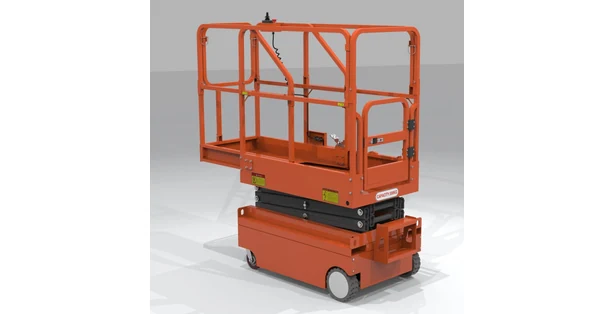
A scissor lift extension deck gives maintenance technicians more room toward a light fitting, pipe or machine they need to reach. The extra floor does not mean extra lifting capacity. The complete platform has a rated load, and the slide-out section has its own limit. A team can stay below the total rating yet put too much weight on the extension.
That distinction matters when buying a compact lift for lighting repairs, overhead inspections or workshop maintenance. Extension length, load placement and clearance all affect whether the platform fits the job. JQLIFT’s ASF mini scissor lift provides a useful example: its published extension length is 550 mm, with a separate 100 kg extension-platform rating. Those two figures answer different questions.
What the extension changes
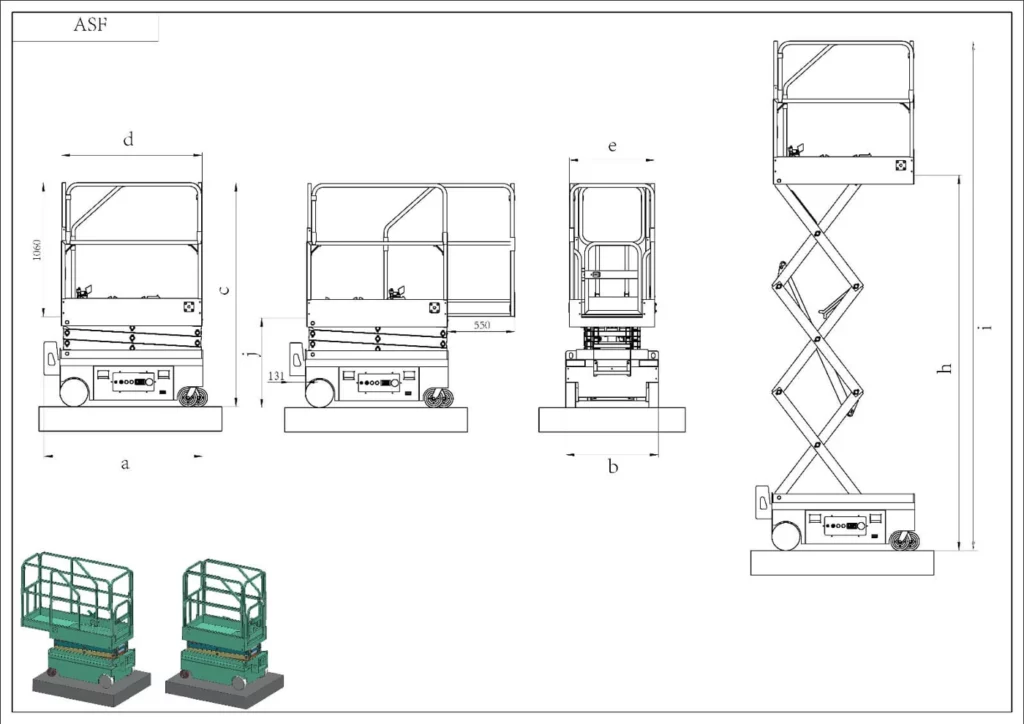
The extension deck discussed here is the section of a personnel platform that slides horizontally out from the main deck, as shown in the ASF drawing below. It brings the standing area closer to a work point without moving the entire chassis. The floor stays at the same height; the extension adds reach along the platform, not lifting height.
The ASF mini scissor lift has a published platform length of 1,155 mm and width of 600 mm. The 550 mm extension describes the additional outward travel of its inner platform. For a buyer, that is useful layout information, rather than a guarantee that a technician can work 550 mm beyond any obstruction.
A machine cabinet may prevent the base from moving close enough. A pipe may interfere with the guardrail before the deck reaches the intended position. The work itself may require both hands, leaving less room for a comfortable posture than a simple reach measurement suggests.
The useful question is therefore specific: where will the operator stand when doing this particular task? A side-view sketch showing the cabinet, chassis position and work point helps answer it.
Read the load limits together
The total load includes people, tools, materials and other items carried on the platform. The extension limit applies to the load supported by the slide-out section. Any additional restrictions for the selected model and configuration also remain relevant.
These are simultaneous limits. The extension rating is not an allowance to add on top of the machine’s total rated capacity.
For the ASF example, the published 100 kg extension limit should not be interpreted as 100 kg of tools in addition to an operator. The operator and carried items both contribute to the load on that section. Nor should a buyer assume that unused capacity elsewhere on the platform can be transferred to the extension.
JQLIFT’s broader explanation of scissor lift load capacity covers the overall load question. An extension-deck check goes further by asking where that load will sit during the job.
Consider a planning example, not an operating approval. An operator with clothing and personal equipment weighs 88 kg. A tool bag adds 9 kg, and replacement parts add 6 kg. If all of that weight is carried on a section rated at 100 kg, the combined 103 kg exceeds the section rating. A higher overall platform rating would not remove that problem.
Reducing the carried load may help, but it must not create an awkward handling task. Heavy or bulky items that cannot be handled comfortably from the permitted standing position may call for a different platform arrangement.
Plan for the load after the job starts
Buyers often picture the platform at the start of a task, with tools arranged neatly and only new parts on board. Maintenance rarely stays that tidy.
During a light replacement, the old fitting may remain on the platform while its replacement is brought into position. A second tool may be needed. The operator may move onto the extension with a bag that was originally left on the main deck.
The purchasing check should cover the heaviest realistic combination, including removed components. It should also identify which items move with the operator. A short task list is more useful here than one total weight written beside a model name.
This is particularly important when several departments share a lift. An inspection task and an installation task may use the same work height but carry very different loads. The more demanding planned task should be included in the discussion with JQLIFT.
Check the extension mechanism as well as its size
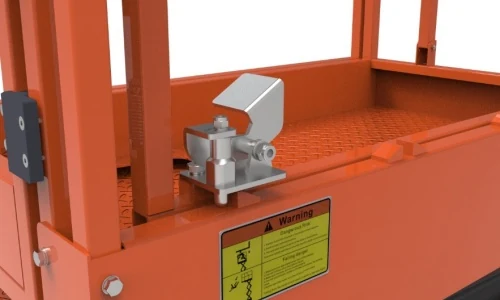
The ASF product details show a foot-operated locking mechanism for the extending platform. Its relevance is practical: the deck needs to be secured in the intended position, not simply pushed outward until it appears close enough.
Before ordering, buyers can ask how the selected configuration locks, which positions are permitted and what the operator needs to verify before use. That conversation should cover the actual unit, especially where a modified platform is being considered.
This article does not set an operating sequence for extending or retracting the deck. Permitted movement, platform position and load distribution depend on the equipment. Those details should be confirmed with JQLIFT during equipment selection and familiarization.
Access to the lock matters during the task, too. Tools and spare parts should have a planned place that does not obstruct the mechanism or force the operator into an awkward position.
Leave room for access and the surrounding work
An extended deck changes the space occupied by the platform. A route that accommodates the stowed machine may not leave enough room to work beside a rack, cabinet or production line.
For the ASF, the published 760 mm overall width is an initial screening dimension. It does not establish the clearance needed for turning, entry or the complete work operation. The site layout needs to include those activities.
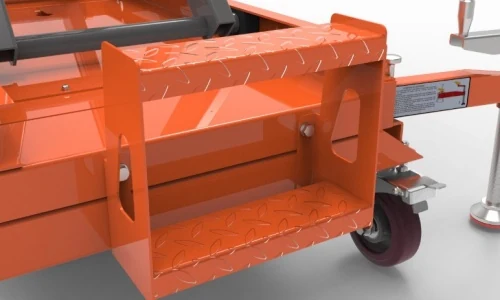
The entry steps and gate also need to remain usable. A tool container that fits on the deck may still obstruct the entrance or the operator’s movement. Platform floor area is not all available storage space.
Nearby vehicles and fixed overhead objects deserve separate attention. Work should stay within comfortable reach, with the guardrails in place. An extension is not a reason to lean farther out or stand on a rail. JQLIFT’s pre-use scissor lift checks provide related inspection context.
Questions to settle before choosing a model
Does a longer extension always make a lift more useful?
No. It helps only if the work point, available clearance and permitted load suit that arrangement. A longer deck that cannot be positioned around the equipment adds little value to the task.
Can the extension carry a second person?
That cannot be decided from deck length alone. The selected machine’s occupancy limit, total rated load, extension limit and usable space all apply. A photograph showing two people on a platform is not approval for two people to occupy its extending section.
Can the machine travel with the deck extended?
Permission depends on the specific model and operating condition. It should be confirmed with JQLIFT before the work method is planned; it cannot be inferred from the presence of powered travel.
Bring the work position into the buying discussion
A useful inquiry describes the task height, the obstacle beside the work point, the number of operators, and the tools and parts carried at the busiest stage of the job. A simple layout can show where the base would stand and which items would move onto the extension. When comparing proposed lifts, the extension travel and extension-deck load limit need to be listed separately from the overall platform rating.
With that information, buyers can discuss the platform configuration with JQLIFT. The aim is to match the working position and load distribution to the selected machine, so the extension is useful for the intended task rather than just an attractive line in a specification table.


