
Push Around Vertical Mast Lift Transport Between Job Sites
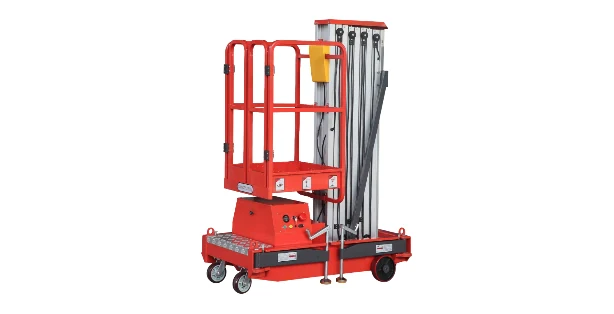
Moving a push around vertical mast lift between job sites takes more than finding space in a vehicle. Its actual weight, stowed dimensions and approved loading method determine the transport arrangement. The receiving site matters just as much: a forklift at dispatch does not solve unloading at the other end.
For contractors and maintenance teams sharing a lift across sites, these details belong in the purchase discussion with JQLIFT.
Push Around Vertical Mast Lift Transport Starts with the Configuration
“Push around” describes movement on the machine’s wheels. It does not mean the complete lift can be carried by hand, loaded by one person or laid horizontally in any available van. Powered lifting and powered travel are also separate features.
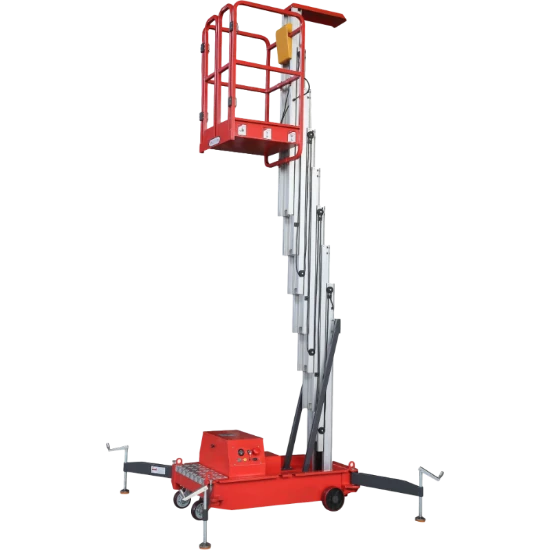
The model, power version and fitted options identify the unit being moved. AC and DC versions can weigh differently; added brackets or a modified platform may also change the space needed. A product photo with the platform raised shows the working configuration, not the dimensions or position to use for transport.
Use the Correct Weight
For the L-series single mast lift, JQLIFT lists the L6-100 at 438 kg in AC form and 472 kg in DC form. Both figures are substantially different from the platform’s rated payload, which describes what the platform can support during use.
For transport, obtain the weight of the actual unit in the agreed loading configuration. Include separately carried accessories and packing when calculating the vehicle’s load. Do not select lifting equipment using the platform capacity or assume a catalog net weight includes a shipping frame.
Measure the Loading Route as Well as the Vehicle Interior
A vehicle can have enough interior space and still have an opening too small for the lift. Door seals, hinges, wheel arches and fixed fittings reduce usable clearance. The approach needs checking too, especially where the machine must turn or line up with the opening.
Stowed height deserves a separate check. In the L series, the listed overall heights are 1,950 mm for L6-100, 2,040 mm for L8-100 and 1,950 mm for L10-100. Height does not increase in a simple sequence with maximum platform reach. Check the model instead of estimating from its name.
Distinguish Equipment Size from Shipping Size
A delivery quote may describe a crated unit; the next journey may involve the bare machine. Keep both sets of dimensions. Packaging adds to the load and can cover handling points that are accessible on an unpacked lift.
For later site transfers, measure the unit in its approved transport position. Removing an accessory to gain clearance is only an option if the manufacturer permits it. That part will also need somewhere to travel.
The DL-series double mast lifts should be assessed separately. A transport arrangement that suits one L model should not be assumed to suit a larger DL configuration.
Agree on a Loading Method Before Dispatch
The loading plan needs to name the equipment and people available at both ends. Where dispatch and receiving facilities differ, the carrier needs an agreed method for each site before a collection time is fixed.
Forklift Pockets Have a Specific Purpose
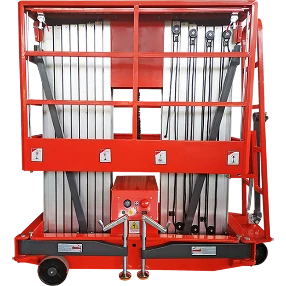
The L series product page identifies forklift pockets. For the selected unit, the approved approach and preparation still need to be confirmed with JQLIFT.
The pockets do not make every forklift suitable for the job. Truck selection still depends on the load and its position. There is a separate question if a crane or restraint straps are proposed: permission to use the pockets for forklift handling does not establish permission for those uses.
Check a Tail Lift or Ramp as Part of the Whole Arrangement
A tail lift needs enough usable platform space as well as capacity at the proposed load position. Check the vehicle floor too. A suitable tail lift cannot compensate for an unsuitable surface inside the vehicle.
With a ramp, the difficult part may be the slope or the transition at its top. Width alone says little about traction or control of the machine. The proposed arrangement needs review by JQLIFT and the transport team against the model’s instructions, including any handling equipment required.
Do Not Assume a Lift Can Be Tipped for Transport
Some personnel lifts have dedicated loading devices or tilt-back assemblies. Their shape can make a loading video look straightforward, but the method depends on the structure and configuration shown.
A method shown for another lift may depend on a loader, support frame or other equipment absent from the selected JQLIFT unit. Even within one brand, model and serial-number differences can change the permitted method.
A low-roof vehicle is a practical option only after the permitted loading and travel positions are confirmed. The discussion also needs to cover any required loading devices or supports. Those answers may point to a different vehicle.
Plan Restraint and Protection Together
A close fit inside a vehicle does not secure the machine against movement during the journey.
Ask JQLIFT to confirm the designated restraint points for the selected model. The transport provider should assess the restraint arrangement against the vehicle, equipment weight and applicable transport requirements. Avoid choosing attachment points by appearance; guardrails, control housings and mast components serve different functions.
Make a separate inventory of the charger, removable outrigger parts and any other loose items. They need restraint too, in line with the relevant instructions. Leave controls and cables protected from neighboring cargo. Dispatch photographs give the receiving team something to compare with the condition on arrival.
For a DC unit, ask about battery preparation for this particular journey. A battery shipped separately or sent abroad may need a different arrangement. Another lift’s battery-removal procedure is no basis for removing this one.
Make the Receiving Site Part of the Plan
Give the receiving contact the model details and agreed unloading plan. Include the transport position and the route from the vehicle to storage. Advance notice of access restrictions lets the carrier plan the arrival around the site.
At handover, compare the delivered unit with the dispatch record. Look for damage and missing parts, then complete the required inspections and function checks before use. Switching the machine on is only part of that process.
Provide a Suitable Storage Position
Set aside a protected parking place with room to inspect and move the lift again. The applicable parking, isolation and battery-care instructions still apply between jobs. Keep the platform free of site materials and the machine out of traffic routes.
Shared equipment also needs a handover record: where it is, who received it and what still needs attention. A damage note is little use if it stays with the delivery team and never reaches the next operator.
A Transport Brief for Comparing Quotations
Use the same information when discussing transport with JQLIFT and the carrier:
| Information to record | What it helps establish |
| Exact model, power version and options | Which weight and configuration apply |
| Transport dimensions and orientation | Whether the vehicle and access opening are suitable |
| Actual transport weight, accessories and packing | The load the vehicle and handling equipment must carry |
| Available equipment at both sites | Whether loading and unloading can follow an agreed method |
| Confirmed handling and restraint points | How the equipment can be lifted and secured |
| Receiving contact and inspection record | Who accepts the unit and follows up on any issue |
FAQ
Can one person load a push around mast lift?
Only if that method is approved for the exact machine and suits the site conditions. Being able to push a lift across a floor says nothing about the personnel needed to load it onto a vehicle. The required personnel should be confirmed with JQLIFT and the transport provider before dispatch.
Can the lift travel on its side?
That depends on the machine and its permitted transport orientation. Dedicated loading or tilt-back features are model specific. Obtain confirmation before planning horizontal transport, and follow the specified preparation and support requirements. A lower vehicle roof is not a reason to improvise a different orientation.
Is the listed net weight enough to book transport?
Use it for an initial discussion, then give the carrier the weight of the actual load. That includes the selected power version, relevant accessories and packing. The resulting figure must suit both the vehicle and the loading arrangement.
Discuss the Complete Move with JQLIFT
When requesting a push around vertical mast lift quotation, include how often it will change sites, the proposed vehicle and the equipment available for loading and unloading. Send the clear access dimensions and identify any restriction on transport height or orientation.
Contact JQLIFT to confirm the configuration and transport requirements before purchase, especially when the same lift will serve several sites.


