
10 Tips to Choose a Vertical Mast Lift Manufacturer (OEM Guide)
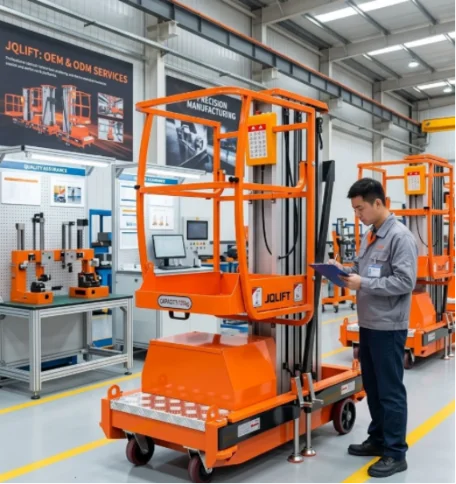
Choosing a vertical mast lift manufacturer is not just about getting a low quote. You are choosing who will affect your product quality, spare parts supply, service pressure, and even your customer complaints six months later. If you want a reliable vertical mast lift manufacturer, you need to look past the brochure and check what the supplier can really build, customize, and support. That is the real starting point for how to choose a vertical mast lift manufacturer.
If you are screening suppliers in China, JQLIFT is worth a close look. The company says it has been in the field since 2015, operates on more than 30 acres, employs more than ten R&D technicians and more than a hundred skilled workers, and has built up dozens of patents. Its site also shows a clear vertical mast lift lineup, global sales, and ongoing cooperation with major OEM customers at home, which usually tells you this is not a one page trading operation. That matters more than people admit.
Why Does the Right Vertical Mast Lift Manufacturer Matter?
When you import access equipment, the machine itself is only part of the deal. You are also buying factory discipline, response speed, parts logic, and the ability to handle changes without making a mess of the next shipment. Below are the ten points that deserve your attention before you settle on any OEM vertical mast lift supplier.
1. Can the Manufacturer Cover More than One Use Case?
A good supplier should not trap you in one model. JQLIFT’s vertical mast lift range includes single mast, double mast, and all electric models, which makes it easier for you to serve indoor maintenance, warehouse picking, and narrow aisle work without switching factories every time your market changes.
2. Are the Core Specs Clear?
You should compare platform height, machine height, width, load, and platform size, not vague phrases like “high efficiency.” Its single mast models list platform heights from 5.8 m to 9.8 m, an overall width of 825 mm, and a 125 kg load. The double mast range goes up to 14 m and 150 to 200 kg. Clear numbers save time.
3. Can the Supplier Handle OEM Work and Custom Requests?
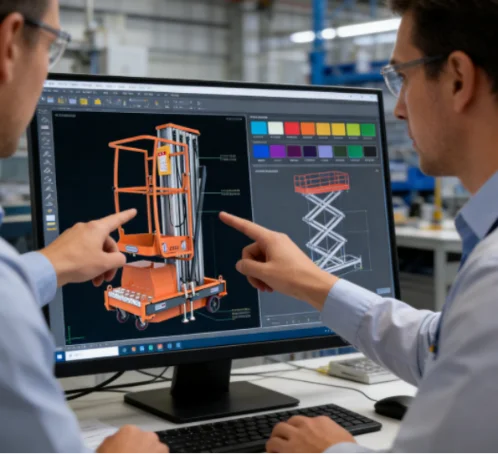
This is where many buyers get caught. A serious OEM vertical mast lift supplier should be able to do more than change a sticker. The product pages state support for color customization, standing platform modification, and attachment brackets. If you need a custom vertical mast lift, or want an OEM vertical mast lift manufacturer for distributor work, that is the kind of detail you should ask about early.
4. Are Safety Details Visible or Just Sales Talk?
You want specific safety hardware, not pretty words. The listed details include anti slip platform surfaces, emergency stop functions, support leg sensor lights, infrared outrigger sensors on the double mast models, mechanical locking, and an emergency lowering pull valve on the all electric unit. If a vertical mast lift supplier cannot explain these plainly, keep looking.
5. Will the Machine Actually Move Well Indoors?
Indoor work is where bad design gets exposed fast. The all electric unit on JQLIFT’s all electric model page is built for 0.8 m aisles, uses dual rear wheel drive, hydraulic steering, and has a 1600 mm turning radius. That tells you this vertical mast lift manufacturer is thinking about shelves, corners, and real warehouse traffic, not just height.
6. Does the Power Setup Match Your Market?
Some buyers need AC for fixed indoor work. Others need DC for mobility. The single mast and double mast pages show both AC and DC options, while the all electric model uses a 24 V drive motor, a 24 V lifting motor, and two 12 V 105 Ah batteries. That flexibility matters when you are building a catalog for different buyers.
7. Will It Protect Finished Floors?
This sounds basic, but it gets missed a lot. The single mast and double mast pages both mention polyurethane tires, and the single mast version also uses rubber bases on the support legs for cushioning and floor protection. If your market includes hotels, offices, malls, or hospitals, that is not a small detail.
8. Is the Factory Set up for Long Term Supply?
A vertical mast lift factory should have more than a workshop and a WhatsApp number. JQLIFT says it has operated since 2015, has more than ten R&D technicians, more than a hundred skilled workers, and dozens of patents. If you are looking for a vertical mast lift manufacturer in China, these signs usually point to better production control and fewer surprises.
9. Can the Supplier Support Parts and Service After Shipment?
After sales is where many deals turn sour. The company says it provides pre sales consultation, tailored aerial work solutions, and quick response after sales to keep equipment running steadily. That is exactly what you want from a vertical mast lift manufacturer with after-sales support, especially if your own team handles local distribution and service.
10. Are You Comparing Total Business Value, Not Just Price?
Price still matters, of course. But the best vertical mast lift manufacturer for importers is usually the one that gives you stable specs, workable customization, clear service, and repeat order confidence. If you need a vertical mast lift supplier with OEM and ODM service, ask how they handle drawing changes, accessory fitting, and spare parts planning before you argue over the last few dollars.
What Mistakes Should You Avoid?
A lot of importers make the same three mistakes. They choose on price alone, they do not test how serious the factory is about customization, and they ignore what happens after the machine arrives. Another common one is choosing a supplier that looks fine on paper but cannot explain aisle width, floor protection, battery setup, or sensor logic in plain language. That is usually where later trouble starts. JQLIFT’s public product pages are useful here because they show concrete details across different mast lift types, not just polished claims.
FAQ
Q1: How do you choose a vertical mast lift manufacturer?
A: You should compare product range, core specs, OEM flexibility, safety details, indoor maneuverability, power options, floor protection, factory strength, and after sales support. Price comes after that.
Q2: What makes a reliable OEM vertical mast lift supplier?
A: A reliable OEM vertical mast lift manufacturer should show clear parameters, real customization items, consistent product categories, and practical support after shipment, not just a low quotation.
Q3: Why does a vertical mast lift supplier need more than one model type?
A: Because your buyers may need one person maintenance lifts, higher double mast units, or compact driveable machines for narrow aisles. One model rarely fits every market segment.
Q4: What should you ask a vertical mast lift factory before ordering?
A: Ask about platform height, load, width, AC or DC options, battery specs, safety devices, customization scope, spare parts support, and how they handle repeat orders.
Q5: Can a vertical mast lift supplier with OEM and ODM service help distributors build their own line?
A: Yes, if the supplier can support color changes, platform changes, attachment brackets, and stable follow up service, it becomes much easier for you to build a differentiated product line.


