
Boom Lift vs Scissor Lift: 7 Key Differences Before You Buy
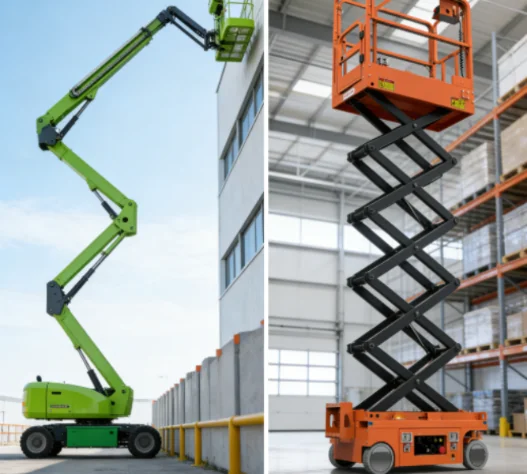
Looking at a boom lift vs scissor lift? Height is just one small piece of the puzzle. The real choice is about other stuff. Think about reach, platform space, and site access. Also look at the floor condition, and how often you repeat a chore. Are you asking what is the difference between a boom lift and a scissor lift? The short answer is super easy. A boom lift stretches up and out. But a scissor lift moves straight up. For lots of inside jobs, a small scissor lift is the smartest tool.
What Is a Boom Lift?
A boom lift makes sense when your work spot isn’t right above you. Sure, that sounds obvious. But it changes everything. Things like pipes, big shelves, air ducts, or roof edges get in your way. That is when you need it.
Basic Design
A boom lift uses a long arm. This arm lifts the worker up and pushes them out. That side-to-side reach is the biggest reason folks pick it. In a scissor lift vs boom lift matchup, this is the first big split. Do you need to get past a big block to reach your spot? If yes, the boom type wins.
Typical Jobs
You spot boom lifts a lot on tricky jobs. Think about fixing outside walls or hanging signs. Utility chores use them too. They shine when the ground space below is totally blocked off. In these spots, asking boom lift or scissor lift means asking a simple question. Is going straight up good enough? Most times, it really isn’t.
What Is a Scissor Lift?
A scissor lift is almost always the smarter pick when the job is right over your head. You just need a rock-solid platform. You don’t need a crazy long reach. That is why big warehouses and busy factories love this type. Indoor fix-it teams rent them all the time.
Basic Design
A scissor lift pushes the platform straight up. It uses a strong metal frame that crosses in an X shape. This straight-up path is super easy to plan for. It is great for fixing lights up high or grabbing boxes off shelves. Daily checks and ceiling repairs are perfect for it too. Plus, it gives you way more floor room than a tiny boom basket. People forget how important that extra space is. Once you pile up your heavy tools, you are glad it is there.
Why JQLIFT Fits This Conversation
If you check out the scissor lift range, JQLIFT heavily focuses on small, tight-space lifts. They make great compact aerial access gear. The brand says it was established in 2015 in Hangzhou. It operates on a site of more than 30 acres. It has more than ten R&D technicians. On top of that, it employs more than one hundred skilled workers. They serve overseas buyers and domestic OEM partners. Why does this matter? Well, you aren’t just picking out a machine type. You are picking the guys who built it. You want to know if their gear works on a real, messy job site. Here, their stuff is built for real daily work. They focus on handy, compact equipment, not just flashy specs that don’t help you on a Tuesday morning.
How Do Movement Patterns Change the Job?
This is where the boom lift and scissor lift differences show up on a real shift. One machine fixes tricky access spots. The other machine makes overhead chores much easier.
Vertical Lift Platform vs Horizontal Outreach
A boom lift gives you horizontal outreach. It stretches out. A scissor lift gives you a vertical lift platform. It goes straight up. What if your task is right above your head? Then that long outward reach won’t do you any good. It might just waste your money. It can also make driving harder. But what happens if the floor right under your job is covered in junk? Then, moving side-to-side becomes the most important thing.
Why This Matters for Daily Work
Lots of jobs are just the same thing over and over. You swap out a burnt bulb. You test a sensor. You fix a water pipe. Next, you drive ten meters down the hall. Then, you do it all again. For this boring routine, a compact scissor lift is the best choice. You do not need a machine made for weird angles. It sounds like a boring pick. But it is still the absolute best tool for most big floors.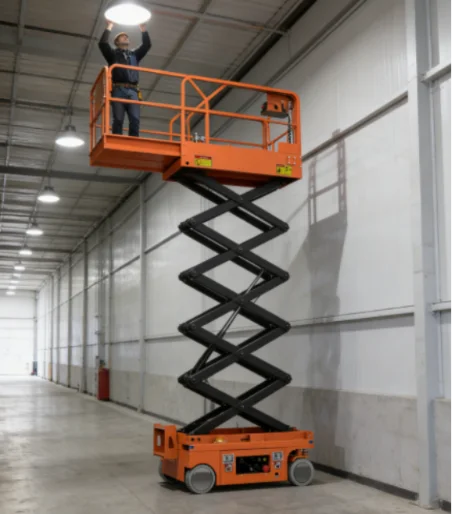
How Much Platform Space Do You Really Need?
Buyers love to chase lift height first. Then the lift shows up, and the real griping starts. There is zero room for spare parts. There is no space for tools. Or, two guys simply cannot stand next to each other comfortably.
Platform Room and Load Capacity
Let’s look at the ASF small scissors page. It lists a platform length of 1155 mm and a platform width of 600 mm. It has a maximum load of 300 kg. It also gives an extended platform load of 100 kg. There is a nice 550 mm outward extension too. That extra deck space is super handy. You need it when you want a rock-solid spot for your tools. It helps when moving heavy boxes or doing overhead jobs all day. This same page shows four platform height options from 1.8 m to 4.8 m.
A More Practical Buying Question
So stop asking just which machine reaches higher. Instead, try to ask this. How much actual work must happen once I get up there? Asking that simple question gets you way closer to the right pick.
Why Does Stability Matter at Height?
Being safe isn’t just about guardrails or loud alarms. It is about how the whole machine feels under your boots. When you are way up high, you get tired. You might do the exact same arm motion for the fiftieth time that shift.
Stable Access for Routine Work
For lots of inside chores, the true worth of a scissor lift is plain to see. You get a much wider, stiffer spot for vertical access. That is the main reason an indoor scissor lift is the top pick. Facility managers love it. Warehouse teams trust it for controlled indoor spaces.
Safety Features That Matter
The ZSF hydraulic small scissors page gives us some really neat details. It lists an electronic level. This smart part blocks lifting if the tilt exceeds safe limits. It also has a hydraulic hose explosion proof valve. This cool valve stops the basket from falling fast if a fluid line breaks. These are the details buyers usually care about after one bad site incident, not before.
Can the Machine Handle Narrow Indoor Access?
This part answers a very big buyer fear. Sure, the lift looks perfect on paper. But can you actually drive it into your real workspace?
Size, Width, and Turning Room
Both compact models on their site list an overall width of 760 mm. The overall length is 1300 mm. They also share a minimum turning radius of 1600 mm. Look closely at those numbers. They tell you why a scissor lift for narrow spaces is a brilliant choice. They fit down skinny store aisles. They slide right through crowded plant walkways. They get into tight indoor service zones. If your boss says you need a small scissor lift for indoor maintenance, these numbers matter heavily. They mean way more than some glossy sales flyer.
What This Means for Warehouses
A compact scissor lift for warehouses is a huge help. It is great when your floor is smooth. It is perfect when your driving path is tight. And it works best when your target sits straight up, not off to the side. That is why the product page says the all electric model is suitable for paved surfaces.
What About Indoor Work, Outdoor Work, and Daily Running Cost?
Here is where we stop talking about machine parts. We need to talk about job economics. The boom lift vs scissor lift cost isn’t just the purchase price. It is also about wasting cash by using the wrong machine for simple work.
Indoor and Outdoor Fit
Think about a boom lift vs scissor lift for indoor work. The scissor kind usually makes more sense. It loves smooth floors and straight-up jobs. Now think about a boom lift vs scissor lift for outdoor work. The boom kind often wins out there. Big obstacles and angled access make the boom arm shine. But listen to this. If your job is easy, repeats a lot, and is right overhead, do not pay for extra reach. It will not help your bottom line at all.
Which Lift Fits Your Job Best?
By now, asking which is better boom lift or scissor lift should feel like the wrong question. The better question is this. Which exact machine fits your site, your floor, your crew, and your daily task?
A Simple Rule to Use
Pick a boom lift when you have to reach way over messy piles. Go with a scissor lift when you just need direct overhead access. Pick it when you need lots of platform room. It also feels right at home in tight indoor areas. If your work is mostly vertical and space is limited, a small scissor lift or compact scissor lift is often the safer bet.
FAQ
Q1: What is the main difference between a boom lift and a scissor lift?
A: The biggest difference is movement. A boom lift goes up high and then stretches out. A scissor lift goes mostly straight up.
Q2: Is a boom lift or scissor lift better for indoor work?
A: For most flat, smooth floor indoor jobs, a scissor lift is the better fit. It wins when your task is directly overhead.
Q3: Why do buyers choose a small scissor lift?
A: Buyers want them because of compact size. They offer easier indoor access. They give you a stable platform space. Plus, they have enough capacity for tools and materials.
Q4: Can a scissor lift replace a boom lift?
A: Yes, but only when horizontal outreach is not needed. If big junk blocks the area below the work point, a boom lift is still the better choice.
Q5: What should you check before buying?
A: Check work height, floor condition, and machine width. Also look at load capacity and turning room. Finally, figure out whether the job needs vertical access or outreach.


