
What Does a Tilt Sensor Do on a Scissor Lift? Alarm, Fault, and Replacement Checks
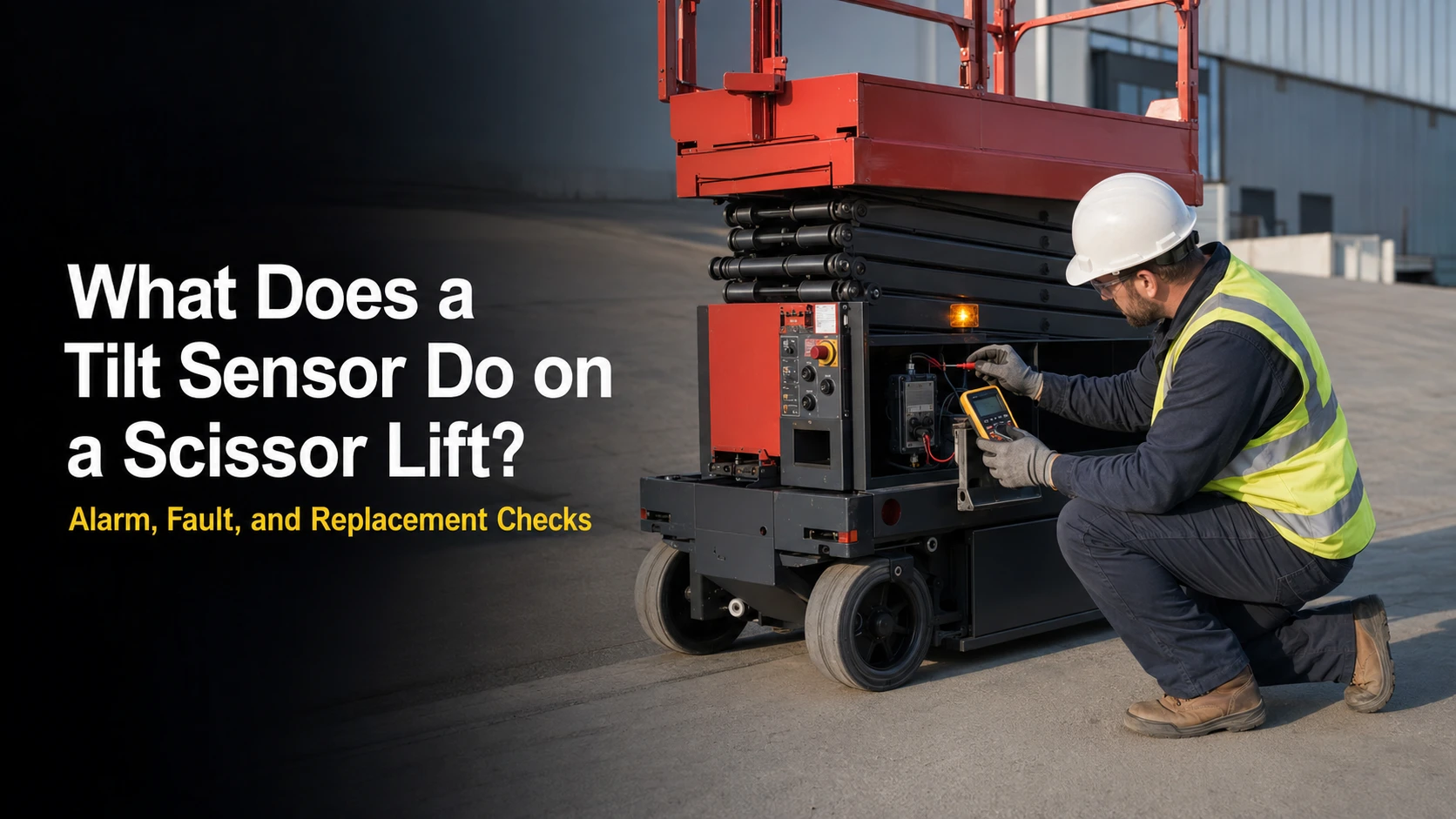
A scissor lift tilt sensor detects whether the chassis is outside the permitted level range and sends that condition to the control system. Depending on the machine and platform position, the response may include an alarm, a warning display, or restrictions on lifting and driving. A tilt alarm does not automatically mean the sensor has failed. It may indicate a real out-of-level condition, a mounting or calibration problem, damaged wiring, or a defective component. This guide helps maintenance teams separate those possibilities before authorizing repair or ordering parts.
What Does a Scissor Lift Tilt Sensor Actually Do?
How the Sensor, Alarm, and Control System Work Together
The tilt sensor—also called a level sensor, tilt switch, slope sensor, or inclinometer—measures the chassis position relative to level. It does not level the machine. Instead, it provides an input to the controller. When that input reaches the programmed limit, the controller applies the manufacturer’s warning or interlock logic.
The alarm may be responding correctly to a sloped surface, a wheel in a depression, soft ground, or a chassis that is not level even though the floor appears flat. For complete-equipment research, JQLIFT aerial work platform solutions show the available lifting-equipment types, but the applicable tilt logic must still be confirmed for the exact model.
What Functions May Be Restricted After a Tilt Alarm?
A triggered scissor lift safety sensor may sound an alarm, stop upward movement, restrict drive, or preserve functions needed to return the platform to a safer position. These reactions may change with platform height and are not identical across machines.
The operator should follow the machine-specific operating manual, lower or reposition the unit only as instructed, and keep people clear of the work area. For example, the ZSF scissor lift with an electronic level is described as prohibiting lifting when front-to-back or side-to-side tilt exceeds its safe limits. That verified ZSF behavior should not be assumed for another series, controller, or configuration.
Why Is the Scissor Lift Tilt Alarm On?
The Machine Is Actually Outside Its Permitted Slope
Check site conditions before treating a scissor lift tilt alarm as a component fault. Causes include a sloped slab, one wheel in a depression, ground settlement, debris beneath a tire, or a transition between floor levels. Visual inspection may miss a small chassis angle that matters to the controller.
Gradeability is also different from the permitted slope for elevated work. A machine may be able to travel over a grade while stowed but may not be allowed to raise the platform there. Record the surface condition, platform position, load, travel direction, and moment when the alarm appeared. If the warning clears after the unit is moved—according to its manual—to a firm, level area, the sensor may have detected an actual operating condition rather than failed.
Why the Tilt Alarm Stays On When the Machine Is Level
If a scissor lift tilt alarm stays on after the chassis is confirmed level, possible causes include a shifted bracket, incorrect sensor orientation, calibration drift, a loose connector, damaged wiring, contamination, or an internal sensor fault. Recent transport, impact, washing, or repair can narrow the investigation.
The observation should guide the next action:
| Observed condition | Priority check | Appropriate next step |
|---|---|---|
| Alarm clears on firm, level ground | Actual slope or surface condition | Review the work area and model limits |
| Alarm remains on verified level ground | Mounting, calibration, wiring, or sensor | Record fault information and request model-specific testing |
| Other warnings appear at the same time | Another interlock or controller input | Check the applicable fault-code information |
| Alarm begins after transport or repair | Bracket position, connector, or calibration | Review service history with a qualified technician |
A persistent warning does not identify the failed part. The same “won’t lift” symptom may involve another safety interlock.
How to Troubleshoot a Scissor Lift Tilt Sensor Safely
Operator Checks Before Calling for Service
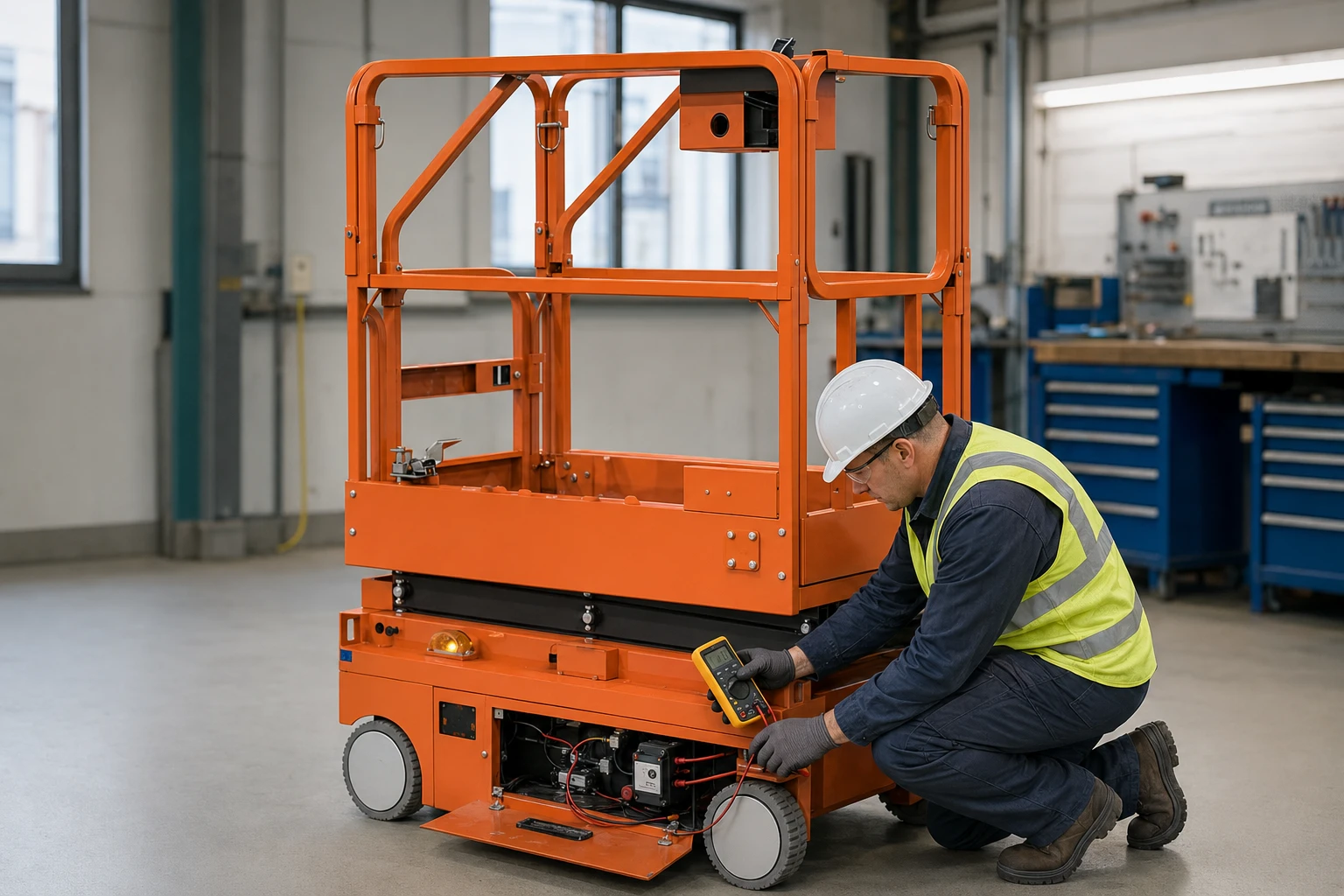
Operator-level checks should remain non-invasive. Lower the platform and place the machine on a firm, level surface by following the operating manual. Note whether the alarm begins at startup, during travel, or while raising. Photograph the display, record the fault message, and inspect accessible areas for impact damage, loose external connectors, or damaged harness protection without opening circuits or moving the sensor.
Document the platform load, recent transport, cleaning, collision, and repairs. If the manual does not authorize a check, or the platform cannot be returned safely to its stowed position, remove the machine from service and obtain qualified support.
Reset, Calibrate, Repair, or Replace?
A reset clears a permitted stored or temporary condition; it does not correct a machine that remains out of level, a loose bracket, damaged wiring, or an inaccurate calibration reference. Repeatedly cycling power can hide the sequence that a technician needs to diagnose.
Calibration establishes the sensor’s level reference and may be required after installation or mount adjustment. Because the procedure and limits depend on the model and serial number, it belongs to trained personnel using the correct service information. Wiring repair is appropriate when testing identifies connector or harness damage. Replacement is justified when the manufacturer’s diagnostic procedure confirms sensor failure. Complete the specified functional test before returning the lift to service.
How to Choose a Replacement Scissor Lift Tilt Sensor and Supplier
Match the Model, Serial Number, and Original Part Number
Searching for a scissor lift tilt sensor replacement by appearance is risky. Similar housings may use different sensing ranges, outputs, mounting directions, calibration methods, or controller logic. Procurement should begin with the machine manufacturer, exact model, serial number, and original part number. Photographs of the nameplate, sensor label, connector, bracket, and fault display help when identification is unclear.
The quotation should state the intended model and serial range, included components, installation orientation, and calibration requirements. A “universal” scissor lift tilt switch should not be accepted without model-specific compatibility information. The replacement must preserve the designed warning and function-cutout behavior.
What a Qualified Supplier Should Confirm Before Quoting
A qualified supplier should request identification data before recommending a part or complete machine. For a sensor inquiry, provide the model, serial number, original part number, fault message, alarm timing, platform position, photographs, and repair history. The response should distinguish confirmed compatibility from items requiring verification and identify installation or calibration requirements.
For complete equipment, compare platform height, rated load, dimensions, travel route, floor condition, power configuration, and published safety-system behavior. JQLIFT identifies Hangzhou Jiequ Machinery Manufacturing Co., Ltd. as the company behind its lifting-equipment range; buyers can review the JQLIFT company and manufacturing background during supplier evaluation. JQLIFT’s ZSF information confirms an electronic level and tilt-related lifting restriction, but not one common sensor, threshold, or fault code across every model.
How to Prevent False Tilt Alarms and Repeat Failures
Inspect After Transport, Impact, or Sensor Work
Transport vibration, impact, water entry, harness abrasion, and work near the bracket can create repeat faults. Include a visual check of the sensor area, bracket, connector, and wiring route in inspections required by the applicable manual, especially after transport or repair. Record the fault code, corrective work, installed part number, calibration status, and functional test.
Keep travel surfaces firm and clear, address floor damage that leaves wheels at different heights, and verify machine level before elevation. Do not move, shim, short, or bypass the sensor to silence an alarm. If a warning returns, repeat the condition-based diagnosis instead of assuming the new component has failed.
Conclusion
A tilt alarm is a condition to diagnose, not an automatic instruction to replace the sensor. First verify the surface and chassis position; then separate mounting, calibration, wiring, and sensor causes using the correct model documentation. To discuss a complete scissor lift or a model-specific equipment requirement, contact JQLIFT for an application review with the model, serial number, nameplate, fault display, working conditions, photographs, required quantity, and destination. These details support a more accurate technical and commercial response.
Frequently Asked Questions
Why is my scissor lift tilt alarm on when the machine is level?
The chassis may not be truly level, or the bracket, orientation, calibration, connector, wiring, or sensor may require inspection. Confirm the surface first, record the warning, and use model-specific service information before replacing a part.
Can a scissor lift move when the tilt sensor is activated?
It depends on the model, platform height, and controller logic. Some machines restrict lift or drive while retaining limited movement needed to return to an allowed position. Follow the operating manual; remaining movement is not permission to continue normal work.
Does a new scissor lift tilt sensor need calibration?
It may. Calibration requirements vary by sensor type, mounting arrangement, machine model, and controller. Installation or bracket adjustment can change the level reference, so the correct service procedure and post-repair functional test should be confirmed before use.
How do I know whether the tilt sensor or wiring is faulty?
A continuing alarm does not identify either component. Technicians should consider the fault display, connector condition, harness continuity, bracket position, calibration status, and the diagnostic sequence for the exact model and serial number.
Can scissor lift tilt sensors with similar connectors be interchanged?
Not on connector shape alone. Confirm the original part number, supported model and serial range, sensing characteristics, output logic, mounting direction, and calibration procedure. A physical fit does not establish functional compatibility with the machine’s safety control system.


