
How to Choose the Right Order Picker for a Spare Parts Warehouse
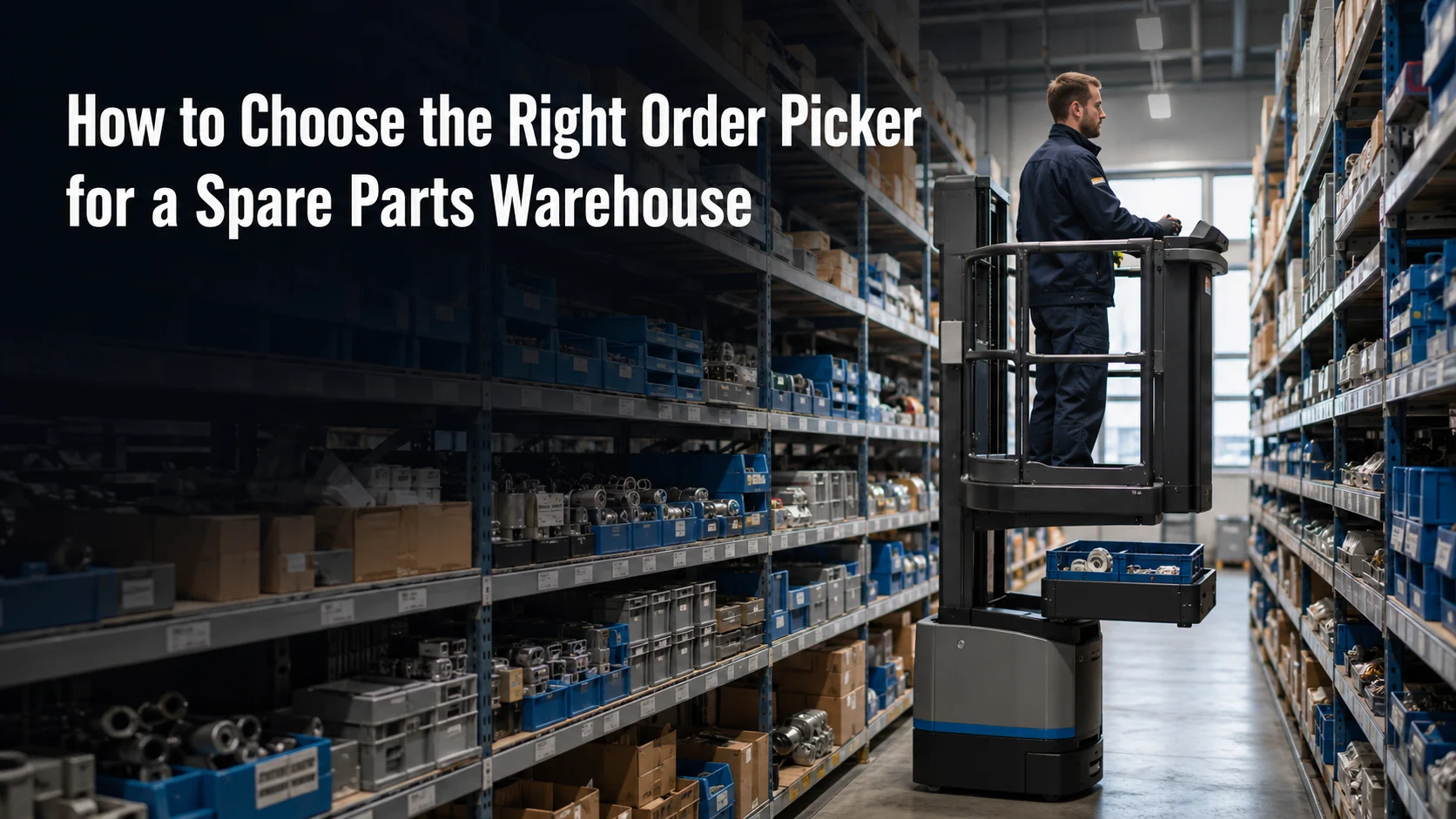
Choosing an order picker for a spare parts warehouse is not simply a matter of matching lift height to the tallest rack. Parts rooms often contain thousands of SKUs with different weights, dimensions, turnover rates, and storage containers. The right equipment must fit the picking route, carry the operator and collected parts, work within the available aisle space, and match the number of picks completed during each shift. A poor match can leave a warehouse with a machine that reaches the shelves but cannot turn, carry the required bins, or support the actual duty cycle.
Why Parts Rooms Often End Up With the Wrong Picking Equipment
Match the Equipment to the Pick Profile, Not Just the Warehouse Size
A small parts room does not necessarily have a light workload. A compact storeroom serving a maintenance department may process frequent requests for bearings, electrical components, tools, and machine parts. Conversely, a larger warehouse may access its upper shelves only occasionally.
Start by recording picks per shift, average lines per order, typical travel distance, highest regular picking point, and the weight collected during a normal route. An order picker is generally more relevant when operators retrieve individual parts or small batches from multiple rack levels. If most work happens at floor level or involves moving complete pallets, another type of material-handling equipment may be more appropriate.
Know When an Order Picker Is Not the Right Machine
An aerial or man-up order picker is intended to bring an operator to the storage position for direct item picking. It should not automatically replace a pallet stacker, reach truck, or forklift.
A different solution should be considered when the primary task is moving complete pallets, handling components beyond the machine’s rated capacity, traveling long distances between buildings, or working on rough outdoor surfaces. Occasional access to a low shelf may still be handled economically with suitable access equipment. Before requesting quotations, define whether the main task is piece picking, pallet handling, personnel access, or a combination of these functions. This distinction prevents comparisons between machines designed for fundamentally different jobs.
Choose the Right Order Picker Type for the Workflow
Parts warehouses can range from a single maintenance storeroom to a distribution facility with long aisles and continuous picking. The following matrix provides an initial equipment direction, but every recommendation should be checked against the exact product specification and site conditions.
| Operating condition | Equipment direction |
|---|---|
| Short routes and occasional high-shelf access | Semi-electric compact aerial order picker |
| Frequent picks across several aisles | Fully electric compact order picker |
| Dedicated rack warehouse with small parts and containers | Order picker with a separate cargo platform |
| High racks and pallet-based order assembly | Forklift-style man-up order picker |
| Complete pallet movement | Reach truck, stacker, or forklift |
| Infrequent low-level access | Suitable ladder or picking cart may be sufficient |
A broader warehouse aerial order picker range helps buyers compare these configurations before committing to a single model.
Compact Aerial or Forklift-Style Man-Up Order Picker?
A compact aerial order picker is suitable for light-to-moderate parts, indoor floors, and storage systems where maneuverability matters more than pallet capacity. A forklift-style man-up order picker is more appropriate when an operator must work at greater rack heights, assemble orders on a pallet platform, or operate within a warehouse designed for industrial lift trucks.
Do not compare these machines by price or maximum height alone. Confirm how the picked goods are carried, whether the rack system is designed for lift-truck access, and how much total weight must travel with the operator. Treating a compact 200 kg-class aerial picker and a high-capacity forklift order picker as interchangeable can lead to an unsafe or unproductive purchase.
When a Semi-Electric Order Picker Is Enough
A semi-electric order picker uses powered lifting but requires manual horizontal movement. It can suit a small parts room where the machine remains within one storage zone, travel distances are short, and high-shelf picks occur only several times per shift.
Manual movement still depends on machine weight, floor condition, slopes, thresholds, and operator workload. A lower purchase price may not provide good value if employees must repeatedly push the machine through long aisles. Buyers should also check whether outriggers or support feet are required, because the operating footprint may be wider than the stowed machine.
When a Fully Electric Order Picker Is Worth the Higher Cost
A fully electric order picker becomes more relevant as travel distance, picking frequency, and shift duration increase. Powered travel can reduce repeated pushing and make movement between storage positions more consistent.
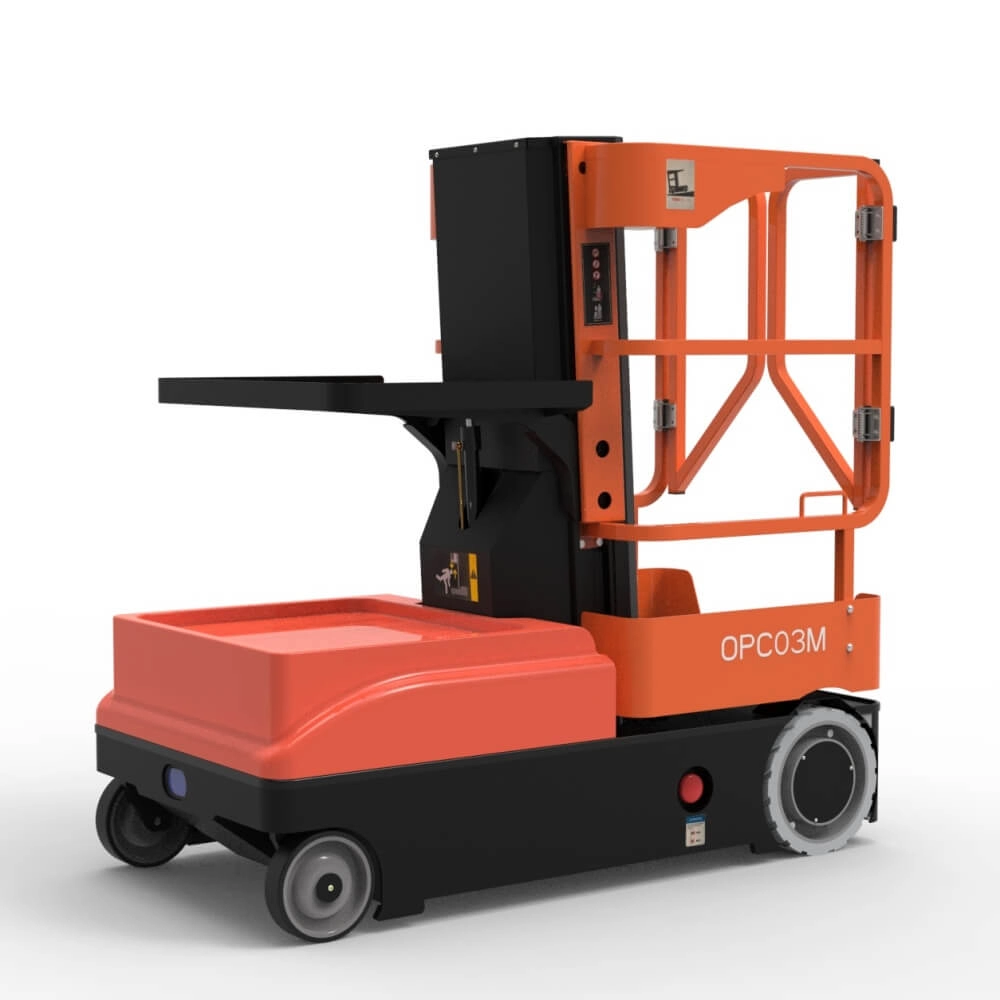
For rack warehouses handling small parts in bins, a compact OPC order picker for rack warehouses offers powered travel, 360-degree steering, and a separate cargo platform. Published configurations include 3,000 mm and 4,000 mm platform heights, a 750 mm overall width, and travel speeds up to 4 km/h. The load definitions for the operator and cargo areas should be checked separately before deciding whether the equipment fits a particular batch of parts.
Check the Specifications That Can Make or Break the Purchase
The highest regular picking point is more useful than total rack height. Measure where the operator’s hands must identify, grip, and remove the part. Shelf depth and bin position also affect practical reach.
Next, calculate the combined load. Include the operator, collected parts, bins, totes, scanners, tools, and packaging materials. Small metal components can create a substantial load even when they occupy little platform space. Buyers asking what order picker capacity is needed for heavy spare parts should use the maximum realistic route load, not the weight of one typical item.
Measure the complete route rather than one aisle. Record the narrowest clear aisle, cross-aisle space, doorway dimensions, turning area, elevator capacity, slopes, thresholds, and charging location. Where stabilizers are used, confirm the deployed footprint as well as the traveling width.
Finally, compare platform and cargo-area dimensions with the actual bins. A machine may remain within its rated load but still be unsuitable if containers obstruct the operator, cannot be secured, or extend beyond the approved load area.
Prevent Common Mismatches in Spare Parts Handling
Match Bins, Totes, and Load Trays to the Parts
An order picker with parts bins must support both containment and practical access. Small loose components may require divided or enclosed containers. Dense metal parts need a load calculation that accounts for every filled bin, while oily or sharp-edged items may require trays that are easier to clean and resistant to damage.
Confirm the number, external dimensions, loaded weight, and placement of each tote. The operator must retain enough room to enter, stand, use the controls, and transfer parts without leaning beyond the designated work area. Requirements for ESD-sensitive components, liquids, or special materials should be discussed with the supplier because compatibility may vary by platform, container, and configuration.
Verify the Complete Travel and Operating Environment
Before ordering, walk the proposed route from storage or charging position to every picking zone. Check floor levelness, door tracks, ramps, columns, rack guards, temporary stock, and pedestrian traffic. A machine that fits a straight aisle may still be unable to enter it or turn at the end.
Charging arrangements also matter. Confirm the available power supply, charging location, expected runtime, and whether the battery can support the planned shift pattern. Photos and a marked warehouse drawing can help a supplier identify restrictions that are not obvious from a list of dimensions.
Decide Whether a Purchase or Replacement Will Pay Back
Use Pick Frequency, Travel Time, and Downtime to Compare the Options
A parts room should consider replacing ladders with an order picker when workers repeatedly reposition, climb, descend, and carry parts by hand during normal shifts. The decision should be supported by data rather than a general claim that powered equipment is faster.
Compare picks per shift, time spent repositioning current equipment, route length, labor effort, maintenance cost, and downtime. Low-frequency work in one short aisle may justify a semi-electric model or continued use of appropriate access equipment. Frequent movement across several aisles may support a fully electric unit. This comparison also helps determine whether a larger battery, cargo platform, or wider standing area provides operational value.
Compare Suppliers Before Requesting a Quote
A useful supplier comparison starts with application support. Buyers should expect clear definitions of platform height, machine height, rated loads, overall dimensions, turning radius, power system, charging requirements, safety functions, and customization limits.
JQLIFT, operated by Hangzhou Jiequ Machinery Manufacturing Co., Ltd., presents electric and semi-electric aerial order pickers for warehouse applications. Buyers can review JQLIFT warehouse lifting solutions before narrowing the request to a particular model.
What a Qualified Order Picker Supplier Should Verify
A supplier should ask how the warehouse works before recommending equipment. Relevant questions include what is being picked, how often the machine will move, where the goods are stored, and how containers will be carried.
The recommendation should explain why a compact, semi-electric, fully electric, or cargo-platform configuration fits the application. Buyers should also request dimensional drawings, clear load definitions, battery information, available modifications, maintenance requirements, spare-parts support, and warranty terms. Unclear answers at this stage often become costly changes after delivery.
Send a Complete RFQ Instead of Asking for Price Alone
A usable RFQ should include the warehouse type, highest regular picking point, aisle and cross-aisle dimensions, doorways, typical and maximum combined load, bin dimensions, picks per shift, travel distance, floor conditions, required quantity, destination, and preferred power type.
Add photographs of the route and a layout drawing when available. If custom colors, cargo trays, platform changes, power outlets, documentation, or spare-parts packages are needed, list them before quotation. Complete application data allows suppliers to compare configurations rather than quote the closest-looking standard model.
Conclusion
The right order picker for a spare parts warehouse must match the pick profile, load, containers, route, and daily operating intensity. Start by separating piece picking from pallet movement, then choose the equipment type and verify every critical dimension against the actual site.
For a model review, submit the picking height, aisle dimensions, combined load, bin sizes, route photographs, operating frequency, required quantity, and destination through contact JQLIFT for an application review. This information supports a more useful configuration and quotation discussion.
Frequently Asked Questions
What type of order picker is suitable for a small parts room?
A semi-electric compact order picker may suit short routes and occasional high-shelf access. Frequent movement or longer aisles may justify a fully electric model. Confirm load, route, floor condition, and operating footprint before choosing.
Is a semi-electric order picker enough for a spare parts warehouse?
It may be enough when powered lifting is the main requirement and horizontal travel is limited. If operators make frequent trips across several aisles, manual movement can create unnecessary effort and delay.
Can an order picker carry multiple parts bins or totes?
Yes, if the combined load, container dimensions, load placement, and available operator space comply with the machine specification. Confirm how bins will be secured and whether they fit within the approved cargo area.
Should order picker capacity be based only on the parts?
No. The calculation should include the operator, parts, totes, bins, tools, scanners, packaging, and any other carried items. Use the maximum realistic load expected during a picking route.
What information does a supplier need to recommend an order picker?
Provide the picking height, aisle and doorway dimensions, turning space, combined load, bin sizes, travel distance, picks per shift, floor conditions, power preference, quantity, destination, and site photographs.


