
Vertical Mast Lift Height Guide: How to Choose a 6m, 8m, 10m, 12m or 14m Lift
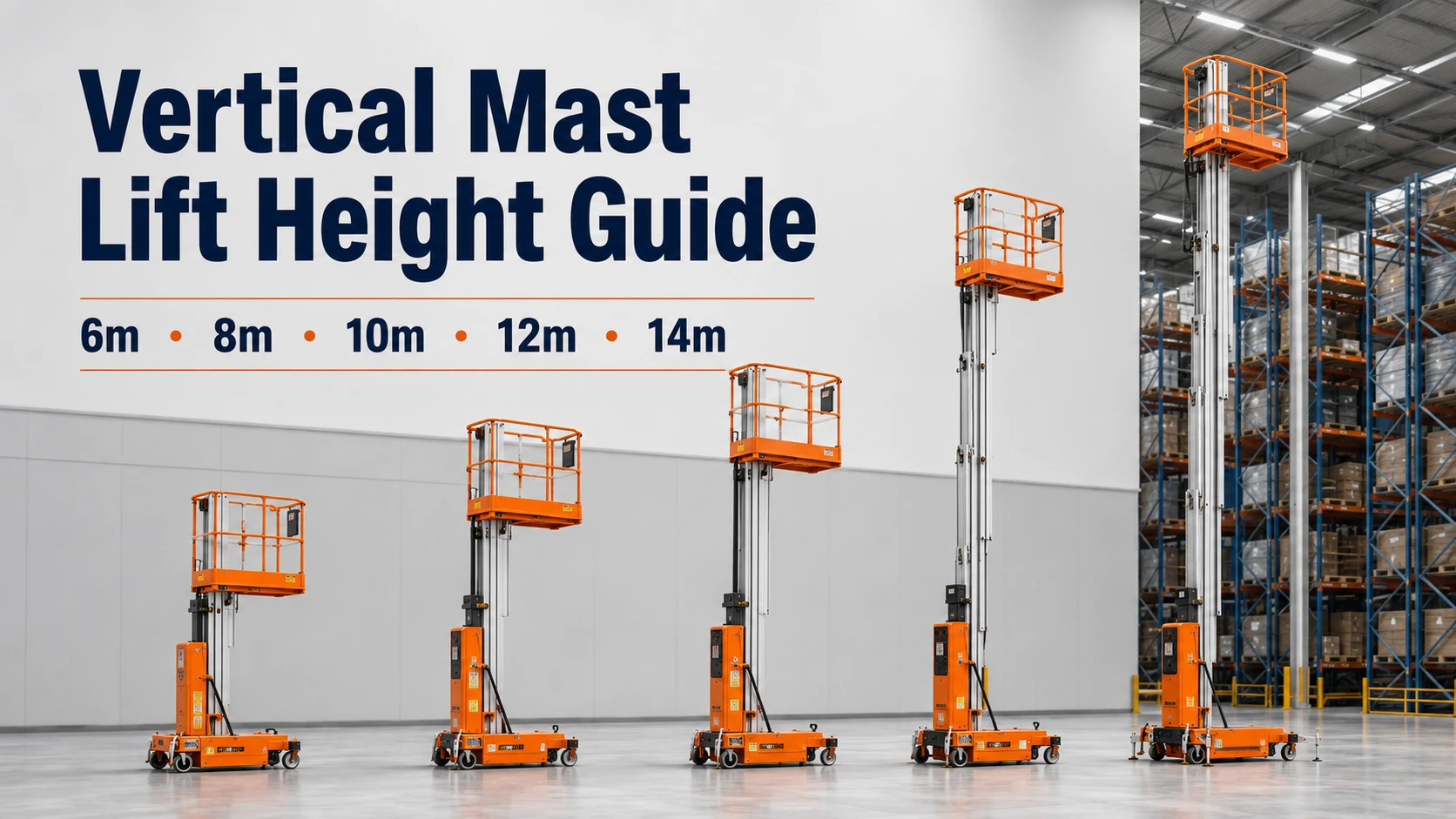
Choosing the correct lift height is not simply a matter of buying the tallest machine available. A useful vertical mast lift height guide must distinguish platform height from working height, match the machine to the actual work point, and account for load, access routes, floor conditions, and daily operating patterns. A 14m model may reach farther, but a 6m or 8m lift can be more practical when doorway access, machine weight, or frequent indoor movement matters.
For B2B buyers, the objective is to select the lowest height class that can complete the work without forcing the operator to stretch, exceed the rated load, or use the machine outside its specified operating conditions.
Vertical Mast Lift Height Guide: Quick 6m–14m Selection Chart
The table below provides an initial vertical mast lift height comparison using JQLIFT’s double-mast range. The listed 6m, 8m, 10m, 12m, and 14m figures are maximum platform heights, not confirmed working heights.
| Model | Max. Platform Height | Max. Load | Initial Selection Question |
|---|---|---|---|
| DL6-200 | 6m | 200kg | Can the platform reach the work point while keeping the machine compact enough for the access route? |
| DL8-200 | 8m | 200kg | Does the site need more reach than a 6m platform without moving into a higher, heavier class? |
| DL10-200 | 10m | 200kg | Are the work points located in a higher warehouse, factory, or commercial interior? |
| DL12-200 | 12m | 200kg | Can the building accommodate the machine, deployed outriggers, and transport requirements of a higher model? |
| DL14-150 | 14m | 150kg | Is the additional height necessary enough to justify the lower rated load and greater site requirements? |
These specifications show why height cannot be evaluated alone. The 6m through 12m models have a listed 200kg maximum load, while the 14m model is rated at 150kg. Buyers comparing the DL double mast aluminum alloy lift range should therefore check the complete configuration rather than assuming that a taller model also provides more capacity.
Platform Height vs Working Height: Calculate the Reach Actually Needed
One of the most common causes of an incorrect purchase is an unclear height definition. A quotation that only says “10m vertical mast lift” does not establish whether 10m refers to platform height, working height, maximum machine height, or another measurement.
How to Measure the Highest Work Point
Start with the highest point the operator must physically reach, not the total height of the building. Lighting replacement may require access to the underside of a fixture, while HVAC service may require the operator to reach controls on the side or top of the unit. The position of the work surface changes the platform height required.
The assessment should record:
- The vertical distance from the floor to the actual work point
- Whether the operator works below, beside, or above the target
- The weight of the operator, tools, parts, and protective equipment
- Obstacles that prevent the chassis from sitting directly below the work
- The route the machine must follow to reach the operating position
Working height is often presented as a calculated reach above platform height, but the method may vary by market and manufacturer. It should be verified against the model-specific product specification. Excessive reaching outside the guardrails should not be used to compensate for an undersized machine.
Why an “8m” or “10m” Lift May Mean Different Things
Suppliers, manufacturers, and rental companies do not necessarily use height labels in the same way. Before comparing an 8m vertical mast lift with a 10m model, request four separate figures: maximum platform height, stated working height, maximum machine height when elevated, and stowed machine height.
This distinction prevents three expensive mistakes. A buyer may order a machine that cannot reach the work point, purchase unnecessary height and weight, or accept quotations for machines that are not technically comparable. Every RFQ should identify the required height measurement and reference a specific model rather than using a general phrase such as “12m lift.”
Which Vertical Mast Lift Height Fits the Application?
Application names alone do not determine the correct height. Two warehouses can have very different ceiling levels, aisle layouts, elevators, and overhead obstructions. The work point and site measurements must lead the decision.
6m vs 8m for Compact Indoor Maintenance
A 6m platform can be considered when most work points are in lower commercial or industrial interiors and the machine must move through restricted access routes. Typical tasks may include lighting, signage, inspection, or building services, provided the measured reach is sufficient.
An 8m platform becomes relevant when the 6m class leaves too little practical reach or the building has occasional higher work points. However, moving up a class should follow measurement rather than assumption. Buyers should compare stowed height, machine weight, doorway clearance, elevator capacity, and outrigger space before deciding that the additional reach is usable inside the facility.
10m vs 12m for Warehouses and Factories
A 10m or 12m vertical mast lift may suit elevated maintenance in warehouses, factories, hotels, or other high-ceiling facilities. The decision depends on how often the highest areas require access.
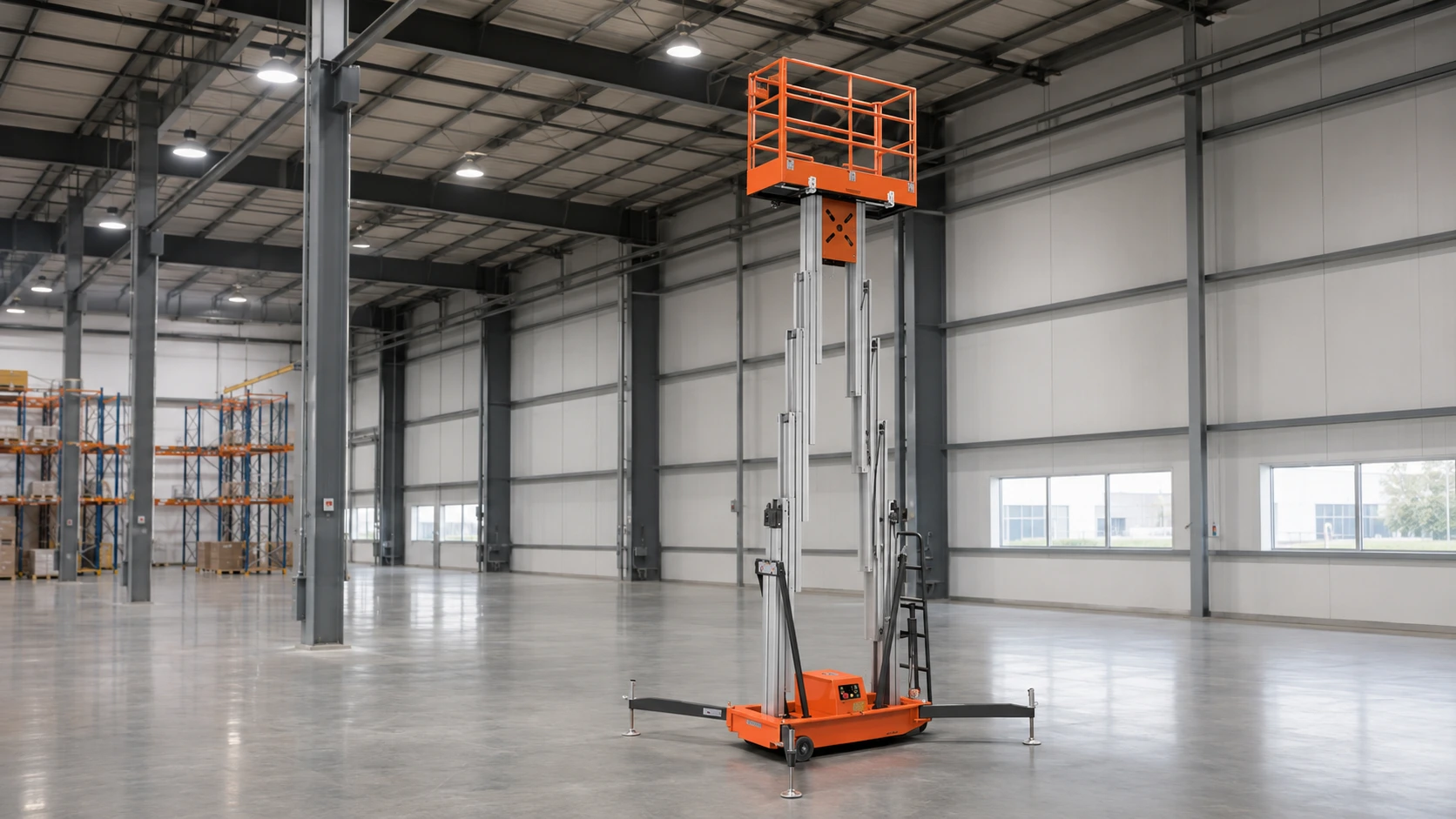
If most work occurs below the maximum height and only a few tasks require 12m, procurement teams should compare the cost and operational impact of owning the taller machine with alternatives such as renting higher access equipment for occasional work. This prevents a facility from carrying additional machine size and transport demands for tasks performed only once or twice a year.
Before selecting either class, confirm the working load, platform dimensions, floor capacity, storage location, power configuration, and space available for full outrigger deployment.
When a 14m Vertical Mast Lift Is Justified
A 14m platform is justified when measured work points require that reach and the complete access route can accommodate the machine. Potential applications include high warehouse ceilings, factory utilities, atriums, and elevated cleaning or maintenance areas.
It is not the default “safer” choice. In the confirmed JQLIFT range, the DL14-150 has a lower maximum load than the 6m–12m double-mast models. A taller machine also requires closer attention to total weight, stowed dimensions, stabilization space, and operating conditions.
A vertical-only lift may also be unsuitable when shelving, pipework, machinery, or structural elements block direct access. If the platform must reach horizontally over an obstacle, another type of access equipment should be evaluated instead of selecting additional vertical height.
Check Capacity, Access, and Operating Conditions
A machine can have sufficient reach and still be unusable at the site. The most reliable vertical mast lift selection criteria combine height with the full operating environment.
Load Capacity, Machine Weight, and Floor Conditions
Rated platform capacity must include the operator, tools, replacement components, cables, test equipment, and other materials carried during the task. It should not be confused with the machine’s net weight.
Machine weight matters when the lift travels in a freight elevator, crosses suspended floors, or operates on finished surfaces. The final figure may vary with AC or DC configuration and optional equipment. Procurement documents should therefore request the machine weight for the exact configuration being quoted.
The floor must also be level, stable, and suitable for the model’s specified use. Polyurethane tires and floor-protection features can be relevant in hotels, offices, and commercial buildings, but they do not remove the need to verify floor loading, thresholds, ramps, and surface condition.
Doorways, Elevators, Aisles, and Outrigger Footprint
Measuring only the work area is not enough. The access survey should begin at the unloading point and follow the complete route to every expected operating position.
Record the narrowest doorway, lowest overhead clearance, elevator entrance, cabin dimensions, elevator capacity, aisle width, turning area, thresholds, ramps, and storage space. For a lift with outriggers, measure both the stowed machine and the fully deployed support footprint.
This prevents a common failure: the machine passes through the doorway but cannot turn, deploy, or operate at the destination. Photos and a simple marked floor plan can help a supplier identify restrictions before recommending a model.
Push-Around, Self-Propelled, Indoor, or Outdoor
A push-around model may suit occasional work at a small number of fixed points. A self-propelled model may be more appropriate when operators move repeatedly through a large warehouse or service many locations during one shift. The higher purchase cost may be balanced by reduced repositioning time, but the decision depends on actual work frequency.
Indoor or outdoor suitability must be confirmed from the product specification. Wind exposure, slopes, uneven surfaces, ramps, and other environmental conditions can limit platform height or rule out a model entirely. General terms such as “mobile” or “electric” do not prove that a machine is approved for every surface or outdoor condition.
Common Height-Selection Mistakes and Prevention
Incorrect selections usually result from incomplete information rather than a lack of available models. Common risks include:
- Treating working height and platform height as the same measurement
- Selecting by ceiling height instead of the actual work point
- Calculating capacity from operator weight alone
- Ignoring doorways, elevators, turning space, and outriggers
- Choosing the tallest model as a precaution
- Failing to account for overhead obstacles
- Accepting a quotation without a model-specific specification sheet
A standard site survey and RFQ form can prevent most of these problems. Engineering, maintenance, and procurement teams should agree on one set of measurements before contacting suppliers. Any quotation that changes the height definition or omits access-critical dimensions should be clarified before commercial comparison.
B2B Buying Checklist and Supplier Verification
A qualified supplier should be able to convert site requirements into a traceable model recommendation. This requires more than a general product catalog. Buyers should receive clear specifications for platform height, working height, load, dimensions, machine weight, power supply, outriggers, and operating limitations.
A complete RFQ should include:
- Highest work point and required reach
- Operator, tool, and material load
- Doorway, aisle, and elevator dimensions
- Floor condition and expected slope
- Indoor or outdoor application
- Frequency of movement and daily operating pattern
- Required power configuration
- Destination market, quantity, and customization needs
JQLIFT provides JQLIFT aerial work platform solutions covering vertical mast lifts and other elevated-work equipment. The company’s product information includes single-mast, double-mast, and all-electric configurations. Buyers assessing production and technical support can review the JQLIFT manufacturing background before comparing commercial proposals.
Supplier claims should still be checked against a model-specific specification sheet and dimension drawing. Ask whether the rated capacity applies at maximum height, whether optional equipment changes machine weight, and which operating limitations apply to the quoted configuration. Certification and electrical requirements should be confirmed for the destination market rather than assumed from a general product description.
Conclusion
The correct vertical mast lift is the lowest practical height class that reaches the real work point while satisfying load, access, stability, and operating requirements. A 6m or 8m lift may be the better choice for constrained indoor work, while 10m, 12m, or 14m models require progressively closer review of the building route and site conditions.
For a model recommendation, submit the highest work point, total platform load, doorway and elevator dimensions, floor conditions, intended operating environment, power requirement, destination, and quantity through request a model recommendation. Complete project data allows the supplier to compare suitable configurations without relying on an ambiguous height label.
Frequently Asked Questions
Is a 10m vertical mast lift rated by platform height or working height?
It depends on the manufacturer and listing. “10m” may refer to platform height or working height. Request both measurements and the exact model specification before comparing quotations.
How do I know which vertical mast lift height is right for my application?
Measure the highest actual work point, identify where the operator must stand relative to it, and compare that requirement with the specified platform and working heights. Then verify load, access-route dimensions, outriggers, and operating conditions.
Does a taller vertical mast lift carry more weight?
Not necessarily. In the JQLIFT double-mast range, the 6m–12m models list a 200kg maximum load, while the 14m model lists 150kg. Capacity must be checked for each model.
Can a 12m or 14m vertical mast lift fit through a standard doorway?
Height class alone cannot answer this. Compare the machine’s stowed width and height with the doorway, elevator, turning space, and complete travel route. Also confirm the space required to deploy the outriggers.
When should a different type of lift be considered?
Consider another equipment type when the task requires horizontal outreach, travel over unsuitable surfaces, a larger platform, additional occupants, or a load that exceeds the vertical mast lift’s rated capacity.


