
How to Reduce Mechanical Crop Damage During Greenhouse Harvesting
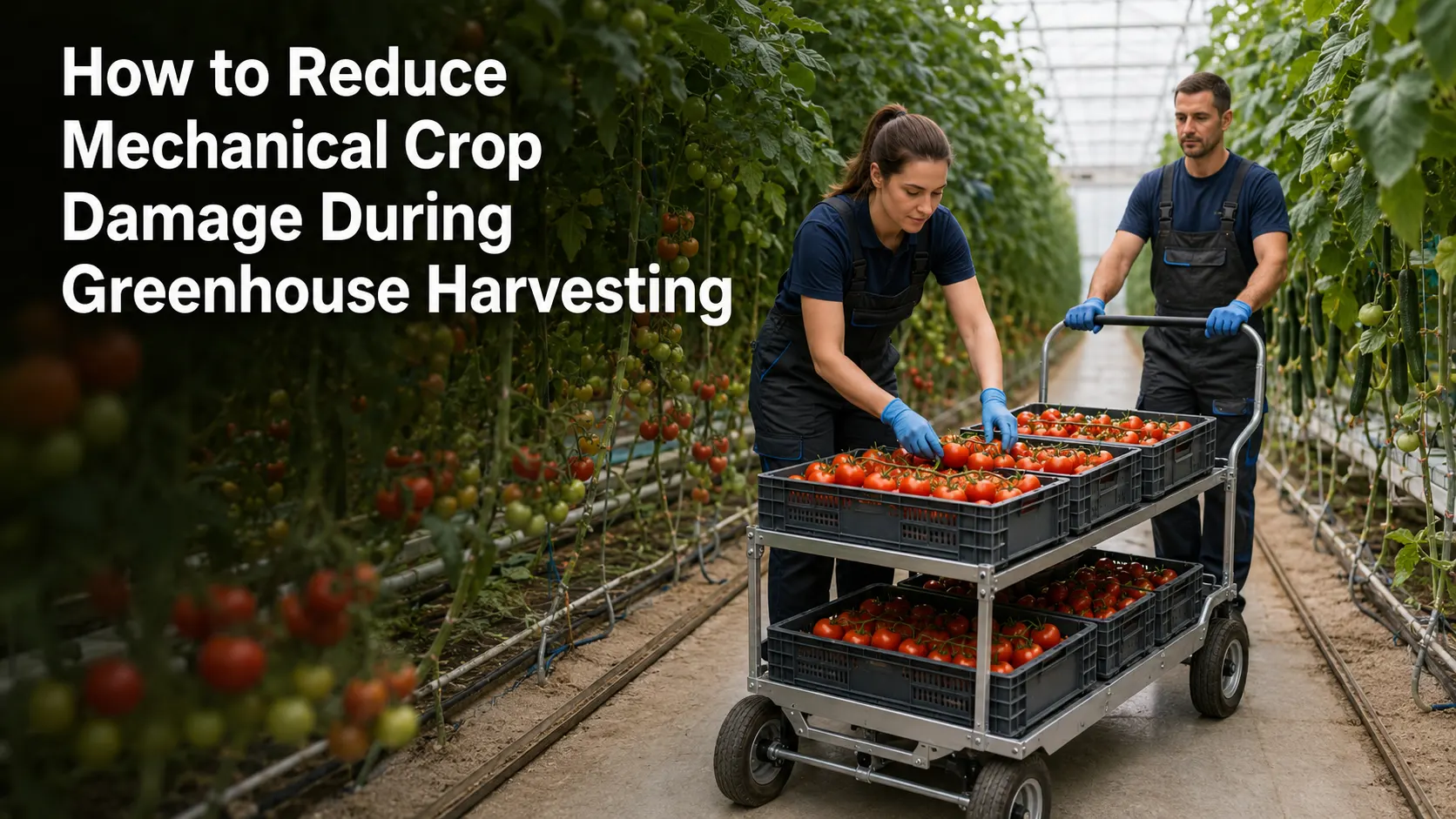
Mechanical crop damage during greenhouse harvesting often begins with ordinary actions: fruit is dropped into a deep crate, containers are overfilled, produce is transferred too many times, or a picking cart moves roughly through a narrow aisle. Reducing damage requires more than telling workers to handle crops carefully. Commercial growers need to identify where bruising, compression, punctures, abrasion, or vibration occurs, correct the handling process, and confirm that containers and harvesting equipment match the crop and greenhouse layout.
Where Does Mechanical Crop Damage Occur During Greenhouse Harvesting?
Damage may happen during picking, container loading, row-side collection, internal transport, unloading, or transfer to the packing area. Some defects, such as cuts and cracks, are immediately visible. Internal bruising may not appear until several hours later, making the original cause harder to trace.
A practical harvest damage audit should follow produce through the entire route rather than inspect only the final container.
| Damage Sign | Likely Cause | Possible Stage | First Check |
|---|---|---|---|
| Bruising or internal discoloration | Impact or compression | Picking, loading, transport | Drop points and container depth |
| Punctures or cuts | Tools, stems, or sharp edges | Picking and loading | Tools and contact surfaces |
| Flattening or cracking | Excessive pressure | Container stacking | Fill level and stack stability |
| Surface abrasion | Friction | Transport and unloading | Container surface and movement |
| Repeated soft spots | Vibration | Trolley transport | Wheels, floor, speed, and route |
Record the crop, harvest maturity, operator, container, trolley, route, and time when damage is discovered. If one route or piece of equipment produces a different damage pattern, the problem may be connected to transport rather than picking technique.
What Causes Crop Bruising, Punctures, and Compression Damage?
Mechanical damage occurs when impact, pressure, vibration, or contact exceeds the produce tissue’s tolerance. That tolerance varies by crop, variety, maturity, temperature, and handling condition, so the same process may be acceptable for one vegetable but unsuitable for another.
Picking Technique, Harvest Maturity, and Tool Contact
Ripe tomatoes and other soft produce can bruise under pressure that would not visibly affect firmer crops. Punctures may come from harvesting tools, fruit stems, plant clips, damaged containers, or exposed parts of a cart. If puncture marks have a similar shape or appear in the same position, inspect every surface the crop touches.
Compare damage among operators and crop rows before changing equipment. A problem limited to one operator may require revised picking technique or tool training. Damage found across multiple operators but concentrated in the same container or route points toward a process or equipment issue.
Tools should be clean, sharp, and appropriate for the crop. Workers should place produce into containers rather than throw or drop it. Harvest maturity should also be considered because softer produce may require shallower loading and more frequent collection.
Overfilled Containers, Drop Height, and Repeated Handling
Overfilled or overly deep containers create compression damage. Produce at the bottom carries the weight above it, while crops at the top can be crushed when another container is stacked incorrectly. Even when the outer skin looks intact, internal bruising may reduce marketable quality later.
Check the actual filling method, not only the rated container capacity. The appropriate fill level depends on crop sensitivity, fruit size, maturity, container depth, stacking design, and transport conditions. Containers should also be inspected for broken edges, rough surfaces, or deformed stacking points.
Every additional transfer creates another opportunity for impact, abrasion, or mishandling. Where practical, picking directly into the next-stage container can reduce contact. However, direct packing may not suit operations that require washing, grading, sorting, or batch separation. The correct approach depends on the complete production workflow.
Trolley Vibration, Sharp Edges, and Narrow-Aisle Contact
A greenhouse harvest trolley can contribute to crop damage if its wheels do not match the floor, containers can slide, or the operator must brake and turn sharply. Uneven surfaces, rail-to-floor transitions, damaged wheels, excessive speed, and loose components can transmit repeated vibration to produce.
Narrow equipment clearance also matters. A trolley that passes through the aisle but leaves little room around plants, irrigation lines, posts, or containers may cause recurring contact damage. Buyers should therefore measure the tightest point and turning area, not just the nominal aisle width.
If damage occurs mainly after full-load transport, compare an affected batch with produce moved slowly over the same route. Inspect wheel condition, container movement, braking, exposed fasteners, and contact points before assuming that a replacement machine is required.
How to Reduce Crop Damage During Picking and Handling
Standardize Picking and Container-Handling Procedures
A useful harvesting procedure should specify how produce is detached, where the container is positioned, how far produce may fall, how full the container may be, and how containers are stacked and unloaded. Instructions should vary where crop sensitivity or maturity creates a different risk.
Damaged containers should be removed from service. Workers should avoid pushing produce down to create extra space, carrying unstable stacks, or tipping containers abruptly during unloading. Supervisors can check a small sample from each shift instead of waiting for damage to appear at the packing stage.
Training is most effective when workers can see the actual defects associated with each handling error. Photographs of bruising, stem punctures, compression marks, and abrasion can make the standard easier to apply consistently.
Reduce Drop Points and Unnecessary Transfers
Map the route from the plant row to the packing area and count each time produce is lifted, tipped, or transferred. Temporary collection points may have been added as production expanded, even though they no longer support an efficient greenhouse harvesting workflow.
Place containers close enough to the picking position to prevent long drops. Where sorting requirements permit, eliminate intermediate dumping or repacking. If a transfer cannot be removed, lower the drop height, control the flow, and prevent produce from striking hard surfaces.
After changing the route, compare handling steps, transport time, visible damage, and delayed bruising. Faster movement is only useful when it does not transfer the bottleneck or damage to another stage.
How Crop, Container, and Greenhouse Layout Affect Equipment Choice
Tomatoes may be vulnerable to compression, punctures from stems, and internal bruising. Cucumbers can suffer abrasion and vibration damage, while peppers may show visible punctures and pressure marks. Leafy greens usually require lighter handling and frequent collection because crushing and abrasion can quickly reduce saleable quality.
These differences should be translated into equipment requirements. Buyers can review greenhouse vegetable picking equipment to compare picking cars, manual carts, driving picking vehicles, and bulk-transfer options, but the final choice should follow the application rather than the product name.
Translate Damage Risks Into Equipment Specifications
Before selecting a greenhouse picking cart, confirm aisle width, door clearance, turning space, floor condition, route length, container dimensions, expected load, and loading height. The wheel or travel configuration should be checked against concrete, compacted surfaces, uneven floors, or pipe-rail systems where applicable.
Container support, movement control, braking, exposed edges, and clearance around plants are also relevant. A high rated capacity does not by itself confirm that delicate crops will remain stable during transport. All dimensional, load, and operating details should be verified against the product specification.
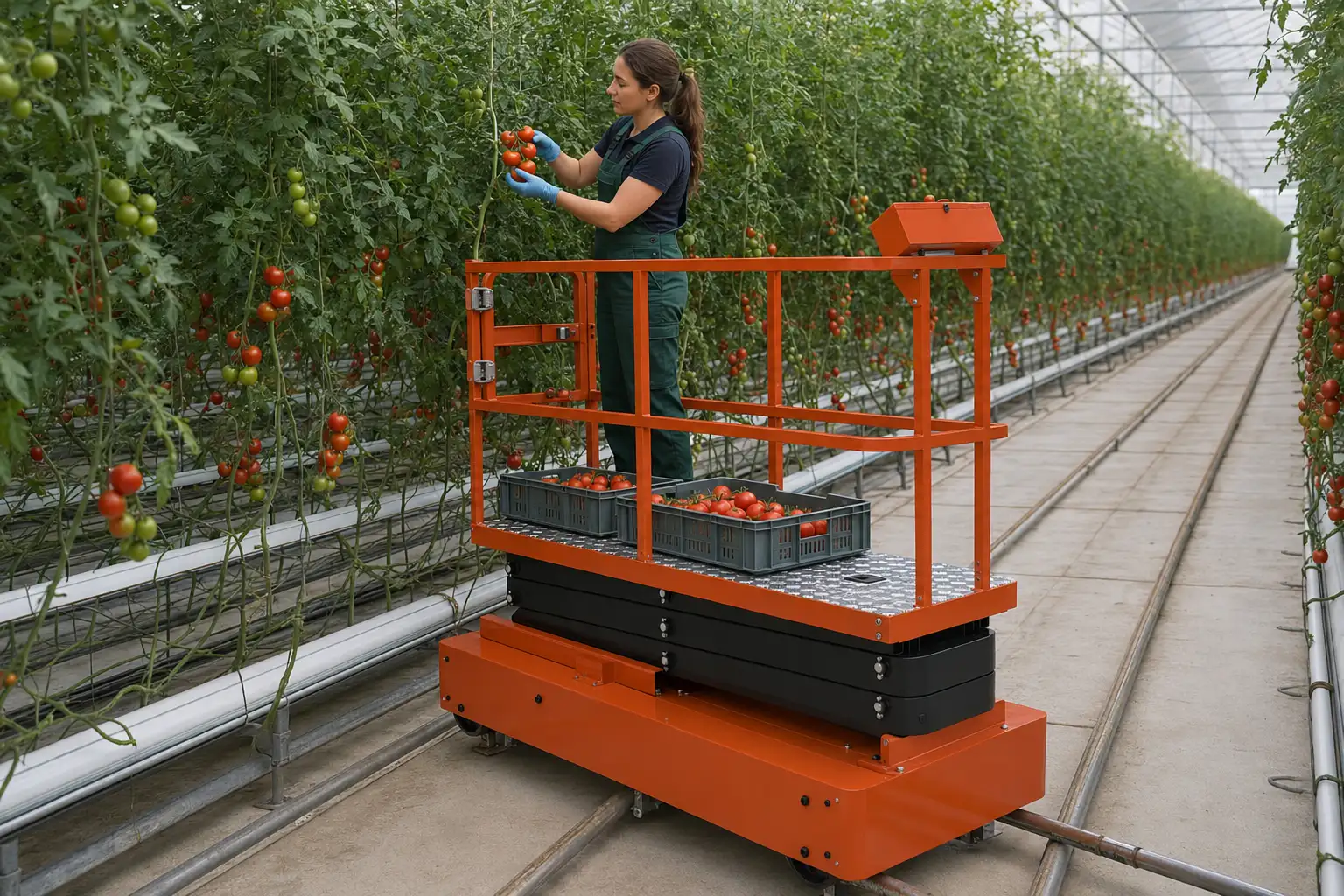
For row-side collection, the WSH-GL greenhouse picking car can be reviewed as one possible equipment direction. Its suitability should still be evaluated against the greenhouse layout, crop, container, route, and required handling method.
Adjust the Process or Replace the Harvest Trolley?
Equipment replacement is not the first response when overfilling, poor stacking, or unnecessary transfers are the main causes. Correct those issues and inspect wheels, brakes, fasteners, container supports, and contact surfaces first.
Replacement becomes more relevant when damage consistently follows one trolley, the machine cannot maintain safe clearance, containers cannot be secured, or the wheel and travel arrangement does not suit the operating surface. Establish a damage baseline before purchasing so that the new configuration can be evaluated under comparable conditions.
How to Prevent Harvest Damage From Returning
Use Pre-Shift Checks and Operator Standards
Pre-shift checks should cover cracked containers, sharp edges, loose parts, damaged wheels, brake condition, unstable supports, and obstacles along the route. Equipment with a clear contact, tipping, or control risk should be inspected before it returns to operation.
Operator standards should define travel speed, turning behavior, container placement, stacking limits, and unloading methods. Temporary and seasonal workers need the same instructions because inconsistent handling can hide the effect of process or equipment improvements.
Measure Damage Before and After Corrective Action
Track damage by type rather than recording only a general reject quantity. Bruising, punctures, compression, abrasion, and cracking often indicate different causes. Samples should be connected to the shift, route, container, trolley, and crop maturity.
Use comparable batches before and after changing procedures or equipment. Also record handling steps, transport time, container movement, and tipping incidents. This helps determine whether the next action should be additional training, maintenance, route modification, or equipment replacement.
RFQ and Supplier Checklist for Greenhouse Harvesting Equipment
A useful RFQ gives the supplier enough information to evaluate the real application. Procurement teams should provide:
- Crop type, harvest maturity, and typical damage
- Damage photographs and the stage where defects appear
- Container dimensions, fill method, and load per trip
- Aisle width, door clearance, and turning space
- Floor condition or pipe-rail arrangement
- Transport distance and daily harvesting frequency
- Required loading or working height
- Manual or powered movement preference
- Existing equipment and reason for replacement
- Target quantity and configuration requirements
A greenhouse picking cart manufacturer should be able to discuss these conditions and identify which specifications require confirmation. Buyers should also ask about container compatibility, standard configuration limits, maintenance information, replacement parts, and any proposed modifications.
JQLIFT offers agricultural handling products within its vegetable picker category. Procurement teams evaluating the supplier can review Hangzhou Jiequ Machinery Manufacturing Co., Ltd. for company information and manufacturing background. Any product recommendation should still be matched to the submitted layout, load, crop, and operating environment.
Conclusion
Reducing mechanical crop damage during greenhouse harvesting starts with identifying the damage pattern and tracing it to the correct stage. Standardize picking, control container filling, remove unnecessary transfers, inspect transport routes, and convert the remaining risks into clear equipment requirements. Buyers can contact JQLIFT with crop details, container dimensions, aisle measurements, route conditions, target quantity, current equipment information, and damage photographs for an application-based discussion.
FAQs
What causes the most crop damage during greenhouse harvesting?
Common causes include dropping produce, overfilling containers, excessive stacking pressure, sharp tools or edges, repeated transfers, trolley vibration, sudden braking, and contact in narrow aisles. The dominant cause depends on the crop, maturity, container, and workflow.
How can a greenhouse harvest trolley reduce crop bruising?
A suitable trolley may reduce manual carrying and unnecessary transfers while supporting more stable container movement. Results depend on container placement, route condition, wheel configuration, speed, braking, and operator practice.
How do I prevent tomatoes from being punctured during harvesting?
Inspect cutting tools, stems, plant clips, container edges, and trolley contact surfaces. Use appropriate tools, reduce handling, avoid overpacking, and place tomatoes carefully rather than dropping them into containers.
Should I replace a picking cart if crops are damaged during transport?
First inspect the route, wheels, brakes, container stability, speed, and handling method. Replacement may be appropriate when the cart cannot fit the aisle, control the load, or operate properly on the existing surface.
What measurements are needed before buying a greenhouse harvest trolley?
Measure aisle and door width, turning clearance, route length, floor or rail conditions, container size, required loading height, and expected load. Also provide crop type, harvest frequency, operating method, and target quantity.


