
How Much Order Picker Capacity Do You Need?
 Choosing the right order picker capacity is not only about the weight of the goods being picked. In real warehouse use, the total working load may include the operator, cartons, spare parts, tools, bins, trays, scanners, and any load placed on the picking platform or cargo deck. If these weights are not calculated before purchase, a warehouse may select an order picker that looks suitable on paper but works too close to its rated limit in daily operation.
The objectives are clear and straightforward for business-to-business customers, warehouse managers, maintenance workers, and machinery sellers – that is, select an order picker with enough capacity for the job but not oversized and hence more expensive and causing issues with aisle clearance, turning radius, lifting height, and floor surfaces. The following guide outlines how to calculate order picker load capacity, the factors affecting capacity utilization, when a small aerial order picker is appropriate, and the verification points with the seller before asking for a quote.
Quick Answer: How to Calculate Order Picker Capacity
A practical order picker capacity calculation should start with the combined working load, not only the heaviest item on the shelf.
A simple formula is:
Required order picker capacity = operator weight + picked goods + tools + bins or containers + platform or tray load + safety margin
This calculation is especially useful when selecting an electric order picker for small warehouse picking, retail stockrooms, spare parts storage, e-commerce fulfillment, supermarkets, logistics centers, or light industrial inventory areas. These applications often involve frequent picking of small and medium-weight items rather than moving full pallets.
Add the Operator, Goods, Tools, and Containers
One common error is that the load capacity of an order picker relates only to the lifted goods. In actual cases, the machine can accommodate both. The load can consist of the operator, one or multiple cartons, the portable scanner, tool bag, plastic bins, picking tray, packaging material, or replacement parts picked up in one trip.
For instance, a company could believe a 120 kg goods load would be a light load for a 200 kg order picker. However, taking into consideration that additional weight can be added by the operator, tools, and other items mentioned, it might be close to its maximum capacity. This is why the buyer should pose one practical question in advance before considering the machines: “What is the maximum load weight on the machine in case of the heaviest picking procedure?”
This method is appropriate when it comes to picking orders in warehouses, picking light cargo, parts and shelves loading. It is not applicable in determining the capacity of pallets, oversized, unstable and heavy goods without taking into account machine specifications and applications.
Use a Safety Margin Before Choosing the Rated Capacity
A calculated load should not be equal to the published rated capacity. Warehouses rarely operate with the exact same weight every day. A new product size, a heavier operator, additional tools, or a larger container can increase the real working load. When a machine works close to its rated load on a regular basis, the buyer has less room for operational variation.
A safety margin helps reduce the risk of choosing an undersized model. If the estimated total load is near the rated limit, the next step is not simply to buy the smallest matching model. The buyer should confirm the working height, cargo position, platform size, shelf depth, and whether the rated capacity applies under the intended working conditions.
For light, repeatable picking tasks, a compact order picker may be suitable. For variable loads, bulky items, or heavier warehouse goods, a higher-capacity machine or another type of material handling equipment may be a better choice.
Why Rated Capacity Is Not Always the Same as Real Working Capacity
Rated capacity is the maximum load stated by the manufacturer under defined conditions. Real working capacity depends on how the load is positioned, how high the platform is raised, how the operator uses the machine, and whether the goods are compact, centered, bulky, or unevenly distributed.
This distinction matters because a product brochure may list a clear number, such as 200 kg or 300 kg, but that number still needs to be checked against the specific application. The correct question is not only “How much weight can an order picker hold?” but also “Can this order picker safely handle this load at the required height, in this aisle, with this shelf depth, and with this operator?”
Rated Capacity vs. Usable Capacity at Height
Order picker rated capacity should be verified against the product specification, especially when the platform is used at different heights. A warehouse that picks from low shelves may have a different risk profile than one that retrieves items from high racks several times per hour. As height increases, stability, operator movement, load placement, and floor conditions become more important.
For buyers, this means the rated capacity should be reviewed together with platform height, working height, machine width, stabilizer or support footprint, and operating surface. A compact aerial order picker may be a good fit when the main task is raising an operator to pick light goods from shelves. It may not be the right machine if the application requires lifting heavy loads at height, handling long items, or moving loads over uneven surfaces.
Before purchase, ask the supplier whether the published order picker weight capacity applies to the target picking height and normal load position. If the application changes by height, load size, or platform configuration, the selection should be reviewed again.
Load Center, Shelf Depth, and Oversized Items
Load weight is only one part of capacity selection. Load position also matters. A compact, centered box is easier to handle than a long, deep, or unevenly balanced item with the same weight. If the operator must reach deep into a shelf, pull out long goods, or place items away from the center of the cargo platform, the actual stability requirement may increase.
This is where many buyers misunderstand order picker load capacity. A lightweight but oversized item may create more handling risk than a smaller, heavier item. Deep shelf storage, irregular cartons, long spare parts, and offset loads should be discussed with the supplier before choosing a machine.
When requesting a quote, provide both weight and dimensions. Include the maximum item length, width, height, shelf depth, and how the item will be placed on the platform or tray. If the load center or placement is uncertain, the supplier should review the application rather than recommending a model based only on total kilograms or pounds.
Choose the Right Capacity by Warehouse Picking Scenario
Order picker capacity should match the real picking scenario. A small warehouse that handles spare parts and cartons does not need the same machine as a distribution center moving heavy case loads. A maintenance team retrieving tools from upper storage levels has different requirements from a retailer picking packaged stock from narrow aisles.
The table below can help buyers make an initial judgment before contacting a supplier.
| Picking Scenario | Likely Capacity Need | Suitable Equipment Direction | Key Buying Check |
| Light cartons, small retail stock, spare parts | Low to medium combined load | Compact aerial order picker | Total operator + goods + tools weight |
| E-commerce order picking with bins | Low to medium, frequent use | Electric order picker or compact picker | Battery, platform size, turning radius |
| Maintenance tools and facility supplies | Variable load | Compact order picker or vertical lift, depending on height | Tool weight, floor condition, working height |
| Bulky but lightweight goods | Depends on dimensions | Application review required | Load center, platform size, shelf depth |
| Heavy case picking or pallet-based handling | Higher capacity required | High-capacity order picker forklift or another machine type | Rated capacity, load center, rack height |
When a Compact Aerial Order Picker Is Enough
A compact aerial order picker is usually most suitable when the main job is lifting a person to reach goods, not carrying heavy loads like a forklift. Typical applications include light warehouse picking, retail shelf restocking, spare parts retrieval, tool storage, small carton handling, e-commerce order picking, and high-shelf access in narrow or medium-width aisles.
For these applications, the buyer should calculate the combined working load and then check whether the selected model’s rated load, platform size, and working height match the real task. JQLIFT’s aerial order pickers category includes compact models designed for high-place material handling and rack warehouse use. Some published JQLIFT product information references capacities such as 200 kg or 300 kg for certain compact reclaimer models, but the final selection should be verified against the current model specification and application conditions.
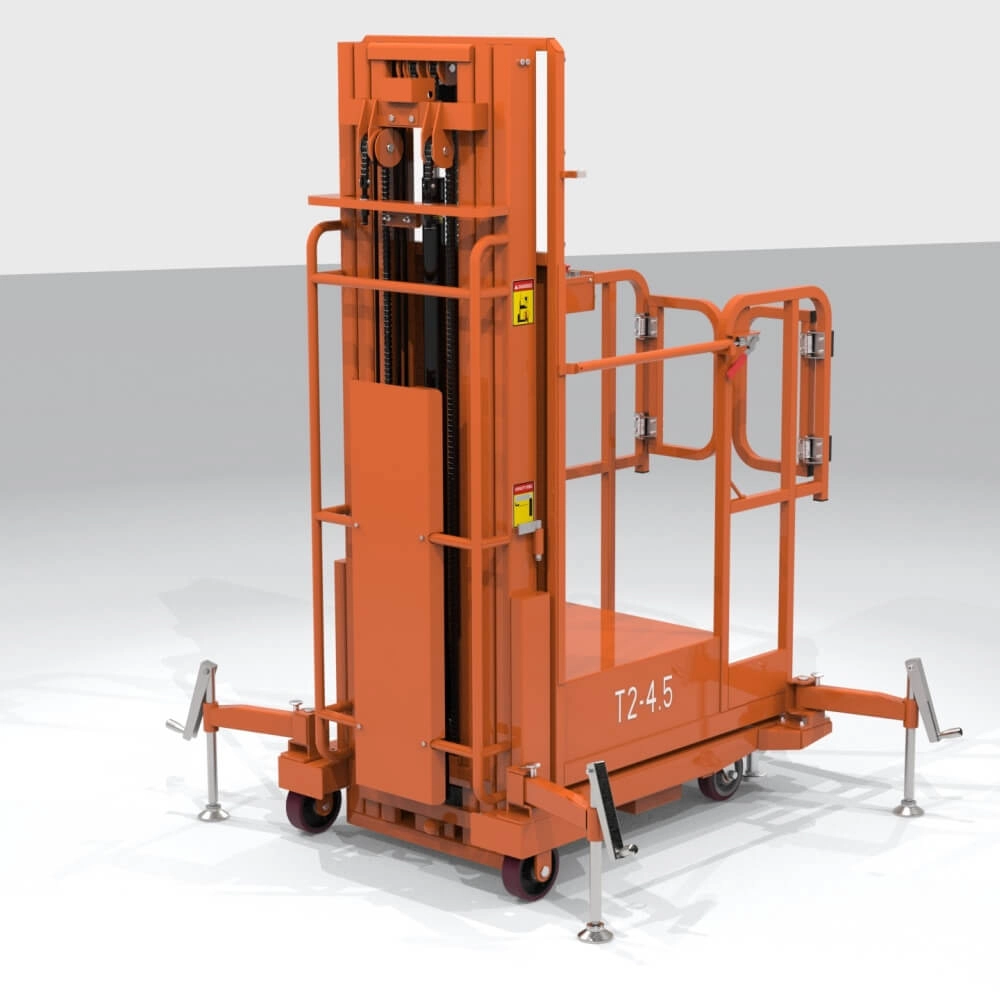
Img.T3 semi-electric order picker for warehouse load capacity calculation.webp
This type of equipment is not the right choice when the warehouse needs to move pallets, handle very heavy goods, pick long unstable materials, or travel long distances with high loads. In those cases, the buyer should consider a higher-capacity order picker forklift, reach truck, or another material handling solution.
When You Need a Higher-Capacity Machine or Another Equipment Type
If the combined working load is high, the goods are bulky, or the task involves heavy case picking, a compact order picker may not provide the required capacity or stability. This is especially important in industrial warehouses, large distribution centers, and operations where product weight changes frequently.
Signs that a higher-capacity machine may be needed include goods that exceed the compact model’s rated load, unstable or offset items, repeated picking at maximum height, deep rack storage, or a need to transport loads across longer warehouse distances. A buyer should also be cautious when trying to use a compact order picker as a replacement for a forklift. The equipment functions may look similar in a narrow search result, but the intended use can be very different.
The next step is to define the real job: person-up picking, goods lifting, pallet movement, shelf replenishment, or maintenance access. Once the task is clear, capacity, height, aisle width, platform dimensions, and travel requirements can be compared more accurately.
How to Prevent Overload and Wrong Model Selection
Overload is usually not caused by one obvious mistake. It often happens because several small factors are ignored during equipment selection: the operator is heavier than estimated, the picking tray carries more items than expected, goods are placed away from the center, the shelf is deeper than planned, or the machine works at a height that changes the safety requirement.
A good purchase process should reduce these risks before the order is placed.
Check the Data Plate, Manual, and Specification Sheet Before Use
The product specification should be treated as the starting point for capacity selection. Buyers should check rated load, maximum platform height, overall machine size, platform size, support footprint, turning radius, battery information, and any listed operating restrictions. If the product has separate values for operator load, cargo platform load, or different load positions, those numbers should be reviewed carefully.
This is also important for dealers and maintenance teams. A replacement machine should not be selected only because it has a similar appearance to the old unit. The actual order picker rated capacity, lift height, platform layout, and operating environment should be compared.
Before confirming a purchase, request the latest specification sheet and clarify whether the stated load capacity includes the operator, the goods, or a separate cargo platform. If the application involves non-standard goods or special operating conditions, ask whether the configuration should be adjusted.
Match Capacity with Aisle Width, Working Height, and Floor Conditions
Capacity should not be separated from the rest of the warehouse layout. A machine with enough rated load may still be unsuitable if it cannot turn safely in the aisle, pass through doorways, operate with its support structure in place, or remain stable on the floor surface.
For narrow aisles and small storage areas, machine width, turning radius, support foot expansion, and platform height can be just as important as capacity. A buyer should measure the aisle width, shelf depth, doorway height, elevator access if relevant, and floor flatness before selecting a model. If the warehouse has ramps, uneven surfaces, damaged floors, or frequent pedestrian traffic, the supplier should review these conditions before recommending equipment.
The safest purchase decision comes from matching the total load with the full operating environment. A machine is not selected correctly until capacity, height, aisle, floor, and picking method all fit the same application.
B2B Buying Checklist: What to Confirm Before Asking for a Quote
A supplier can give a more useful recommendation when the buyer provides real application data. A request that only says “need an order picker” or “need 200 kg capacity” is usually not enough to select the right model.
Before requesting a quote, prepare the following details:
- Maximum item weight and normal item weight
- Operator weight range
- Tools, scanners, bins, trays, cartons, or containers carried on the platform
- Highest regular picking point
- Required platform height and working height
- Aisle width, shelf depth, and turning space
- Goods dimensions and load placement
- Floor condition and indoor or outdoor use
- Daily picking frequency and travel distance
- Preferred semi-electric or fully electric operation
- Target quantity, destination market, and any customization needs
This information helps the supplier judge whether a compact order picker, electric order picker, aerial work platform, or another handling machine is more suitable. It also reduces the risk of receiving a quote that looks attractive but does not match the real job.
How to Evaluate an Order Picker Supplier
For B2B purchasing, the supplier should be evaluated beyond the rated load number. A clear specification sheet, practical application review, model matching support, and communication about operating conditions are often more useful than a simple low-price quotation.
A qualified supplier should be able to discuss capacity together with height, platform size, machine footprint, power type, and application limits. Buyers should also check whether the supplier can provide current product information, answer technical questions before purchase, and recommend a model based on actual warehouse data.
JQLIFT manufactures mobile lifts and aerial work platforms, with product categories including aerial order pickers, scissor lifts, vertical mast lifts, and related handling equipment. The company’s JQLIFT manufacturing background can help buyers understand its product focus before comparing models. For order picker projects, the most useful buying step is to send the real load, height, aisle, and shelf information rather than asking for a capacity number alone.
When the application is outside standard use, such as special colors, unusual goods, narrow spaces, or different operating requirements, buyers should verify whether customization or model adjustment is available for the selected product. Any final capacity decision should be based on the current product specification and the actual working environment.
Conclusion
Order picker capacity should be selected from the real working load, not from the goods weight alone. A practical calculation should include the operator, goods, tools, containers, trays, platform load, and a safety margin. Buyers should then check rated capacity together with working height, platform size, load position, aisle width, shelf depth, floor condition, and daily picking frequency.
For light warehouse picking, spare parts retrieval, retail stock handling, and e-commerce fulfillment, a compact aerial order picker may be suitable when the total load and working conditions match the specification. For heavy, bulky, unstable, or pallet-based handling, a higher-capacity order picker forklift or another machine type may be required.
To receive a more accurate recommendation, buyers can send your order picker load data to JQLIFT, including maximum load, item dimensions, operator and tool weight, required height, aisle width, shelf depth, quantity, and application photos if available.
FAQs
Q1: How much order picker capacity do I need?
A: The required capacity depends on the total working load. Add the operator, goods, tools, bins, cartons, trays, and any platform load, then include a safety margin. The result should be compared with the rated capacity and verified against the product specification.
Q2: Does order picker capacity include the operator?
A: It depends on the model and how the manufacturer defines the rated load. Some equipment may separate operator load and cargo platform load. Buyers should confirm this with the supplier before purchase and should not assume that the goods weight alone represents the full working load.
Q3: Is a 200 kg order picker enough for warehouse picking?
A: A 200 kg order picker may be enough for light goods, small cartons, spare parts, tools, and retail stock if the combined load remains within the rated capacity. It may not be suitable for heavy case picking, bulky items, pallet handling, or applications where the load varies significantly.
Q4: What affects actual order picker load capacity?
A: Actual capacity can be affected by operator weight, item weight, tools, platform load, lift height, load center, shelf depth, platform size, floor condition, and how the goods are positioned. These factors should be reviewed together before choosing a model.
Q5: What information should be sent to an order picker supplier?
A: Send the maximum item weight, operator weight, tools or containers used, goods dimensions, highest picking point, required working height, aisle width, shelf depth, floor condition, picking frequency, target quantity, and any special requirements. This helps the supplier recommend a suitable model instead of quoting only by rated load.


