
When a Vertical Mast Lift Is the Better Choice for Narrow Indoor Spaces
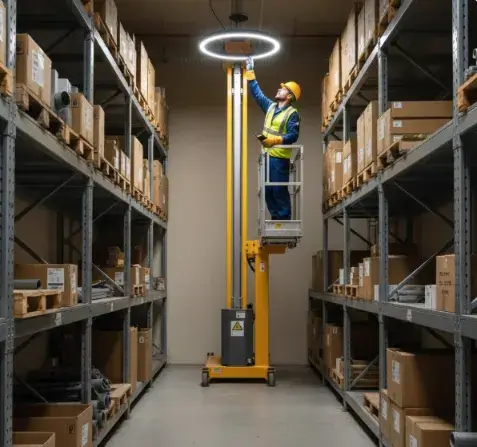
If your indoor space is tight, lift selection gets strangely personal. A scissor lift may look perfect on paper, but then you try to thread it through a doorway, park it near a corner station, and keep an aisle open for traffic. That is why the debate around vertical mast lift vs scissor lift keeps coming up in small warehouses, backrooms, and maintenance corridors. You are not only buying height. You are buying access, positioning, and workflow.
This guide focuses on when a vertical mast lift is the smarter tool in narrow indoor spaces, especially for point tasks handled by one operator.
Why Not Every Indoor Job Needs a Scissor Lift
Mini scissor lifts are great when you need platform space, repeated stops, and the ability to bring tools or cartons up with you. But not every indoor task needs a wide deck. In tight rooms, a larger footprint can become the problem. If your work happens in corners, beside fixed equipment, or near doorways that are just wide enough, the fastest lift is often the one that can get into position without a fight.
So the real question is not “Which is better?” It is “Which lift type matches your most common lifting operations indoors?”
What Defines a Vertical Mast Lift
A vertical mast lift uses a mast-type structure to raise a compact platform or basket straight up. The footprint is generally slim, and the lift is built for precise access rather than carrying larger loads.
Mast-Type Lifting Structure
Compared with a scissor mechanism, a mast structure stays narrow as it rises. That narrow profile is the whole point. Many vertical mast lift designs are built to reach high points in confined indoor areas without demanding much side clearance. In practice, that makes them easier to place next to shelving ends, machine guards, or wall-mounted fixtures.
Typical Indoor Height and Load Range
Most indoor mast lifts are used for routine building heights, not extreme construction work. They are also commonly chosen as a single person lift, which changes how you evaluate them. Instead of asking “Can two people work up there?” you ask “Can one technician reach the point safely, with the tools needed, and finish quickly?” That is the mast lift sweet spot.
Key Advantages of Vertical Mast Lifts in Tight Indoor Spaces
A vertical mast lift earns its keep when space is the constraint and the task is specific.
Slim Profile for Narrow Aisles and Doorways
In narrow indoor spaces, the ability to pass through standard doorways and still operate near racks matters more than a few extra centimeters of platform width. A vertical mast lift is often chosen because it can move through tight access routes without turning the whole area into a staging zone. If your aisle is already busy, keeping it open is a real operational benefit, not a nice extra.
Precise Positioning for Point Tasks
Many indoor jobs are point tasks, not long runs. Think of one ceiling sensor, one light, one section of cable tray, one sign, one camera. A mast lift feels made for that. You roll it into place, lift straight up, do the work, and move on. For this kind of lifting operation, the narrow platform is not a drawback. It keeps the machine compact and easier to align.
Efficient for Single-Person Indoor Work
If your facility assigns overhead maintenance to one technician at a time, a vertical mast lift fits the reality. For inspection and maintenance jobs handled by one operator, a single person lift often feels more practical than a larger platform-based machine. It reduces unnecessary size and setup while still giving a stable, controlled way to work at height.
Typical Tasks Where Vertical Mast Lifts Perform Best
To decide if a vertical mast lift makes sense, picture a normal week, not an emergency.
Lighting and Ceiling Fixture Checks
Replacing a tube light, checking a ballast, adjusting a fixture angle, or swapping a driver often happens above clear floor space, not directly above pallets. A mast lift lets one operator reach the fixture with a small tool kit, finish the job, and move to the next point without dragging a ladder around.
Fire System and Sensor Inspection
Fire detectors, sprinklers (visual checks), smoke sensors, cameras, and ceiling-mounted scanners usually sit in fixed positions. The work is careful, not heavy. A mast lift supports that style of work, especially in corridors or areas where you want to keep the floor footprint small.
Equipment Maintenance in Tight Corners
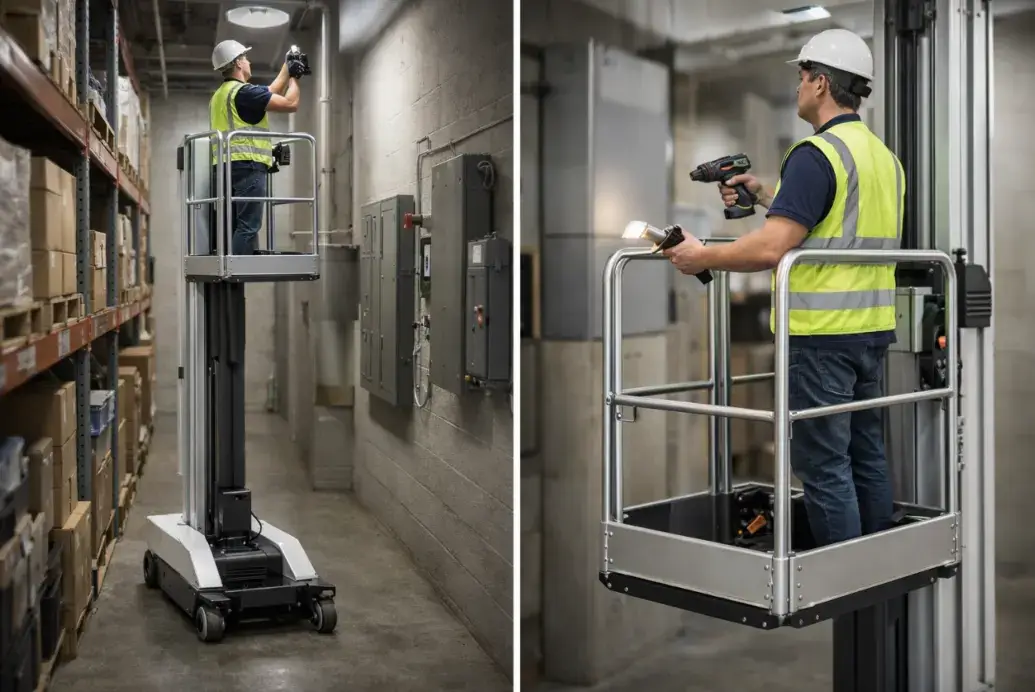
Warehouses and backrooms hide awkward corners behind packing stations, near compressors, beside electrical cabinets, and next to mezzanine supports. Those are the spots where a wider platform can feel bulky. A vertical mast lift can often approach closer, which reduces reaching and awkward posture at height.
Retail and Backroom Indoor Maintenance
Retail stockrooms, supermarkets, and compact distribution rooms often have narrow aisles and constant foot traffic. Mast lifts fit well here because they are less disruptive. You can handle signage, lighting, ceiling tiles, and small repairs without turning the area into a blocked-off project.
Vertical Mast Lift vs Mini Scissor Lift in Real Indoor Use
Here is where the comparison becomes practical. The difference between a vertical mast lift vs scissor lift choice shows up once you consider task duration, platform needs, and load handling.
A mini scissor lift gives you platform space. That matters for jobs that involve cartons, multiple tools, or longer time at height. It also supports two-person work more naturally. A mast lift trades that space for access. It is narrower, often easier in tight routes, and better for precise point tasks.
In most facilities, the cleanest way to think about it is this: if you need a stable deck for work and materials, scissor lift. If you need a slim machine to reach a specific point in a tight area, vertical mast lift.
When a Vertical Mast Lift Is Not the Right Choice
A vertical mast lift is not a universal answer. If your indoor work at height often involves handling boxes, carrying bulky parts, or staying up for a long time, the limited platform space becomes a constraint. The same is true if you regularly need two people at height for alignment, installation, or coordinated work.
Also, if your workflow depends on moving along a rack line while working, a wider platform can feel faster because it reduces stops and resets. In those cases, a compact scissor lift may fit the job better.
Choosing the Right Vertical Mast Lift for Indoor Work
Once you know mast lifts match your tasks, selection becomes simpler. You are balancing usable height, load needs, and how the lift moves through your building.
Working Height vs Actual Ceiling Height
Start with the highest point you actually service. If your ceiling fixtures sit around five to seven meters, choose a vertical mast lift that reaches that comfortably without oversizing. Oversizing adds cost and often adds bulk you do not need.
Load Capacity for Tools and Parts
Be honest about what goes up with the operator. Many indoor jobs only require a tool bag, small parts, or a handheld device. If most indoor tasks are completed by one technician at a time, choosing a single person lift reduces unnecessary size and setup time. If you routinely carry heavier parts, consider whether a mast lift still makes sense, or whether a scissor platform would save time.
Floor Conditions and Indoor Use
Mast lifts shine on flat indoor floors. Keep an eye on ramps, thresholds, and transitions between rooms. Smooth movement matters in narrow spaces because you will make many short moves and precise stops.
Storage and Transport Inside Buildings
Finally, think about where the lift lives. Narrow facilities often have limited parking space. A mast lift can be easier to store in a corner or near a maintenance room without consuming valuable floor area.
Conclusion
In narrow indoor spaces, the best lift is the one that matches the task and the layout. A vertical mast lift is often the better choice for point tasks, tight access routes, and single-operator indoor work. A scissor lift remains the stronger option when platform space, load handling, or two-person work is common. Rather than treating vertical mast lift vs scissor lift as a winner-takes-all decision, it is smarter to match lift types to the lifting operations you do every week.
How JQLIFT Supports Vertical Mast Lift Needs Indoors
JQLIFT focuses on practical access equipment for indoor work where space is limited and tasks repeat day after day. Its vertical mast lift lineup is built for narrow routes, tight corners, and controlled lifting in warehouses, retail backrooms, and maintenance corridors. Designs emphasize stable mast-type lifting structures, compact footprints, and operator-friendly controls that suit real indoor workflows. Many applications involve point tasks like lighting checks, inspections, and small repairs, so accurate positioning and smooth vertical travel matter more than oversized platforms. JQLIFT also pays attention to durable construction details that affect long-term use, including consistent hydraulic performance, robust frame fabrication, and safety features that support routine operation. If your site needs a reliable single-operator access tool that fits through indoor spaces without disrupting traffic, JQLIFT vertical mast lifts are designed to meet that kind of day-to-day reality.
FAQ
Q1: Is a vertical mast lift safer than a ladder indoors?
A: For many routine indoor tasks, yes. A vertical mast lift provides a controlled platform and reduces the balance issues that come with repeated ladder climbing, especially during point inspections.
Q2: Can a vertical mast lift fit through standard doorways?
A: Many models are designed for indoor access routes, so doorway clearance is a common design target. You still need to measure your narrowest doors and turns before choosing.
Q3: How high can a vertical mast lift reach indoors?
A: Indoor models are often chosen for typical ceiling heights in warehouses and backrooms. Select based on the highest point you actually service rather than maximum possible height.
Q4: Is a mast lift suitable for narrow warehouse aisles?
A: Yes, especially for point tasks where you need a slim footprint and precise positioning. It is a strong option when you want to keep aisle traffic moving.
Q5: When should you choose a scissor lift instead?
A: Choose a scissor lift when platform space, higher lift capacity for materials, or two-person work is common. For longer tasks at height, a wider platform often feels more efficient.