
What To Look For In A Small Hydraulic Scissor Lift: 10 Key Specs
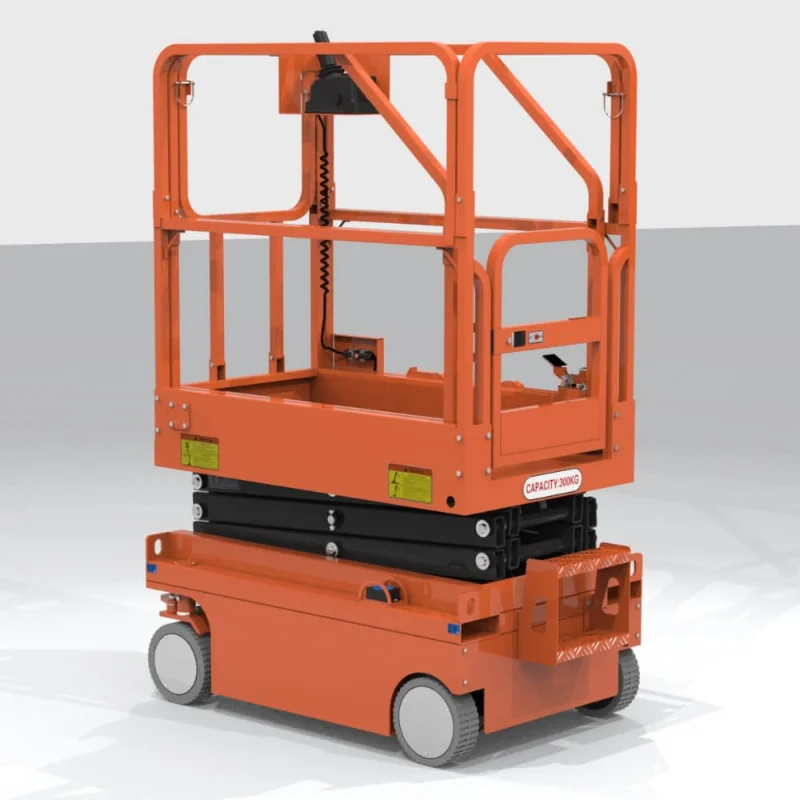
You may have looked at many spec sheets already. The lists feel long. The numbers blur. Yet you only need a lift that works in your place, day after day. A good way to start is to check a real unit, like the ZSF Hydraulic Small Scissors. This page shows what a compact lift can do indoors. It also helps you match size, height, and power to your tasks. Keep your focus clear: pick the small hydraulic scissor lift that fits your floor, your people, and your work.
This guide breaks big ideas into simple parts. Each part answers one common question. Read it once, then use it as a checklist when you compare options.
1. Maximum Platform Height — How High Do You Really Need?
Many buyers reach for the tallest machine. It looks safe to “buy big.” But extra height adds weight and cost. It also makes storage harder. Instead, choose the height that meets your most common job. Not the rare one.
For lamps, signs, and racks under six meters, a platform around 2.7 m to 4.5 m works well. This range keeps the operator steady. It also keeps moves smooth. If your top pick face is close to six meters, 4.5 m is a sweet spot. You reach the work face without tiptoeing. You also avoid the bulk of an extra-tall frame.
Practical Tips For Height
Measure the highest regular task. Write the number down. Subtract a small safety buffer for guardrails and posture. Then select the lowest platform height that still hits that mark. It is simple and it works.
2. Platform Size and Extension — Will It Fit Your Tasks?
Space on the deck affects the whole shift. Too small and tools get crowded. Too large and the lift becomes clumsy in narrow aisles. Many units include a sliding extension around 550 mm. That extra reach helps you cover more area without moving the base.
Pick a deck that lets one person stand with a normal stance. Allow room for a small parts bin or a drill case. The extension saves time in rows where you cannot reposition often. It also helps when you must reach the last few centimeters to a panel or light.
Test The Fit With Simple Moves
Stand as you would at work. Lift a light tool bag. Step, turn, and face the rail. If it feels tight in a demo, it will feel worse at height. Choose the platform that feels calm and steady.
3. Rated Load Capacity — How Much Can It Handle?
Capacity is more than body weight. Count tools, parts, packaging, and a small tray. A common range for compact units is 230–320 kg. Check the rating at full height, not just at the floor. You want the lift to hold steady when it is raised.
If you often carry heavy fixtures, aim higher in the range. If your tasks are light and quick, a lower rating can be fine. The key is to do the math once and write it into your buying note.
A Simple Load Math
Person weight + tool kit + parts = planned load. Keep a buffer of at least 15–20%. This helps when jobs grow mid-shift.
4. Chassis Width and Turning Radius — Can It Navigate Narrow Aisles?
This spec decides if a lift can even reach the job. A frame near 760 mm wide slips through common doors and 0.8–0.9 m aisles. A turning radius close to 1.6 m keeps U-turns simple. Fewer multi-point turns mean fewer bumps and less wasted time.
Look for stable drive on smooth floors. Dual rear-wheel drive grips well on polished concrete, even when a thin layer of dust or moisture appears. You want steady moves, slow and sure, near racks and glass.
Walk The Route Before You Buy
Use a tape to measure the narrowest point on your real route. Check door handles, posts, and corners. Write the tightest number down. Then pick a chassis that clears this point with real space to spare.
5. Power and Battery System — How Long Can You Work Per Charge?
Battery setup shapes your day. Most compact lifts use a 24 V system made from two 12 V batteries in the 80–100 Ah class. This is enough for a full shift with short top-ups. A clean onboard display with voltage and charge bars helps plan breaks. You avoid the guesswork that leads to mid-task stops.
A common charger is 24 V/15 A. It fits quick “opportunity charging” during lunch or between jobs. Put the charging point near the staging area so operators do not walk far. Little things like this keep uptime high.
Keep Charging Simple
Set a rule: plug in whenever you park for more than 15 minutes. Short charges add up over a full day.
6. Lifting and Drive Motors — What Do the Numbers Tell You?
Two motors do two jobs. The lift motor raises the platform. The drive motor moves the base. A pair like 24 V/1.2 kW for lift and 24 V/0.5 kW for drive is common in compact units. The lift power controls how fast you rise with a load. Smooth, steady speed helps the operator work with less stress.
Do not chase the highest number only. Focus on repeatable speed at working height. A motor that runs smooth and cool through many short lifts helps throughput more than a fast but jumpy unit.
Try Short Cycles In A Demo
Raise. Stop. Lower. Repeat ten times with a small load. Listen for strain. Feel for shake. If it stays calm, it is a good sign.
7. Hydraulic System — Why Build Quality Matters
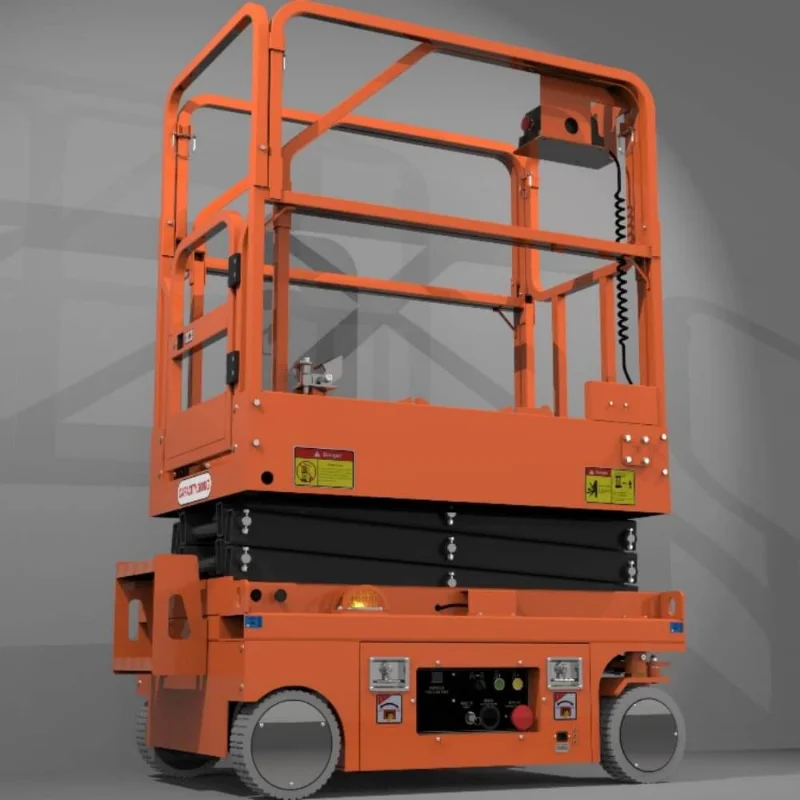
Hydraulics make the lift feel safe. Good seals and hoses prevent drips, jerks, and sudden stops. Quality designs include explosion-proof valves and anti-burst hoses to hold pressure. When cylinders glide, operators relax. When they shudder, people tense up and slow down.
Inspect hose ends, fittings, and the tank area. Even a small leak can grow. Fix early to protect seals and keep the platform speed steady.
Service Access Saves Time
Some units add pull-out drawers for batteries and key components. This keeps service quick and clean. Ask how long a basic fluid check takes. Time saved here returns as uptime.
8. Safety Features — What Makes a Real Difference?
Strong safety design prevents small errors from becoming big events. Start with emergency-stop buttons within easy reach. Add tilt alarms to warn at unsafe angles. Look for guardrails about one meter high (around 1070 mm is common). These details build confidence at full height.
Overload protection is also key. It stops lift movement if weight goes past the rating. Check for CE or ISO marks as baseline signals. These marks do not do the work, but they show that the model follows known rules.
Make A Short Safety Habit
Run a 30-second pre-use check: rails, e-stop, tilt alarm, battery bars, tire look-over. Short and simple. Done at the start, not after trouble.
9. Mobility and Tires — Can It Handle Different Floor Surfaces?
Indoor floors are not all the same. You may see polished concrete, epoxy, or tile in one site. Choose non-marking tires to protect floors. A large wheel—around 230 mm—rolls over small gaps and drains with less shake.
Hydraulic steering gives fine control in tight rows. Operators can line up square to a panel with tiny moves. That reduces rack taps and keeps parts intact.
Match Tire To Task
If your site is clean and smooth, a softer non-marking tire feels great. If you cross door thresholds or rough patches, a slightly firmer wheel helps.
10. Maintenance and Customization — Is It Built for Long-Term Use?
A long-life lift is not only strong. It is easy to care for. Look for pull-out drawers for batteries and service points. Ask about OEM/ODM changes for color, platform add-ons, or control layout. Small tweaks can fit your site rules and boost safety.
The ZSF line shows how this plays out. It pairs compact size with parts you can reach. Battery trays and hydraulic checks sit where techs can get to them. That means shorter service stops and more time on the floor.
Keep A Simple Log
Record hours, charging times, and any alerts. A small log helps spot trends before they become stoppages.
Choosing a Reliable Manufacturer
A good machine starts with a team that knows real floors. Hangzhou Jiequ Machinery Manufacturing Co., Ltd., the maker of the ZSF Hydraulic Small Scissors, builds compact lifts for narrow aisles and low ceilings. The goal is clear: design for daily use, not only for a brochure.
Each unit is tested for stable lift, safe electrics, and steady hydraulics before it ships. The company also supports OEM and ODM for non-standard sizes or controls. With a base in a strong build hub, Jiequ serves logistics, retail, and indoor service teams. The mix is simple: solid maneuvering, steady height work, and fair running costs over time.
Common Mistakes to Avoid
- Buying by height alone — Taller is not always better indoors.
- Ignoring total load — Add tools and parts, not just body weight.
- Skipping tire type — The wrong tire marks floors or slips.
- Overlooking service access — Tight spaces slow basic checks.
- Forgetting aisle width — Measure real routes, not drawings.
Final Thoughts
A small hydraulic scissor lift is a tool you use often, not a showpiece. It should move calmly in tight paths and lift cleanly to work height. Focus on ten key specs: height, platform size, load, chassis width, battery, motors, hydraulics, safety, tires, and service design. These are the parts that shape daily work.
If you build a shortlist, include the ZSF series. It shows how compact frames, clear power specs, and easy service can make shifts smoother. Pick with care now, and your team will feel the gain for years. For many teams, this is the best route to a small scissor lift for indoor maintenance that just works.
FAQ
Q1: What’s the ideal height range for indoor scissor lifts?
A: For most sites, 3–4.5 m platform height covers common tasks. This range supports shelf work, signs, and lights without extra bulk.
Q2: How long do batteries last in daily use?
A: A 24 V system with two 12 V batteries in the 80–100 Ah range usually runs a full shift. Short top-ups during breaks keep the lift ready.
Q3: Can these small lifts fit through regular doors?
A: Yes. Frames near 760 mm wide pass through standard doors and 0.8–0.9 m aisles. Always measure your narrowest point first.
Q4: What maintenance schedule should I follow?
A: Check tires, rails, and the battery display daily. Inspect hydraulics weekly. Run a deeper check every six months, including seals and hoses.
Q5: Are small scissor lifts safe for two operators?
A: Only if the rated load allows it. Confirm capacity and guardrail strength. When in doubt, keep to one person plus tools.