
What Is a Hydraulic Man Lift? Types, Applications, and How to Choose the Right One
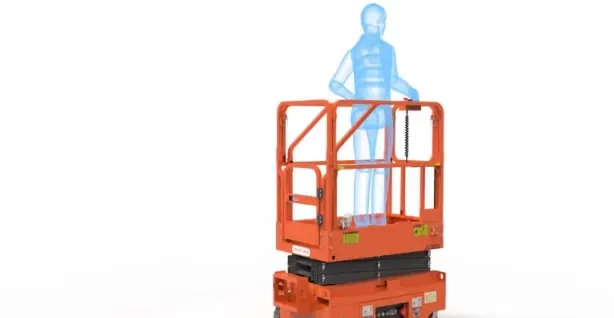
When you begin to check lift gear, “hydraulic man lift” can seem like a fuzzy tag on a list page. In truth, it includes a bunch of machines that lift folks and tools up high for safe jobs above the ground. If you handle a tiny storage place, a shop spot, or a snug building, the kind of man lift you select hits safety, setup, and even how much work gets finished.
This guide takes you through what a hydraulic man lift is, how it runs, the chief kinds out there, and where each kind suits. The spotlight stays on actual spots with little room, not only large outside build jobs. By the close, you should look at your spot, your usual tasks, and your cash plan. Then you can choose a path with much more sureness.
What Is a Hydraulic Man Lift?
At the easy level, a hydraulic man lift is a powered stand that uses hydraulic push to shift folks up and down to job spots. Instead of going up steps or standing on made-up stands, you stay on a protected stand or in a tiny basket. Then you use buttons to get to the height you want. The hydraulic bit points to the setup of oil, tubes, and gates that powers the lifting move.
Before you dive into types and choices, it aids to spot what is shared among them. Most hydraulic man lifts have a few main parts, even if the forms look quite unlike from the outside.
Core Components Of a Hydraulic Man Lift
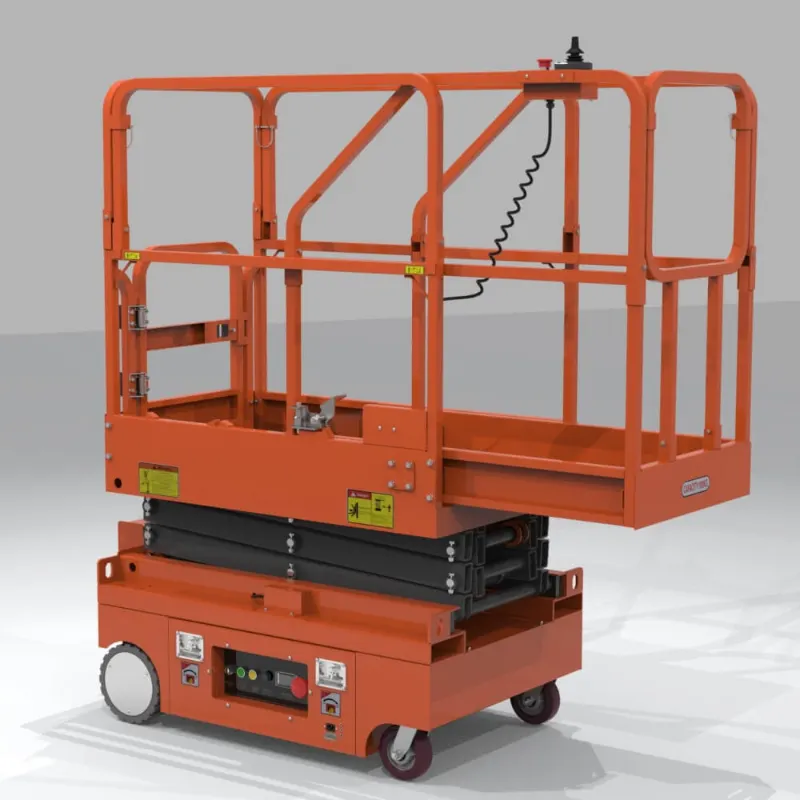
A usual hydraulic man lift has a bottom or frame with wheels, a lifting build, a stand or basket, and a hydraulic setup. The frame holds the weight. And it gives steadiness. The lifting build might be a scissor pile, a pole, or a boom arm. The stand has guards, foot boards, and a control spot. So, you can shift the machine while up high.
The hydraulic setup sits at the core of the lift. A pump shoves oil into tubes. These extend and raise the build. Gates control how quick the oil runs. So, the stand can move even. When you lower the lift, oil goes back to the tank through a watched path. So, the stand does not fall fast.
How a Hydraulic Man Lift Works
You often power the pump with an electric mover or an engine. When you hit the lift switch, the setup sends oil into the right tubes. And the build starts to go up. On a scissor lift, the arms spread out. And they push the stand higher. On a boom lift, the arm parts stretch. And they shift angle. Safety gates and stop switches halt the lift at its set height. And they back up quick lowering if something goes bad with the chief buttons.
For inside use, electric power is quite usual because it works quiet. And it skips fumes. For outside or rough tasks, engine powered still has a spot. Both setups still count on hydraulic tubes to carry the load. And to keep the stand firm even when you handle tools or stuff up high.
Common Types Of Hydraulic Man Lifts
“Hydraulic man lift” does not mean one exact machine. It is more like a group name. Inside that group, a few shapes show up over and over in storage places, shops, and fix teams.
Knowing the basic kinds helps you skip buying a lift that looks nice but does not fit your floor room or jobs. You do not need a full builder class. You just need a clear view of the main forms. And how they act.
Hydraulic Scissor Lifts
Hydraulic scissor lifts use a piled “X” frame that opens and shuts like a big fold tool. The stand sits on top of this frame. And it moves straight up and down. This gives you a wide, firm working spot. And higher load hold compared to many boom baskets. For picking stock, light work, and top access, that big flat stand is often more useful than fancy reach.
Because of this setup, many spots pick mini scissor lifts when they want a small machine that still gives okay working height. And room for two folks and some stuff. Small models keep the frame narrow enough for path work. While keeping the scissor pack tough enough for daily inside use.
Hydraulic Boom Lifts (Cherry Pickers)
Hydraulic boom lifts, often named cherry pickers, carry a tiny basket at the end of an arm that can swing up, down, and to the sides. They do well when you need to reach over parked cars, gear, plants, or roads. A boom lift can put you in front of a sign or wall without rolling the frame right under it. This makes them liked for street lights, outside signs, and building cover work.
Vertical Mast Lifts
Vertical mast lifts use a slim pole with a stand that runs up and down along it. They are more small and light than a full scissor lift. With a smaller stand and lower load mark. You often spot them in hotels, low top malls, or light fix roles. Where one person needs fast access to a row of fixtures without shifting a lot of stuff.
Where Are Hydraulic Man Lifts Used?
Hydraulic man lifts show up anywhere folks need safe, repeat access above ground level. Some spots ask for high reach and hard outside do. Others need quiet, small machines that can go through stock or shows without messing the setup. Your own building likely falls somewhere in the middle.
Looking at usual use cases can aid you map your work to the right style of lift. Instead of picking on cost alone.
Indoor Commercial And Retail Spaces
In shop spots, buy centers, and show rooms, most work happens within a few meters of the floor. Staff change signs, fix lights, clean high glass, hang flags, and service screens. Here, the chief issue is room and buyer ease. A mini electric scissor lift for narrow aisles fits between fixtures. It runs quiet. And it does not fill the store with smoke.
Warehouses And Logistics
In storage places and move hubs, man lifts back picking, rack changes, fire setup checks, and wire runs. Paths can be tight. But the loads are often heavier. Boxed stock, boxes, and tools all need space. In many small buildings, a mini electric scissor lift for small warehouses hits the sweet spot. It is small enough to turn in paths. Yet tough enough to carry two folks and stock to the top beam.
Facility Maintenance And Light Construction
On the fix side, man lifts aid with air work, pipe runs, duct holds, and general mend tasks. Top height and setup say the right lift kind. In low or middle height buildings, a scissor style hydraulic man lift covers many jobs without the mess of a full boom lift. In taller open spots or tricky tops, boom lifts still have a role.
Outdoor Work And High Structures
Hydraulic boom lifts and truck set platforms take over once you step outside. And start dealing with building walls, street lights, big signs, or work builds. These jobs call for greater reach and working heights that basic scissor lifts just do not give. For many small groups, renting such lifts when needed is more real than owning them all time.
Hydraulic Man Lift vs Other Lifting Equipment
You might match a hydraulic man lift not only against other man lifts. But also against steps, moving tower stands, or simple stands. Each choice has a spot. Though some fit better to new safety hopes than others.
If you are true about how often you work up high, how long each task takes, and who uses the gear, the match becomes much easier.
Man Lift vs Ladder
Steps still show in almost every building. But they count a lot on user ways. It is easy to stretch too far, carry too much in one hand, or climb when worn out. A man lift takes away some of that risk. It gives you a guarded stand with room for tools. When you add in the time lost going up and down, the work gap also shows clear once you start noting tasks.
Man Lift vs Scissor Lift
“Man lift” is a wide tag that includes scissor lifts, boom lifts, and mast lifts. The scissor kind is often the most handy branch of that group for inside work and shop tasks. When the job mainly means straight up move rather than reaching over blocks, a compact indoor scissor lift is usually easier to place. And simpler to teach on than more tricky boom shapes.
Electric vs Hydraulic Lifts
Electric lifts focus on how the pump is run. While hydraulic points to the lifting setup itself. In truth, most lifts on the market mix both. For inside spots where sound and air matter, an electric run pump on a mini electric scissor lift gives you quiet run. And no smoke. Hydraulic tubes still handle the weight. But the power source fits better with closed spots and long work times.
How To Choose the Right Hydraulic Man Lift?
Picking a hydraulic man lift is less about chasing the biggest mark. And more about matching a machine to your real tasks. A simple list can aid you skip overpaying and under-buying.
Start by noting your regular jobs, the folks who will use the lift, and the tightest spots it needs to go through. With that in hand, you can work through a few key things.
Height Requirement
Look at the highest spot where you often work, not the rare once-in-ten-years task. From there, you can go back to a stand height. For many small work and shop spots, a mini electric scissor lift with a working height around six to eight meters is enough. That range covers most storage racks, shop tops, and inside signs.
Space and Turning Radius
Measure your narrowest path or hall. If the lift cannot turn there, you will always shift stock to make room. Spots with tight runs between racks gain from a compact indoor scissor lift that keeps the footprint slim. Short full length also aids, especially when you need to get near a wall or rack close enough to work easy.
Platform Size and Load Capacity
Think about how many folks and how much stuff you want on the stand. If a single fix person with light tools is the usual, smaller lifts can work. If you often need two staff plus boxes or fixtures, a mini scissor lift with a wider stand and stronger load mark saves trips. And cuts tiredness.
Indoor vs Outdoor Conditions
Inside floors are usually smooth hard ground or tile. And they do not take heavy, rough wheels well. Outside yards can be bumpy, dirty, or sloped. That gap alone may push you toward an inside machine or a rough ground model. For the bulk of inside tasks in tight spots, a mini electric scissor lift for narrow aisles makes more sense than a big outside unit.
Budget and Frequency of Use
At last, look at how often the lift will move in a given week. If you only face high work a few times a year, renting a boom lift for those tasks and buying a lighter machine for daily duties can be a better blend. When most tasks sit in the low to middle height band inside your building, picking a mini scissor lift for small warehouses keeps your cash focused on what staff really use every week.
Conclusion
A hydraulic man lift is more than a chunk of heavy gear. It is a daily tool that shifts how your team works above ground level. By spotting the main kinds, where they fit, and how they differ from steps and basic stands, you can match a machine to your real spot instead of chasing fancy numbers on a mark sheet. For many small storage places, shop stores, and inside work spots, scissor style man lifts – especially small models – quietly become the main choice once things settle.
About JQLIFT and Its Man Lift Solutions
Hangzhou Jiequ Machinery Manufacturing Co., Ltd. is a dedicated manufacturer of aerial work platforms and lifting equipment, trading under the name JQLIFT. The company focuses on lifts for real workplaces such as warehouses, logistics centers, factories and retail projects, not just exhibition pieces. Its range includes self propelled scissor lifts, mini scissor lifts for indoor use and other hydraulic man lift solutions built for daily use.
Production runs under strict process control with attention to structural strength, hydraulic reliability and safety functions like emergency lowering and overload protection. Platforms are sized for practical tasks, with options that fit through standard doors and move in narrow aisles. JQLIFT also supports users with model selection advice, technical help and spare parts. If you are planning to bring a man lift into a small warehouse or retail environment, these lifts give you a focused, application based choice rather than a random catalog.
FAQ
Q1: Do you always need a hydraulic man lift instead of ladders?
A: Not always. For very occasional low work, a ladder is still fine. Once you have regular tasks above head height, especially with tools or boxes, a man lift quickly feels safer and less tiring than climbing up and down all day.
Q2: Is a hydraulic man lift hard for your staff to learn?
A: Most modern lifts have simple controls, and basic training usually fits into a short session. The bigger shift is getting staff used to pre shift checks and safe habits, but many teams pick this up quickly when they see the comfort of a stable platform.
Q3: Can one hydraulic man lift cover both indoor and outdoor work?
A: Sometimes. If your outdoor work is light and your yard is flat, one compact unit might serve both areas. If you have rough ground or need to reach high on building exteriors, it is better to treat indoor and outdoor needs as separate and plan equipment around each.
Q4: How often should a hydraulic man lift be serviced?
A: Most manufacturers suggest regular inspections plus at least one full service each year, sometimes more in heavy use. It helps to keep a simple log of hours and tasks so you know when it is time to call your service provider instead of waiting for a fault.
Q5: What is the biggest mistake buyers make with man lifts?
A: Many buyers look only at maximum height and price. They forget about aisle width, platform size and how often the lift will actually move. A lift that is a little lower but easier to drive through your building often gets used more, which is what really matters.