
Vertical Mast Lift vs Scissor Lift for Modern Facilities
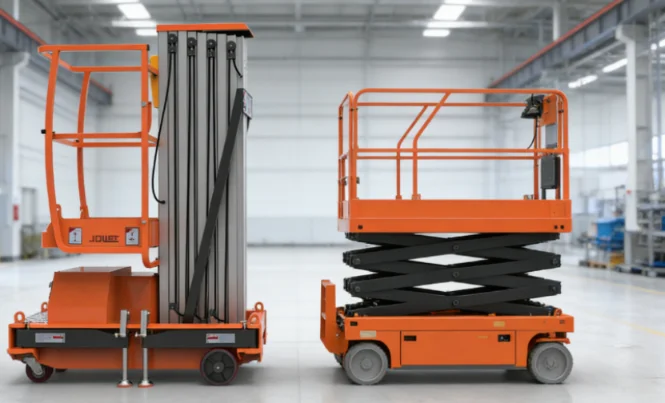
If you are comparing a vertical mast lift vs scissor lift, the real issue is not which machine looks stronger on a spec sheet. It is which one fits your building, your tasks, and the way your team moves through the day. Modern facilities care about access, but they also care about aisle space, door clearance, floor load, setup speed, and how much disruption a lift creates during normal work. That is why mast lift or scissor lift has become a more practical buying question than a purely technical one.
JQLIFT is worth noting here because its product structure reflects how buyers actually shop now. On its official category pages, the company separates vertical mast models into the L single mast aluminum alloy lift, the DL double mast aluminum alloy lift, and the AL all-electric aluminum alloy lift. Its scissor range is also split into ZSF hydraulic small scissors, ASF small scissors, and SF semi-electric small scissors. That is a useful sign. It shows a manufacturer thinking in work scenarios rather than one-size-fits-all claims. JQLIFT’s About page also states that the company was established in 2015 in Hangzhou, operates on more than 30 acres, has more than ten R&D technicians and more than a hundred skilled workers, and sells products globally. For a buyer, that reads like industrial depth, not just catalog breadth.
What Is the Main Difference Between a Vertical Mast Lift and a Scissor Lift?
The shortest answer is footprint versus platform. A compact access platform comparison usually comes down to how much room you have, how much load you need to carry, and how often the machine has to move through tight indoor paths. That sounds simple. In real projects, it decides everything.
Vertical Mast Lifts Are Built for Tight Indoor Access
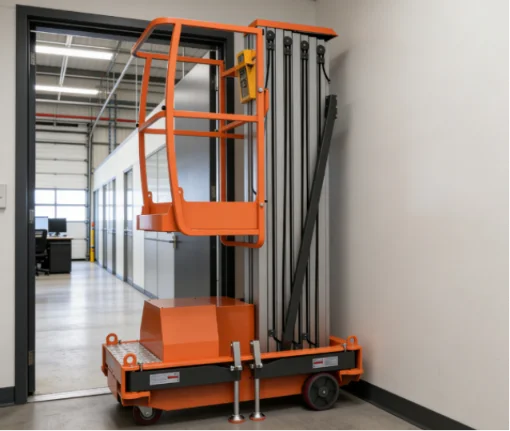
Reference guidance on this topic makes the core point clearly: vertical mast lifts are smaller and more compact, which makes them a better fit for narrow spaces, indoor work, and restricted-access areas. The same source notes that they can fit through doorways and elevators, which matters a lot in schools, offices, malls, and multi-story facilities. If your daily problem is access, not payload, a vertical mast lift for narrow spaces usually starts with an advantage.
Scissor Lifts Are Built for Larger Platforms and Heavier Loads
Scissor lifts take the lead when platform size and load matter more than extreme compactness. The reference comparison says scissor lifts need more room to operate, but they can carry heavier loads and are better for larger work platforms. That is a big reason they stay common in facilities where workers need more tools, more parts, or simply more standing room during a job.
The Better Choice Depends on the Work Pattern
This is where buyers sometimes overcomplicate things. The machine is not for “future flexibility” in the abstract. It is for the jobs your site repeats every week. If the job is a quick indoor service task, the smaller platform may be the smarter pick. If the job regularly involves higher load and a broader work area, the answer shifts fast.
Which One Works Better in Tight Indoor Spaces?
This is the section most facility teams care about first, because indoor lift equipment choice often gets decided by what the building will tolerate. Some machines look great until they meet a narrow corridor or a service elevator. Then things get awkward.
Vertical Mast Lifts Usually Win on Maneuverability
The comparison article says vertical mast lifts are compact and can easily fit through doorways and elevators. It also links them to tight access areas and fast-paced environments. That is exactly why a vertical mast lift for indoor maintenance is often preferred in hotels, office towers, retail sites, and public buildings. JQLIFT’s AL all-electric aluminum alloy lift is described on the company home page as reaching 7.5 meters with a 125 kg load and having a compact design that allows elevator access, with examples including malls, offices, and warehouses. That is not a minor detail. In older buildings, elevator fit can decide the purchase before anything else.
Scissor Lifts Need More Open Operating Space
The same reference warns that scissor lifts may be too large for multi-story or restricted-access sites. That does not make them a bad option. It just means they ask more of the building around them. In a warehouse with broad aisles and clear zones, that may be fine. In a narrow back-of-house service path, maybe not. Everyone loves more platform space until they have to turn the machine around.
Which Lift Is Better for Platform Space and Load Capacity?
Once space is dealt with, the next concern is usually what the platform has to carry. This is where buyers stop asking about access and start asking about how much work can be done per trip.
Scissor Lifts Make More Sense for Bigger Platform Jobs
The reference source says scissor lifts are best for tasks that demand larger work platforms and heavy load-lifting capability. If you need room for tools, stock, fixtures, or more than one part of the task at once, a scissor lift with larger platform space may save time even if it takes up more room below.
Vertical Mast Lifts Fit Smaller, Faster Tasks
That same source links smaller vertical mast lifts to maintenance, electrical work, and installations. In other words, these machines are strong when the job is precise and localized. JQLIFT’s category structure also supports that reading. Its mast range is segmented by single mast, double mast, and all-electric aluminum alloy options, which suggests buyers are choosing around task size, mobility, and access constraints, not just headline height.
How Do Height and Reach Change the Decision?
Height always enters the conversation, but it should come later than many buyers think. Buying more height than you need can make indoor movement harder and cost more without solving any real problem. It happens a lot.
Vertical Mast Lifts Cover Many Standard Indoor Height Tasks
The reference comparison says vertical mast lifts typically offer height and reach capability up to 30 feet and are well suited for indoor ceilings, HVAC systems, and signage work. That covers a large share of facility maintenance jobs. For many indoor teams, that is enough. More than enough, actually.
Scissor Lifts Go Higher When the Job Truly Demands It
The same source says scissor lifts can reach up to 60 feet or more, making them better when higher elevation is part of the normal task. If your site routinely works well above standard indoor service height, the extra reach matters. If not, larger equipment can become a daily inconvenience dressed up as future-proofing.
What Does JQLIFT’s Product Range Say About Today’s Market?
One useful way to read the market is to look at how manufacturers organize their lines. When the product families split more clearly, it usually means buyers have become more specific too.
Specialized Product Segmentation Reflects More Specific Facility Needs
JQLIFT’s vertical mast line includes the single mast aluminum alloy lift, double mast aluminum alloy lift, and all-electric aluminum alloy lift, while its scissor line includes hydraulic small scissors, small scissors, and semi-electric small scissors. That kind of segmentation suggests modern facilities are no longer shopping for a generic “lift.” They are shopping for a fit: compact access, heavier platform work, simpler hydraulics, or electric mobility for indoor use. That is a healthier buying pattern, honestly. It usually leads to fewer expensive mistakes.
How Should You Decide Between a Mast Lift or Scissor Lift?
By the time you get here, the answer is usually clearer than it seemed at the start. You do not need a dramatic rule. You need a practical filter.
Choose Based on Space First, Then Job Demands
If your main limit is access, especially doorways, elevators, narrow paths, and indoor maintenance routes, a vertical mast lift for narrow spaces is often the cleaner answer. If your main need is a larger platform, heavier load support, or higher reach, a scissor lift usually fits better. That is the heart of this vertical mast lift vs scissor lift decision, and it aligns closely with both the reference comparison and JQLIFT’s own split product categories.
FAQ
Q1: Is a vertical mast lift better than a scissor lift for indoor use?
A: It often is when access is tight. The reference comparison says vertical mast lifts can fit through doorways and elevators and work well in tighter indoor areas.
Q2: When should you choose a scissor lift instead of a mast lift?
A: Choose a scissor lift when you need a larger platform, heavier load capacity, or more working height than a mast lift typically provides.
Q3: What is a good compact access platform comparison for facility buyers?
A: Compare footprint, maneuverability, platform size, load need, and whether the machine must pass through elevators or tight indoor routes.
Q4: What does JQLIFT offer in these two product categories?
A: JQLIFT lists single mast, double mast, and all-electric aluminum alloy lifts on the vertical mast side, plus hydraulic small scissors, small scissors, and semi-electric small scissors on the scissor side.
Q5: How should you make the final indoor lift equipment choice?
A: Start with the building, then the job. Check access limits first, then platform and height needs. That sequence usually gives you the right mast lift or scissor lift answer faster.