
Ultra-Narrow Aisle Vertical Mast Lifts: The Ultimate Guide to Compact Lifting Solutions
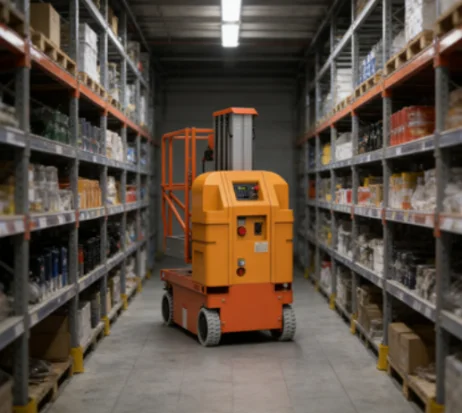
Floor space in a warehouse feels like gold these days. Have you looked at your storage bills lately? They probably hurt a little. Companies want to save money and pack in more goods. So they push racks closer and closer. That gives you a real headache. How do you lift a worker and tools up to a high shelf when the aisle is only a bit wider than a bedroom door? Regular scissor lifts just don’t work here. They are too wide. They feel clumsy in tight spots. When you turn, they swing out wide like a big truck. You need something slim and precise instead of something heavy and slow.
Why Is Your Warehouse Aisle Getting Narrower?
The push for crowded storage is not a short trend. Companies do it to survive. Land and rent prices keep climbing. Cut an aisle from three meters down to just over one meter. Suddenly you can add about 40 percent more shelves in the same space. That saves a lot of cash. But it leaves very little room. Ordinary machines can’t manage it. Some areas in your warehouse become off-limits to old equipment. Worse still, you risk bumping expensive stock because the machine won’t fit.
JQLIFT specializes in exactly this problem. They focus on aerial work platforms that squeeze into tiny gaps where others stop. Their all-electric aluminum alloy series shows this smart thinking well. The machines stay small yet reach high. They perform best in 0.8-meter aisles. The engineers make sure the unit stays steady even when tall with a narrow base. This narrow focus makes JQLIFT a favorite for anyone who wants to use every inch of floor. You get clever space use without losing safety. Their machines handle the tightest corners smoothly.
The Problem With Traditional Lifting Equipment
Most older lifts were designed for large construction sites or wide factory areas. Try to move a standard scissor lift into a narrow rack area. You soon notice the turning circle is awful. You go forward and back many times just to line up straight. That wastes time. It drains the battery fast too. The driver gets frustrated. Suppose the machine is 1.2 meters wide and the aisle is only 1.3 meters. There is almost no space left. One tiny error and you scrape a rack or damage a pallet.
How Ultra-Narrow Aisle Technology Fixes The Gap
The Ultra-Narrow Aisle class exists to solve this exact warehouse bottleneck. These machines skip the wide base. Instead they use a mast that rises straight up. The ground size stays the same whether the platform is low or high. The slim base lets you drive through paths once meant only for ladders. You lose the worry about getting stuck or scraping walls.
What Exactly Is a Compact Vertical Mast Lift?
To understand the difference, look at the basic build. A scissor lift has a large X-frame that unfolds to rise. A mast lift has metal tubes that slide into each other like a telescope. This setup keeps the whole unit light. That helps a lot on mezzanine floors with low weight limits. You find many of these tools in the vertical mastlifts category. The goal there is clear: tall, thin, and easy to move.
Understanding The Mast Mechanism
Usually the mast moves with hydraulic pressure or a strong electric motor. Inside buildings, electric wins easily. It runs very quiet. No bad smells or oily fumes fill the air. The mast parts slide smoothly. That matters for safety. A small shake at the base feels huge when you are ten meters up. You need a mast that stays stiff and solid. No one wants to feel like they stand on a shaky branch in the wind.
The Role Of The Compact Chassis
The chassis forms the bottom that holds everything. In compact models, wheels sit neatly under the body. Nothing pokes out at the sides. If the front clears a shelf, the back clears it too. Driving becomes simple. You don’t guess. No need to keep checking behind while you steer.
The Magic of the 0.8m Chassis and 360 Degree Steering?
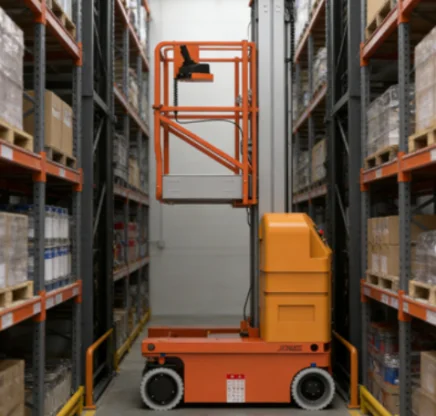
The 0.8-meter width stands out as the key feature. Compare it quickly: most office doors measure about 0.8 or 0.9 meters. So this compact mast lift slips through normal doors. It fits small elevators. It even loads into the back of a delivery van easily. That mobility helps in buildings never built for big industrial gear.
Why 0.8 Meters Is The Industry Sweet Spot
A machine only 0.8 meters wide can go almost anywhere. Many shelves leave just a little space. Drop below one meter and most units won’t fit. The 0.8-meter size gives a small safety buffer. You avoid feeling squeezed. Drive at normal speed without constant fear of hitting racks. The job changes from stressful to straightforward.
The Power Of 360 Degree Flexible Steering
Regular steering needs space for the wheels to turn in a circle. But many new models, like the all-electric aluminum alloy ones, spin 360 degrees on the spot. The unit turns fully without moving forward or back even a little. Drive into a dead-end by accident? Just rotate and head out the same way. No long backing up. That saves plenty of time on busy days.
Bi-Directional Driving Capabilities
Look for another handy feature: easy driving in both directions. Certain lifts move backward as quickly and smoothly as forward. The controls feel smart. They help you sense exactly where you head. This proves useful in tight aisles when you need to line up close to a shelf. You want precise movement on command. Up at eight meters, jerky motion feels scary. Smooth control keeps things calm.
Where Can You Actually Use These Tiny Lifts?
These machines work beyond huge warehouses. Small shops use them now. Even computer rooms do. Any spot with high storage and little floor space fits well. Picture a library with tall shelves or a clean room for medicine production. Big dirty lifts simply don’t belong there.
High Density Retail and E-commerce
In stores you stock shelves while customers walk nearby. A giant orange lift scares people and blocks paths. A small quiet mast lift slips through aisles and works without trouble. For fast-moving online shops, these lifts let you pack more items in the same building. That means more orders shipped.
Data Centers and Server Rooms
Server rooms stay tight and packed. Narrow paths help cool air flow right. The equipment costs a fortune so you must stay careful. You cannot bump a server rack. The 360-degree steering plus 0.8-meter base make mast lifts the safe pick. Plus non-marking tires keep expensive floors clean and unmarked.
Manufacturing and Production Lines
Factory floors fill up with conveyor belts and large machines. Sometimes the only way to reach a light or pipe is straight up from a tiny gap. A compact lift rolls or drives through those spots easily. Maintenance teams fix issues without halting the whole line for hours.
Choosing the Right Model for Your High Density Storage?
Picking the right lift goes beyond max height. Check the folded height too. If it reaches ten meters but won’t pass through your door when lowered, you wasted money. Also look at the battery. Nothing annoys more than a dead battery mid-job.
Battery Life and Charging Needs
Most lifts run on large batteries. Lithium types shine because you can quick-charge during a short break. For 24/7 warehouses this feature matters a lot. Without it you need spare units just to keep one ready.
Platform Capacity vs Machine Weight
Balance matters here. Think about load capacity against machine weight. If you are tall with heavy tools you may want 200kg capacity. But too much weight risks damage to a mezzanine floor. Always confirm your building’s weight limits first.
FAQ
Q1: Can you drive a vertical mast lift while the platform is high up? A: Most models let you drive slowly while you are up high, but you should only do this on a very flat and level floor so you do not tip over.
Q2: What is the main difference between a vertical mast lift and a scissor lift? A: A mast lift uses a straight tube to go up and takes up much less floor space. A scissor lift is wider and uses big folding arms to go up.
Q3: Do I need a special license to use a small mast lift? A: Usually, you need some basic safety training. This teaches you how to check the machine and what to do if there is an emergency.
Q4: How often do I need to fix the hydraulic system? A: You should check the oil and the hoses every month to be safe. A big service is usually only needed once a year if you use the machine a lot.
Q5: Can I use these lifts on a carpet or nice floor? A: Yes, if the lift has non-marking rubber tires. They are safe to use in schools or offices without ruining the carpet or the shiny floor.