
Total Cost Of Ownership: Why Investing In A Quality Small Scissor Lift Saves You In The Long Run
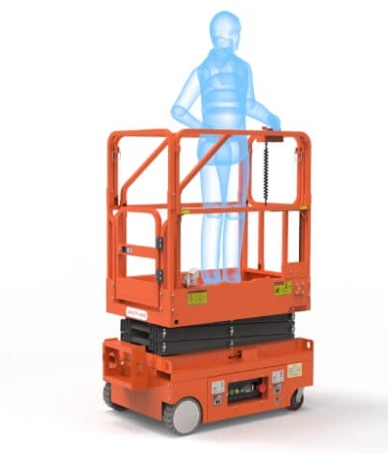
Keeping people safely up in the air to work on lights, racking, signs, fans, cables, HVAC, you name it, is not a “nice to have.” It is daily work in most warehouses and plants. Many buyers look only at purchase price when they choose an access tool. The problem is that the cheapest lift is rarely the lowest cost in real use. Breakdowns stop the job. Oil leaks trigger safety calls. A bent platform fails inspection. A compact hydraulic scissor lift that can lift, hold, and steer in tight aisles without constant attention is usually the cheaper machine over its full life.
What Does Total Cost Of Ownership Really Mean for Scissor Lifts?
Total cost of ownership, or TCO, is the full cost from day one until retirement. It includes purchase price, charging and daily running, mini scissor lift maintenance cost, inspections, downtime, parts, and how long the unit stays in service. A quality small scissor lift is not only about platform height on a spec sheet. It is about staying available instead of sitting tagged “out of order.”
Why TCO Matters When You Work Every Day at Height
In a warehouse or production floor, if the lift is down, work above head height often stops. A weak pump, leaking hose, or unstable platform can delay simple tasks like lighting or racking checks. Over a year, that lost access time often costs more than whatever “deal” you got buying a bargain unit.
How Do Cheap Lifts Increase Hidden Costs?
A low-cost unit may claim similar reach, but inside you may get thin arms, light steering parts, and basic hydraulics. Those weak points turn into repair bills, unplanned downtime, and safety problems.
Frequent Breakdowns and Repair Downtime
Entry-level machines often save cost in the hydraulic group or steering. A better compact design uses rear wheel drive and hydraulic steering up front to turn in narrow aisles without scraping racks. That tighter steering control also helps reduce shock load into the frame, so parts last longer.
Shorter Service Life and Faster Wear
Cheaper lifts bend early. Platforms flex. Paint flakes. Hoses rub through. By contrast, a better build uses a reinforced scissor structure and a rated load around 300 kg, with about 100 kg allowed on the deck extension. That means two people and tools at working height without the machine feeling nervous. Slower wear in pivots and pins means you are not replacing the whole unit after only a couple of years.
Safety Risks and Compliance Penalties
Hidden cost also shows up when a unit fails a safety check. A serious hydraulic small scissor lift will include hose burst protection. If a hose fails, the platform locks instead of dropping. That kind of valve is not “extra.” It helps you avoid injuries, failed audits, and late-night paperwork.
What Makes a Quality Hydraulic Small Scissor Lift Worth It?
A good lift is built to live on a factory floor, not just look clean in a brochure. You see this in the frame, the wheels, and how it behaves at full height.
Durable Construction and Hydraulic System Stability
A compact scissor lift for warehouse work often runs large wheels, roughly 230 mm diameter, so it can roll over floor joints and small debris without needing sheets of plywood under it. It should raise smoothly to working height. Typical platform height in this class is about 4.8 meters, which is enough for ceiling work in most standard buildings without calling in a boom truck.
Hose Rupture Protection and Safety Interlocks
Look for built-in interlocks. A quality small scissor lift may include an electronic level sensor. If tilt front to back or side to side gets past a safe limit, the lift function locks. Some units also include a 550 mm sliding deck extension and platform safety hook. You can reach over conveyors or pallet racks without driving the whole chassis into that space. This sounds small, but in real aisles it keeps the job moving.
Long-Term Value and Residual Life
Strong steel structure plus those safety controls usually means longer service life. You keep the same lift in rotation for years, and you are not panic-buying rental replacements. A quality small scissor lift in this style is built for daily indoor duty, not a one-time rental.
How Do You Calculate ROI Over the Life of the Lift?
Return on investment is not just how cheap the lift was at purchase. It is how often it stays in use.
Real World Cost Picture
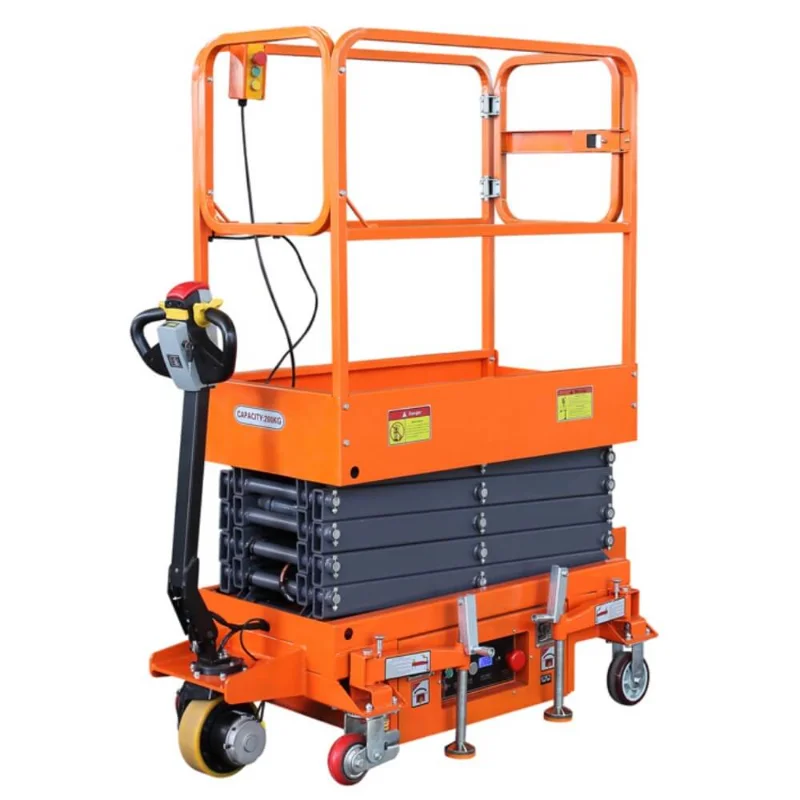
Picture two paths. One lower tier unit needs hydraulic work twice a year and sits idle while waiting on parts. Another unit keeps running because it was designed to be serviced from a pull-out drawer section. That drawer layout gives fast access to core parts, so techs can keep it in service instead of tearing half the body apart. Over time, that cuts mini scissor lift maintenance cost and avoids scrambling for rental backup gear.
What Key Features Should You Look For in a Small Scissor Lift?
Before you choose, use a short checklist based on real use, not only numbers.
Core Features That Matter
Look for rear wheel drive with hydraulic steering on the front wheels, so the machine can actually turn in a narrow aisle. Look for rated load near 300 kg and stable lift height up to about 4.8 m for overhead work. Look for a sliding platform extension, about 550 mm travel, so you can reach over racks or lines without moving the base. Look for automatic tilt lock and hose burst protection so the platform will not rise when the machine is sitting crooked and will not drop if a line fails.
A compact scissor lift for warehouse with that feature set often replaces ladders and step cages. It also cuts climb risk for staff who are not trained like high-reach techs.
How Do You Choose the Right Lift for Your Site?
The best lift is the one that actually fits where you work and what you lift.
Match the Job, Not the Brochure
If you run high racks with narrow aisles, you need tight steering and calm travel speed, not a giant boom truck that cannot even turn between bays. Many of these small hydraulic lifts travel at roughly walking pace, around zero to 3.5 km per hour, which is fast enough to reposition but not fast enough to be unstable. If you run plant service, easy access to hydraulic components saves hours. Less fighting with covers means less downtime.
Also think about fatigue. Dragging a ladder, climbing, moving it, and climbing again is slow and risky. A controlled scissor lift lets a tech go up, slide the deck to reach 550 mm farther, complete the task, lower, and roll to the next spot. That is quiet money saved shift after shift.
Introduction to JQLIFT
Hangzhou Jiequ Machinery Manufacturing Co., Ltd. produces aerial work platforms, order pickers, and hydraulic small scissors style lifts for warehouse, facility service, and light industrial use. The company also supports OEM and ODM requests, so platform size, working height, and load rating can match what your site actually needs instead of forcing you into a generic model. The brand name often shown in the market is JQLIFT. The design focus is simple: stable reach in tight space, controlled lifting with hose burst protection, and easy service. The ZSF hydraulic small scissors series, for example, uses rear wheel drive, hydraulic steering on the front wheels, electronic tilt lock, and a pull-out service drawer. That layout keeps the lift working and limits downtime for maintenance teams instead of sending the unit to the corner, tagged out of service.
FAQ
Q1: What is total cost of ownership in a scissor lift?
A: It is the full life cost, not just what you paid on day one. That includes service time, downtime, mini scissor lift maintenance cost, parts, and how long the unit stays safe and usable.
Q2: Why is a hydraulic small scissor lift safer than a ladder?
A: It gives a guarded platform, controlled raise and lower, tilt lock that blocks unsafe lift on a slope, and hose burst protection that holds the platform if a line fails.
Q3: How high can a compact scissor lift for warehouse work?
A: Typical platform height in this class is around 4.8 meters. That covers lighting, signs, fans, and rack checks in most standard buildings.
Q4: How much weight can a small unit handle?
A: Many quality units are rated near 300 kg on the main platform and about 100 kg on the extended platform.
Q5: What should you check before buying?
A: Check steering setup, drive layout, rated load, extension deck length, tilt and hose burst protection, and how fast you can service the hydraulic section. Also make sure it can actually turn in your aisle without hitting racks.