
Top 5 Safety Features Every Electric Order Picker Should Have
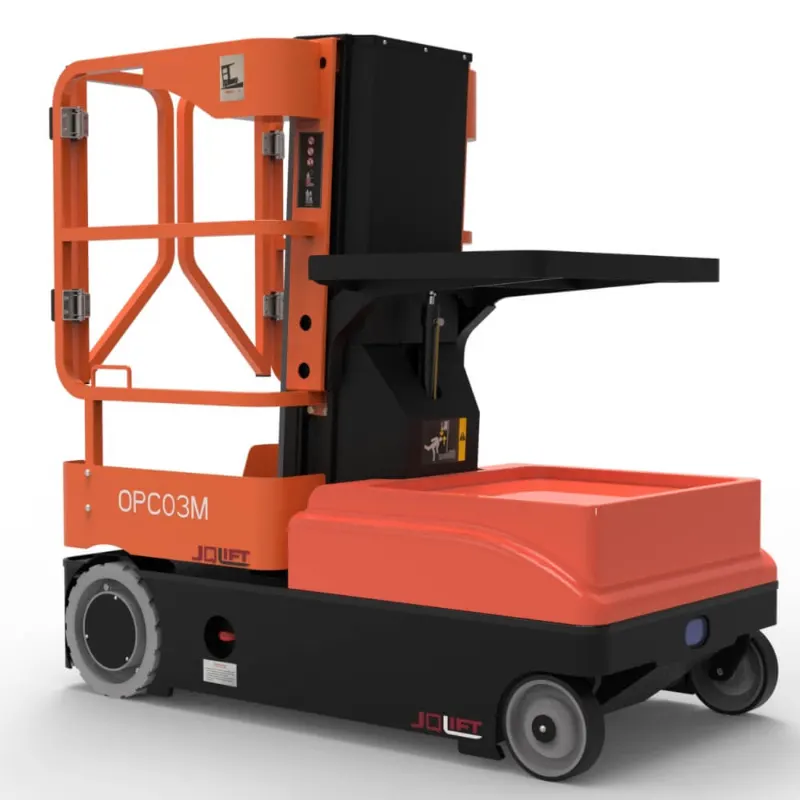
You want fewer injuries, fewer stoppages, and steady output in narrow aisles. An electric picking platform helps, but safety hardware and daily habits do the heavy lifting. This guide covers the five features that matter most, why they cut risk, and how to check them before a shift. The goal is simple: protect people, protect stock, keep orders moving.
A well-equipped electric order picker reduces step-offs, controls speed at height, and adds clear load limits, which together cut incidents and keep throughput steady.
Why Do Built-In Safety Features Matter?
Aisles get crowded. Floors get dusty. Shelves sit above shoulder height. In that mix, small mistakes turn into lost time or near misses. Built-in safety features act like quiet guardrails. They reduce step-offs, calm sharp turns at height, and keep loads stable. Clear routes and trained hands still matter, but good hardware removes many hidden traps.
The Real Risks in Narrow Aisles
Falls from ladders, slips on smooth floors, and blind picks around posts show up often in incident logs. An electric order picker adds reach and stability, yet the platform only pays off when rails, brakes, and controls work together.
The Business Case for Safety
Fewer incidents mean fewer claims, fewer downtimes, and fewer re-picks after drops. A safer setup also keeps fatigue down, which protects the last hour of each shift when errors usually rise.
Guardrails, Gates, and Non-Slip Platforms: Why Do They Matter?
Before any sensors, you need a solid deck. Rails, a self-closing gate, and traction underfoot protect you before you touch the lift controls. Think of this as the base layer of electric order picker safety.
What Is It?
Full-height guardrails around the deck, a gate that shuts with a positive latch, and a textured platform surface.
Why It Reduces Risk
Rails and a latched gate block step-offs at height. A grippy surface stops micro-slips when soles are wet or dusty. With a steady stance, hands move faster and more accurately at the pick face.
Operator Checklist
Confirm the gate auto-closes and latches. Scan rails for loose fasteners. Wipe grit from the deck.
Spec and Buying Notes
Look for firm latch feedback on the gate and a deck texture that still grips after months of use.
Fall Protection Tie-Off Points: Do You Need Them?
Not every task uses a tether at height, but approved anchors add a second layer for extended picks or tricky reaches. They also set a clear routine for higher-risk zones.
What Is It?
A rated anchor point for a harness with visible labels. The anchor sits where you can clip in without leaning.
Why It Reduces Risk
If a foot slips or a box shifts your balance, the tether catches you. That backup turns a bad moment into a quick reset.
Operator Checklist
Check anchor labels and hardware. Inspect harness webbing and hook gate. Clip in before raising the deck when policy calls for it.
Spec and Buying Notes
Choose anchors with clear markings and an easy reach from a normal stance.
Capacity Controls and Visibility Aids: How Do They Prevent Errors?
Overloading and blind picks hurt stability and slow a shift. Capacity markings and visibility aids guide better decisions at the shelf. When light is poor, mistakes rise.
What Is It?
Posted platform and tray ratings, clear decals, task lighting, and sightlines free of tall panels.
Why It Reduces Risk
You keep the center of gravity stable and avoid tray overloads. Lighting reveals labels and edges so hands move with confidence. Fewer drops mean fewer re-picks and less damage.
Operator Checklist
Read posted capacity. Count the operator, tools, and goods together. Test task lights. Clean decals.
Spec and Buying Notes
Ask for separate ratings for the platform and any auxiliary tray. Choose lighting that covers the pick face without glare.
Anti-Tilt Logic, Speed Limiting, and Braking: What Should You Look For?
Turns at height, ramps by docks, and crowded cross-aisles can combine into unstable moments. Smart speed profiles and firm brakes keep the machine calm when the deck is up.
What Is It?
Height-linked speed limits, turn limits at elevation, a strong parking brake, and non-marking tires matched to your floor.
Why It Reduces Risk
Lower travel speed at height buys reaction time and stops sharp swings. Brakes that hold on slight ramps prevent slow roll-aways. Non-marking tires protect floors and maintain traction.
Operator Checklist
In a safe zone, raise the deck and drive slowly. Feel the speed limit engage. Test turning response and brake hold. If behavior feels off, tag the unit.
Spec and Buying Notes
Look for predictable slow-down at set heights and a brake that holds under a light push. Match tire hardness to floor finish.
Emergency Stop, Key Control, and Interlocks: How Do They Work?
In crowded aisles, seconds matter. A big, reachable stop button can be the difference between a near miss and a long report. Key control and interlocks reduce misuse and unsafe states.
What Is It?
A red emergency stop within easy reach, a key switch for access control, and interlocks that block travel or lift unless the gate is shut and the presence pedal is pressed.
Why It Reduces Risk
A fast stop cuts motion when a person or pallet appears. Key control prevents off-hours use. Interlocks force safe posture and gate closure before movement.
Operator Checklist
Test the horn and E-stop during pre-shift checks. Confirm the gate interlock at ground level. Verify key procedures for shift handoff.
Spec and Buying Notes
Choose an E-stop that is easy to hit from a natural hand position. Presence pedals should feel firm.
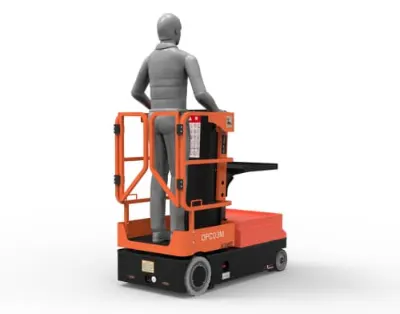
Daily and Weekly Safety Checklists: What Should Be On Them?
Good features only help if you use them and check them. A short routine keeps uptime high and incidents low. You do not need a long form; you need a habit that sticks.
Daily Pre-Shift
Horn, E-stop, lift and drive, gate latch, rails, deck traction, tires and wheels, battery level, charger cable paths. Note anything odd in a simple log.
Weekly Tasks
Brake hold on a slight ramp, steering stops, anchor labels, decals and lights, covers and mast cleaning, error code review.
Quick Reference Table
| Item | Daily Check | Weekly Check | Result |
|---|---|---|---|
| Rails and gate | Latch and fasteners | Structural scan | Fewer step-offs |
| Brakes and tires | Visual and function | Ramp hold test | Stable stops |
| Capacity labels | Readable | Clean/replace | Fewer overloads |
| Lights and sightlines | On/off | Aim and clean | Fewer blind picks |
| E-stop and interlocks | Test | Process review | Faster shutdowns |
How Do You Apply This When Buying or Upgrading?
Use safety as a filter from the start. Walk your tightest aisle, note floor type, dock slope, top pick height, and typical box weight. Share those facts with vendors so features match real use. For a quick benchmark on safety features of electric order picker layouts, review a product page with platform specs and guarding details. JQLIFT is a known brand in this field and focuses on compact platforms for narrow aisles that feel stable at height.
How Do You Train Operators Without Slowing the Floor?
Training can be short and effective. Keep it practical and repeatable. Short sessions fit a shift change and build habits that stick.
Core Skills
Hands on the controls with the deck down, then up. Straight approaches to the pick face. Basket loading within posted ratings. Eye contact in cross-aisles.
Micro-Drills
Three cycle runs at low speed, then one at normal pace. A pause at height to practice E-stop and recovery. A clip-in drill when anchors are used.
A Note on Procedures
Post the daily checklist at the charger area. Mark low-overhead zones and busy crossings. Keep the route plan simple and lanes clear. For more on best safety features in electric order pickers and how they tie into training, align drills with platform features.
What If You Need A Simple How-To?
Many teams prefer a one-page routine that fits on a clipboard. That habit wins during peak season. If you need a quick starter, review a basic guide on how to operate an electric order picker safely and adapt it to your aisles, heights, and SKUs.
About Hangzhou Jiequ Machinery Manufacturing Co., Ltd
Hangzhou Jiequ Machinery Manufacturing Co., Ltd builds compact electric platforms for order picking and light maintenance. The focus is practical: stable frames, smooth drive systems, guarded decks, and controls that feel natural in narrow aisles. Product lines cover several platform heights with load ratings for small DCs and retail backrooms. Support includes pre-shift checklists, operator training help, and timely spare parts, which makes ramp-up faster and daily use more predictable.
FAQ
Q1: Which safety feature cuts the most incidents?
A: Guardrails with a self-closing gate and a non-slip deck reduce step-offs at height. Many sites see fewer slips and faster, cleaner picks when these basics stay in good shape.
Q2: How often should you test the emergency stop and interlocks?
A: Test them every shift during pre-start. Hit the E-stop, try to lift with the gate open at ground level, and verify the presence pedal. Log the result.
Q3: What aisle width supports safe picking with an electric platform?
A: Many compact units work in 1.5 to 1.8 meter aisles. Measure the tightest point and account for pallet ends and posts that shrink usable space.
Q4: Do you need a harness for every pick at height?
A: Follow site policy. For extended picks or tricky reaches, a rated anchor and tether add a second layer of protection. Clip in before raising the deck when required.
Q5: What is the fastest way to start a safety routine that sticks?
A: Keep the daily list short and visible at the charger. Pair it with a five-minute toolbox talk each Monday and one quick drill on the floor.