
Mini Scissor Lifts for Small Warehouses: Height, Load, and Aisle Requirements
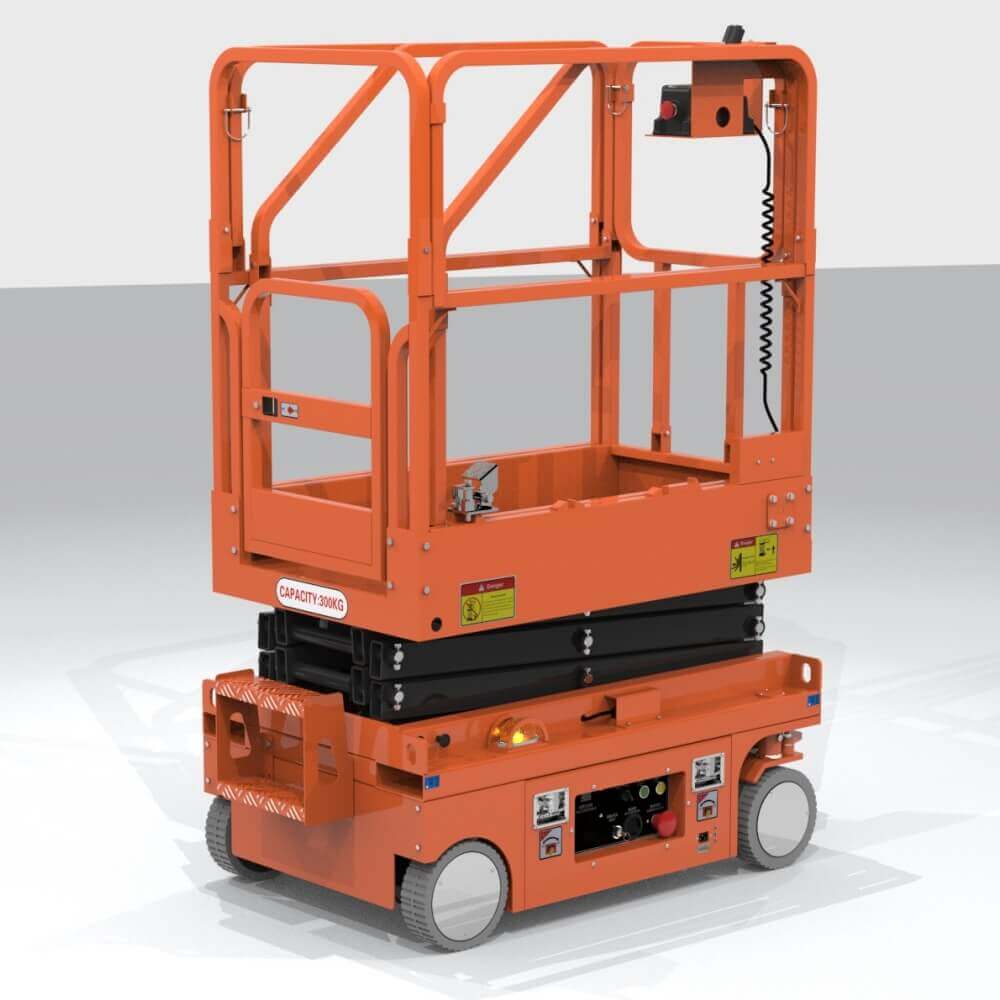
Running a small warehouse often feels like a puzzle. You have racking squeezed into every corner, pallets that seem to grow overnight, and just enough ceiling height to be annoying. Staff still need to work above head height to pick stock, change lights or check sprinklers, but there is no space for large machines. That is exactly the world mini scissor lifts are built for.
Instead of sending folks up steps with boxes and tools, you can give them a small power spot that matches your paths. It reaches your bars. And still sits nice in a corner when the day ends. The main is picking a mini scissor lift with the fit up, hold and wide for your spot. Not just one that seems tiny in a paper.
Why Small Warehouses Need Mini Scissor Lifts
Small warehouses sit in a weird middle place. Your tops may only be five to seven meters. But that is still too up for safe step work when you carry boxes or tools. At the same time, normal scissor lifts seem too big and slow in slim paths. You need tools that match the true sizes and setups you deal with each day.
In lots of cases, shift from steps to a mini scissor lift for small warehouses right away cuts tired. And boosts day safe. Workers make fewer goes up and down. They have bars around them instead of open spots. And they can deal with heavier things up high without turn or pull. Over a full week, that space adds to more done jobs. And fewer near misses.
What Counts as a “Mini” Scissor Lift?
The label “mini scissor lift” has no strict standard, but in practice it points to a compact indoor scissor lift with reduced footprint and moderate working height. You still get a scissor mechanism, a guarded platform and hydraulic lifting, but the body is trimmed down for tighter spaces.
Typically, machine width stays under about 0.85 meters so the lift can pass through single doors and run between warehouse racks. Platform height often sits in the three to four meter range, with working height around five to six meters. That is ideal for many small warehouses where top beams and services sit below eight meters. Capacity in the 230–300 kilogram range supports one or two people plus cartons or tools without pushing the structure too hard.
Essential Height Requirements for Small Warehouses
If you guess your height requirement, you often end up with the wrong machine. The smarter way is to start with your real work points and then back-calculate.
Platform height is the deck height of the lift. Working height is roughly platform height plus the reach of a person standing on it. So a platform height of four meters often gives a working height of around six meters. If your beams or light fixtures sit around five and a half meters, there is no need to buy a machine that can reach ten. You pay more and carry more weight through your aisles for no benefit.
Many small warehouses fall into two bands: low rooms with ceilings around four to five meters and taller rooms with ceilings around six to eight meters. In both cases, a low-height scissor lift with a working height of five to six meters covers most tasks, from top shelf picking to lighting and sprinkler checks.
Load Capacity Requirements for Indoor Warehouse Tasks
Height alone does not tell the full story. You also need enough platform capacity to handle real loads. One person with a barcode scanner and a few small boxes does not ask much from the machine. Two people with cartons of stock or light fixtures do.
A capacity near 300 kilograms lets two average adults work together with some extra allowance for materials and tools. It also gives more margin when handling awkward items like heaters, screens or signage. For single-operator maintenance roles, you might decide a lighter lift is enough, but most small warehouses are happier with a platform that can safely handle two-person jobs.
Aisle Width and Turning Radius Requirements
This is where mini scissor lifts really earn their name. A lift that cannot turn around in your aisles becomes a problem, no matter how good the spec sheet looks.
Many small warehouses live with aisles between about 1.2 and 1.8 meters wide. Forklifts already use some of that room. In those conditions, a full size scissor lift simply does not belong. When aisles fall between 1.2 and 1.8 meters, a mini electric scissor lift for narrow aisles is the only type that can move smoothly without constant repositioning.
Machine width under 0.85 meters and a tight turning radius let you approach racks squarely, then rotate and exit without moving pallets around just to make space. On a busy shift, those minutes saved in each move are the difference between an easy job and a slow, frustrating one.
Mini Scissor Lift Types Suitable for Small Warehouses
Even inside the “mini” category, you still have several types to choose from. The right choice depends on your travel distances, duty cycle and staff.
Electric mini scissor lifts use battery power for both drive and lifting. They run quietly, do not produce exhaust and suit warehouses where most work stays indoors. For stock picking, light maintenance and short travel ranges, a compact indoor scissor lift offers the right balance of size, height and stability.
Hydraulic mini scissor lifts use hydraulic systems for lifting and may be push-around or powered. Push-around units are lighter and cheaper but require someone on the ground to move them between tasks. Self-propelled mini lifts let operators drive from the platform, which is better when tasks are spread across racks or zones.
Real Warehouse Tasks a Mini Scissor Lift Can Improve
If your warehouse team already gets the job done with ladders and small platforms, it can be hard to picture what changes when a mini scissor lift appears. The difference shows up in repetitive tasks.
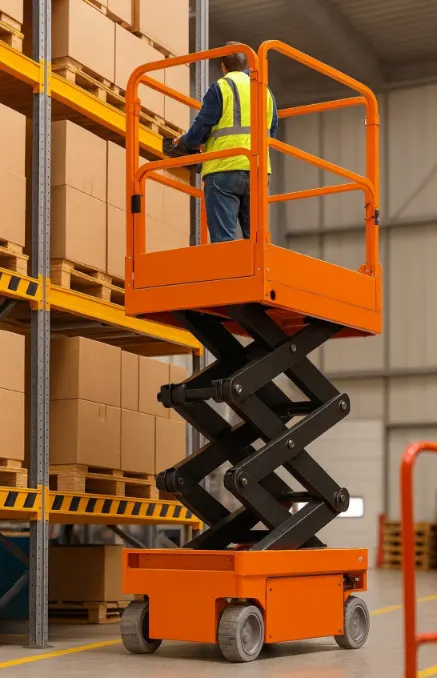
Stock replenishment and cycle counts at higher rack levels become simpler when staff can stand on a stable deck with both hands free. Rack adjustments, label replacement and basic light maintenance no longer require half a day of moving ladders and rolling steps. Tasks like replacing lights or reaching the top rack often take less time when staff use a small electric scissor lift instead of climbing a ladder repeatedly.
Fire system checks and cable work also benefit. You can roll along a row, stop, lift, carry out the inspection, lower and move to the next point without constantly climbing off and on equipment. Seasonal tasks, such as rearranging backroom stock for peak periods, become less of a physical drain.
Mini Scissor Lift vs Other Indoor Access Tools
You might already have ladders, mobile platforms or a vertical mast lift. Comparing them with a mini scissor lift can clarify what you really need.
Ladders win on price and portability but lose on comfort and safety for frequent high work. Balancing on narrow rungs while holding boxes is never ideal. Vertical mast lifts are very slim but offer smaller platforms and lower capacity, which can feel limiting during two-person or stock-heavy tasks. Standard scissor lifts provide more height and deck space but often demand more aisle width and loading area than a small warehouse can spare.
Key Factors When Choosing a Mini Scissor Lift
Once you know your heights, loads and aisle widths, you can look at real machines with a sharper eye. A good lift for your site does not have to be perfect on paper. It only has to match your daily reality.
If most of your jobs sit below six meters, you can focus on models with that working height and avoid taller, heavier units. For mixed picking and maintenance work, pay attention to platform capacity and dimensions so two people can move without bumping elbows. If your aisles are tight, prioritize body width and turning radius over extra speed or decorative features.
If your building has several corners or equipment zones with restricted turning space, an indoor mini scissor lift for tight spaces is usually the safest long-term choice. Combine that with a realistic view of your battery charging habits and maintenance capacity, and you will end up with a lift that staff actually use rather than one that gathers dust.
Example Configurations for Small Warehouses
As a rough guide, a low-height scissor lift with about three to four meters platform height, working height around five to six meters, platform capacity near 300 kilograms and machine width under 0.85 meters fits many small warehouses with 1.4 to 1.8 meter aisles.
For mixed use areas that combine a backroom, stock mezzanine and small warehouse, the same kind of lift can move between zones without needing special doors or ramps. Single-operator maintenance teams may choose a push-around version to keep things simple, while multi-shift operations lean toward self-propelled models for faster aisle-to-aisle travel.
Why Many Small Facilities Choose JQLIFT Lifting Solutions
Many small facilities look for a lift supplier that focuses on practical indoor work rather than only large construction machines. JQLIFT designs and builds lifting equipment with small warehouses, logistics rooms and compact industrial sites in mind. Its mini scissor lifts use compact chassis dimensions, stable scissor structures and guarded platforms sized for one or two people plus stock.
Production pays close attention to welding quality, hydraulic reliability and safety features such as emergency lowering and overload protection. Models in this category are tuned for common indoor heights and narrow aisles, so they fit into existing buildings without major layout changes. With selection advice, parts support and technical help available, warehouses can treat these lifts as long-term tools instead of one-off purchases. For operators who are used to ladders and makeshift platforms, stepping onto a well designed mini scissor lift changes how daily work at height feels.
FAQ
Q1: How high should a mini scissor lift reach for a small warehouse?
A: In many small warehouses, a working height of five to six meters is enough to reach top racks and ceiling services. You can usually get that from a three to four meter platform height without moving into larger, heavier machines.
Q2: Can a mini scissor lift pass through standard doors?
A: Many mini models keep machine width under 0.85 meters, which fits common single door openings. You still need to check both door width and lift width before buying, but door access is a clear design target for compact units.
Q3: Is it safe to use mini scissor lifts in narrow aisles?
A: Yes, as long as you pick a model that matches your aisle width and respect the manufacturer’s rules. Narrow aisle scissor lifts are specifically designed for tight spaces, with compact bodies and stable bases to reduce the risk of contact with racks or stock.
Q4: Do operators need special training for mini scissor lifts?
A: Basic training is important even for small lifts. Operators should learn how to do pre-use checks, read the load chart, use controls smoothly and handle emergency situations. Once trained, most people find these lifts easier and less tiring than regular ladder work.
Q5: How often should a mini scissor lift be serviced in a small warehouse?
A: A simple rule is to follow the service interval in the manual and schedule at least one professional inspection each year. Heavy daily use may justify more frequent checks. Keeping a short log of hours and any faults makes it easier to plan maintenance before problems appear.