
Mini Scissor Lift vs Vertical Mast Lift: Which One Fits Narrow Warehouse Aisles?
Pick a lift for a tiny storehouse. It’s not often about the tallest reach. The big issue is room. Tight paths, full shelves, and folks plus loads moving all the time mean the lift has to blend into everyday jobs. It can’t slow stuff down. So, many bosses in storehouses think hard between a mini scissor lift and a vertical mast lift. Both fit inside spots. Both hit usual storehouse tops. But in real use, they act quite different when stuck in slim racks.
This piece looks at mini scissor lifts and vertical mast lifts from a view of cramped storehouse paths. The main point isn’t fancy numbers. It’s how each kind deals with true storehouse jobs like grabbing stock, fixing things, and doing overhead stuff again and again.
Why Narrow Warehouse Aisles Make Lift Choice More Complicated
Little storehouses often have path widths from 1.2 to 1.8 meters. That spot must hold people, carts, loads, and at times fork trucks. Any lift that stops flow or needs lots of moves soon turns into a jam.
In these places, the worry isn’t just if a lift can go into a path. It’s if it can shift, halt, spin, and do jobs without making the whole storehouse wait. Pick the bad lift kind. It causes lost time, mad workers, and tricks that beat the reason for a lift at all.
What Is a Mini Scissor Lift?
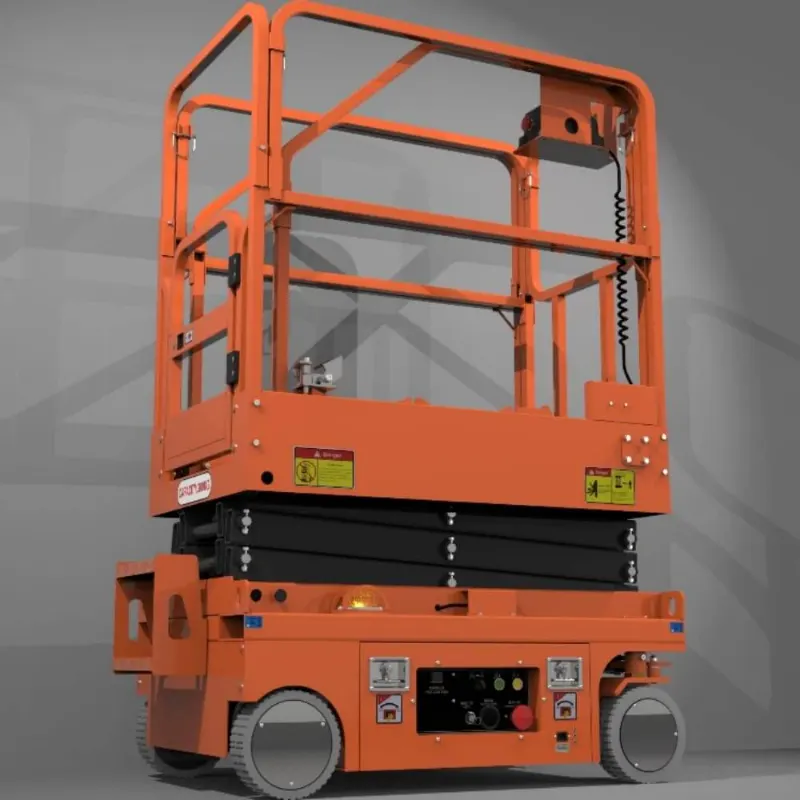
A mini scissor lift is a small take on a normal scissor lift. It’s made just for inside areas with short room. It uses a scissor way to lift a flat spot straight up. And it keeps the base pretty brief and steady.
Compact Platform Design for Indoor Work
The key part of a mini scissor lift is the flat spot. Not like one-person holders, the flat spot gives room to stand easy and put tools or boxes. This helps a lot in storehouse jobs where moving loads is part of the work, not rare. For many spots, a compact indoor scissor lift hits the good mix of firm hold and size. It doesn’t take over the path.
Typical Size and Height Range for Small Warehouses
Mini scissor lifts usually give work heights near five to six meters. This matches well with shelves and top parts in small storehouses. Machine width stays under 0.85 meters most times. So, the lift can work between shelves without endless changes. Load hold is higher than most mast lifts too. It backs one or two folks with tools or boxes.
What Is a Vertical Mast Lift?
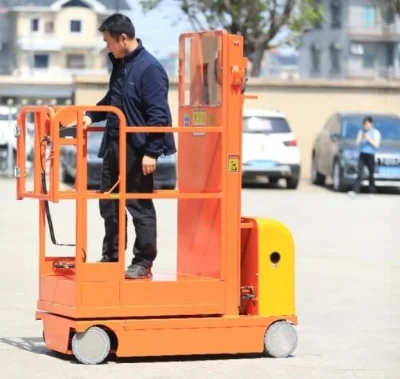
A vertical mast lift pushes its flat spot up with a mast-like build instead of a scissor way. These lifts are famous for their thin shapes and skill to reach super tight areas.
Vertical Mast Structure and Single-Person Use
Most mast lifts are built for one-person jobs. The flat spot or holder is slim. Often just right for one worker and simple tools. This build keeps the whole size tiny. But it cuts choices when jobs mean lifting heavy stuff or using both hands for long bits.
Where Mast Lifts Are Commonly Used Indoors
Vertical mast lifts get used a lot for check jobs, fast looks, or fix tasks where the worker only stays up for a short while. They do fine in halls, by walls, or in spots where spin room is super short and flat spot room matters less.
Mini Scissor Lift vs Vertical Mast Lift in Narrow Aisles
When path width is close, both lift kinds can squeeze in. But their acts during jobs differ in key ways.
Platform Space and Working Comfort
The flat spot size is one of the plainest gaps. A mini scissor lift gives a level, firm flat spot that lets the worker move around easy while doing stuff. This helps extra for jobs that need stretching over shelf bars or fixing things. Mast lifts, on the other hand, limit shifts because of their slim holders. Over time, this hits ease and speed.
Load Capacity for Tools and Stock
Load moving is another big pick point. Mini scissor lifts often give higher lift hold. This makes them good for jobs with boxes, spare bits, or many tools. Mast lifts fit better for light jobs where the worker brings little gear. For storehouses with usual stock touch at top, this gap counts.
Stability on Flat Warehouse Floors
On level hard floors, the scissor way spreads weight even over the base. This makes mini scissor lifts feel steady, mainly when all the way up. Mast lifts count on a slimmer base. It’s okay for quick jobs but can seem less kind during long runs or when the worker moves spot.
Maneuverability Between Tight Racks
Mast lifts win when going straight in very close rooms. Yet turning and placing can still feel odd based on setup. A mini scissor lift for narrow warehouse aisles is often simpler to put right in front of shelves. The broader base lets more guided stops and tiny shifts without shake.
Which Lift Works Better for Common Warehouse Tasks?
Check daily jobs. It clears up which lift kind fits nicer in real life.
Stock Picking and Cycle Counts
Grabbing stock and counting often need many stops, moving boxes, and checking tags. A mini scissor lift backs these jobs well. The flat spot can hold boxes and tools. This cuts trips up and down. A mast lift can handle it, but lots of climbs and short room make it slower.
Lighting, Fire System, and Overhead Maintenance
Top fix jobs usually last longer than thought. Room to put tools and change spot helps. For these, a small electric scissor lift often seems more usual and less wearing than a mast lift.
Label Replacement and Rack Adjustments
These tasks mean stretching side ways and working along a shelf part. The broader flat spot of a mini scissor lift lets smoother shifts along the job spot. It skips endless drops and new places.
When a Vertical Mast Lift Makes More Sense
Vertical mast lifts aren’t a bad pick. They do great in certain spots. If jobs are quick, use just one person, and happen in super close places where flat spot room comes second, a mast lift can be the easy fix. They help too for check work where the worker must shift fast from place to place without gear.
When a Mini Scissor Lift Is the Better Fit
For storehouses with lots of top work, repeated lifting jobs, and tasks with tools or stock, a mini scissor lift usually gives better all-around speed. The flat spot room, higher lift hold, and firm work feel make it simpler to finish jobs without hurry or make-do. Many spots hunting for an indoor mini scissor lift see that it changes better to shifting jobs all day than a mast lift.
Choosing Between a Mini Scissor Lift and a Mast Lift
The last pick should rest on how your storehouse really runs, not just lift sizes in a book.
Aisle Width and Turning Space
Check your slimmest path and spin spots. Both lifts might squeeze, but one will seem simpler to deal with in everyday use.
Typical Task Duration and Frequency
Quick, rare jobs like mast lifts. Longer, often jobs like scissor lifts.
One-Person vs Two-Person Work
If two folks work together at top often, mast lifts hit limits fast. A mini scissor lift for small warehouses backs shared jobs more easy.
Comfort and Fatigue Over a Full Shift
Ease isn’t fancy. Over a whole day, it hits pace, safe ways, and team mood. This is where flat-spot lifts often show their worth.
Conclusion
In tight storehouse paths, both mini scissor lifts and vertical mast lifts have spots. Mast lifts do well for quick, one-person jobs in very close areas. Mini scissor lifts, though, give more choices for storehouses with usual lifting jobs, load moving, and repeated top work. By looking at path width, job kind, and daily flow, you can pick the lift that matches your storehouse. Not make your storehouse match the lift.
How JQLIFT Supports Indoor Lifting Work in Tight Warehouse Spaces
In close storehouse spots, lift gear needs to match true setups, not perfect plans. JQLIFT works on making and building scissor lifts that run trusty in small inside areas. There, path width, top height, and daily job count all set limits on gear picks. Instead of making big build machines smaller, the way focuses on made-for-purpose compact scissor lifts for storehouses, stock spots, and inside fix areas.
Care goes to real things that count in daily use. Like firm flat-spot builds, steady water-push acts, and sizes that let easy shifts between shelves. Flat-spot setups are made to back usual storehouse lifting jobs. This includes stock moving, fix work, and two-person tasks with tools or stuff.
By matching lift build with true inside flows, JQLIFT aids storehouses go past steps and short-term reach fixes. Toward safer, quicker ways to work at top. Without messing close setups or old storage ways.
FAQ
Q1: Is a mini scissor lift wider than a vertical mast lift?
A: In most cases, yes. However, many mini scissor lifts are still compact enough to work in narrow warehouse aisles while offering more platform space.
Q2: Can a mini scissor lift operate in 1.5-meter aisles?
A: Many models can, but you should always check machine width and turning requirements against your actual aisle layout.
Q3: Which lift is safer for carrying tools at height?
A: A mini scissor lift is generally safer because of its platform space and higher lift capacity, which support stable load handling.
Q4: Are mast lifts only for single-person use?
A: Most mast lifts are designed for one operator, which limits their usefulness for tasks involving tools or shared work.
Q5: How do I decide which lift fits my warehouse layout?
A: Start with aisle width, then consider how often tasks occur, how long they last, and whether load handling is involved. The lift that fits your daily routine will usually be the right choice.