
Labor Shortages in Greenhouse Harvesting: How Picking Lifts Reduce Manual Work
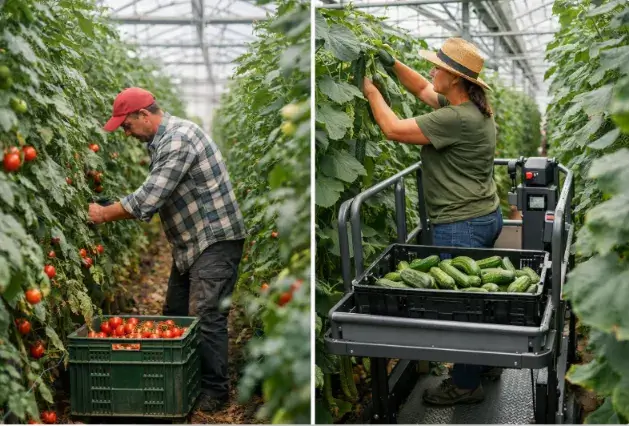
Greenhouse growers rarely struggle to produce volume. The constraint shows up later, when everything ripens at once and the clock starts. The harvest is plentiful but the laborers are few. During peak weeks, the issue is not only headcount. It is how much usable picking work each person can complete in a shift inside narrow crop rows and confined greenhouse spaces.
That is why many operations are shifting from “more hands” to “less manual work.” This article explains where greenhouse harvesting labor is most wasted, what labor shortages do to daily output, and how picking lifts reduce manual work in greenhouses through equipment-assisted harvesting rather than full automation.
Why Greenhouse Harvesting Is Especially Labor-Intensive
Greenhouse picking is a repeatable routine, but the environment forces extra motion. Rows are tight, the operator is constantly changing height, and the task rewards rhythm. When labor is short, any wasted movement becomes a production problem.
Repetitive Vertical Movement
Most greenhouse harvesting includes repetitive vertical movement: climb, reach, pick, step down, move, climb again. Even when the crop is easy to pick, the “up and down” becomes the time sink. It also drives fatigue, which quietly slows the last hours of a shift.
Reducing those climb cycles is one of the fastest ways to cut manual work in greenhouse harvesting without changing crop plans or staffing levels.
Narrow Crop Rows and Confined Spaces
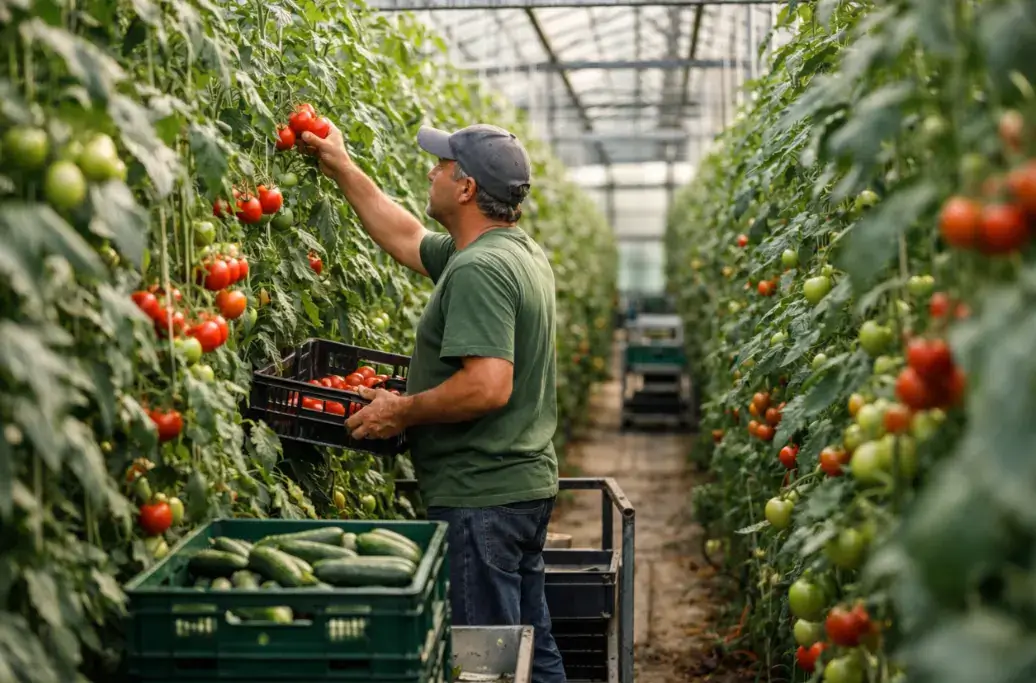
Narrow crop rows limit how people and tools can move. In open fields, two workers can pass each other or work side-by-side. In a greenhouse aisle, you often have single-file movement, frequent stop-and-go, and limited turning space at row ends.
This is where labor shortages hit harder: if movement is awkward, output drops immediately because every correction and every pause steals time from picking.
The Real Impact of Labor Shortages on Harvest Efficiency
Labor shortages in greenhouse harvesting do not just reduce total labor hours. They change the entire picking system: cycle times stretch, quality becomes inconsistent, and supervisors spend more time “keeping things moving” than improving throughput.
Slower Picking Cycles and Missed Windows
When you are short on people, picking cycles slow down. The same greenhouse block that used to be cleared in one pass now takes multiple passes, and fruit that should have been harvested at the right stage lingers longer than planned. Over a season, those delays can translate into more sorting, more waste, and less predictable shipping.
In practice, greenhouse harvesting efficiency often falls for two reasons at once: fewer workers and a less stable picking rhythm.
Increased Fatigue and Safety Risk
Labor shortage conditions usually mean longer shifts, fewer breaks, and more pressure to “make up time.” Fatigue increases mistakes: stepping down too fast, reaching too far, or handling produce less carefully. Safety incidents can be minor, but the management cost is real. Even small injuries reduce availability further, which compounds the original labor problem.
Why Simply Hiring More Workers Is Not a Sustainable Fix
Hiring is important, but it is not a complete strategy. Greenhouse harvesting labor is seasonal, skill-sensitive, and physically demanding. When turnover is high, the same training work repeats every cycle.
Training Time and Turnover
New workers need time to learn safe movement, picking standards, and packing discipline. During seasonal harvesting pressure, you often do not have that time. The result is uneven quality and constant supervision. When workers leave mid-season, the team resets again.
This is why many growers shift focus from “headcount targets” to labor efficiency in greenhouses: the output per person matters more than the number on paper.
Cost Pressure During Peak Season
Even if you can hire, peak-season wages and staffing overhead can rise quickly. Add in overtime, supervision, and the hidden cost of slower cycles, and labor becomes both expensive and uncertain. That is the point where equipment-assisted harvesting becomes a practical choice, not a futuristic one.
How Picking Lifts Reduce Manual Work in Greenhouses
Picking lifts reduce manual work by removing the most wasteful parts of the routine. Instead of using energy on climbing and repositioning, the operator stays on a stable platform and keeps the harvest moving with them. For many operations, this is the most reachable “automation step” because it changes workflow without requiring robotic picking.
Keeping the Operator and Harvest Moving Together
A vegetable picking lift keeps the operator at the correct working height while moving along the row. That reduces repeated vertical movement and cuts the stop-start pattern that slows ladder-based harvesting. When the platform moves with the worker, the picking motion becomes more continuous, which helps maintain pace during long shifts.
In labor-constrained weeks, that continuity is the difference between “finishing the block” and “falling behind.”
Single-Operator Workflow in Narrow Crop Rows
In narrow greenhouse rows, teamwork can become congestion. A single-operator picking lift allows one person to pick and reposition without needing a second person to hold ladders, shuttle bins, or manage constant handoffs. That reduces coordination losses and makes output more predictable when staffing changes day to day.
If you are assessing options, a compact greenhouse picking lift designed for tight aisles will usually deliver higher practical value than a larger platform that forces more corrections.
Integrated Harvest Handling
Manual work is not only picking. It includes carrying, staging, and unloading. A picking lift with dump tray can reduce the number of times a worker steps down to transfer produce. Fewer unload interruptions keep rhythm stable and reduce back-and-forth walking.
For example, a compact vegetable picking lift for greenhouse harvesting can support pick–place–move–unload as one connected loop, which is exactly what labor shortages disrupt when you rely on ladders and hand-carry routines.
Picking Lifts vs Traditional Tools Under Labor Constraints
The comparison is not “lifts are always better.” The real question is which tool keeps output stable when labor is limited and time pressure is high.
Ladder-Based Harvesting
Ladders can work for low volume, low height tasks, or short-term work. But under labor shortage conditions, ladders create two problems: slower cycle time and higher fatigue. When fewer workers are available, every extra climb and every extra reposition has a bigger impact.
Purpose-Built Picking Lifts
Picking lifts are designed to reduce manual work in greenhouses by cutting climb cycles, improving stability at working height, and supporting harvest handling on-platform. The benefit is not theoretical. It shows up in fewer interruptions, less fatigue, and more consistent greenhouse harvesting efficiency across the shift.
When Greenhouse Operations Benefit Most from Picking Lifts
Picking lifts deliver the most value when your operation has frequent height changes, tight row spacing, and repetitive harvest handling. They also make sense when labor shortages are no longer “just peak season,” but a regular constraint.
If you want a practical framework for matching equipment to your row width, turning space, and daily working height, use this internal guide on choosing the right vegetable picking lift to keep your evaluation consistent across crops and seasons.
Conclusion: Reducing Manual Work Is the First Step to Solving Labor Shortages
Labor shortages in greenhouse harvesting are unlikely to disappear soon. The operations that stay stable are the ones that redesign workflow so each worker produces more usable output with less fatigue. Picking lifts support that shift by reducing repetitive vertical movement, improving movement inside narrow crop rows, and keeping harvest handling connected to the picking task. In other words, they do not replace workers. They reduce the manual work that drains workers.
JQLIFT Greenhouse Picking Solutions
JQLIFT provides vegetable picking lift options built for greenhouse conditions, including compact movement in tight rows and harvest-friendly platform layouts. If your goal is to reduce climb cycles and keep pick–move–unload flowing with a single operator, explore this self-propelled vegetable picking lift with integrated dump tray as a practical equipment-assisted harvesting option for labor-constrained seasons.
FAQ
Q1:What causes labor shortages in greenhouse harvesting?
A: Tight seasonal windows, high turnover, and physically demanding work reduce available greenhouse harvesting labor, especially during peak weeks.
Q2:How do picking lifts reduce manual work in greenhouses?
A: Picking lifts cut climb cycles, reduce walking and repositioning, and keep the operator working at the right height for longer periods.
Q3:Are picking lifts a form of automation?
A: They are equipment-assisted harvesting, not robotic picking. They reduce manual work and improve consistency without full automation systems.
Q4:When is a single-operator picking lift most useful?
A: When narrow crop rows limit teamwork, or when staffing is unpredictable, a single-operator picking lift helps keep output steady.
Q5:Does a picking lift with dump tray improve harvesting efficiency?
A: Yes, when unloading interrupts picking often. A picking lift with dump tray reduces unload downtime and helps maintain a steady picking rhythm.