
How to Choose a Vegetable Picking Lift for Greenhouses and Narrow Crop Rows
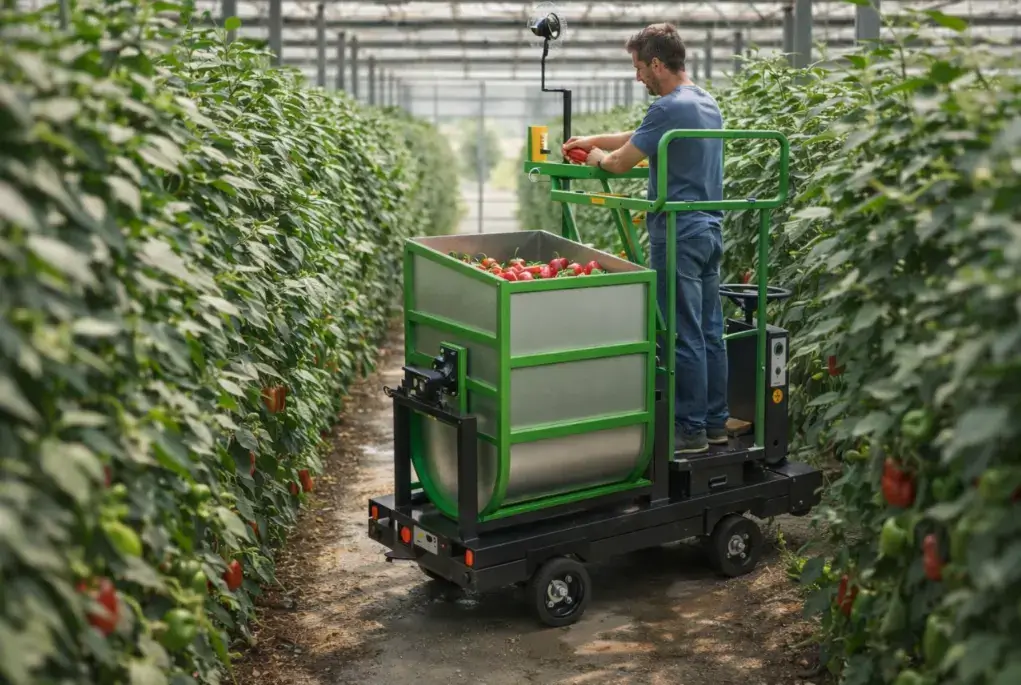
If you run greenhouse production, you already know the hardest part of harvesting is not the crop. It is the space. Narrow crop rows, tight headroom, constant stop and go movement, and a workday built around repeated up and down steps quickly turn “simple picking” into a labor and safety bottleneck. A vegetable picking lift solves that problem by keeping the operator and harvested produce moving together in a controlled, vertical workflow. In terms of workflow, it is closer to an order picker used in warehouses, but it is designed specifically for greenhouse rows rather than storage aisles.
This guide breaks the selection process into the variables that actually decide success in greenhouses and narrow crop rows: clearance, maneuverability, height range, harvest handling, and real operator rhythm. The goal is to help you choose a vegetable picking lift that fits your crop layout and daily picking pattern, not just a spec sheet.
Understand Your Greenhouse Picking Environment
The right vegetable picking lift starts with your environment, because greenhouses punish “almost fits.” A unit that works in a wide packhouse aisle can become awkward or unsafe once it enters narrow greenhouse rows.
Crop Row Width and Turning Space
Start with the row width you must travel through, then add the space you need to turn, correct alignment, and park without brushing plants. Many buyers measure only the straight path and forget that turning is the real constraint. Your picking lift may need to reverse and re align dozens of times per shift, so small turning differences become real labor cost.
Also note that “fits” is not binary. A machine that clears the row by a few centimeters may still slow your team if the operator must creep forward constantly to avoid contact. In narrow crop rows, productive travel is smooth travel. That is why a compact picking lift with predictable steering often beats a larger platform even when both can technically enter the row.
Greenhouse Floor Conditions
Greenhouse floors vary more than people admit. Concrete walkways, compacted soil, drainage slopes, and wet spots change traction and stability. A picking lift that feels stable on a dry slab can behave differently on slightly uneven ground, especially when the platform is raised and the operator shifts weight during picking.
Before you commit, define your most common surface conditions. Ask whether the unit is intended for indoor and semi indoor use, what tire style is used, and how the machine behaves when the floor is not perfectly level. The best greenhouse picking lift is the one that stays calm and predictable when conditions are not ideal.
Define Your Picking Height and Reach Requirements
Picking height is not only about maximum lift. It is about the range you use every day, the time it takes to adjust, and the stability you keep while working.
Typical Crop Heights in Greenhouses
Write down the real heights you pick at, not the “maximum possible” height of the crop. Many greenhouses spend most of the day in a mid range zone and only occasionally go higher. If that is your situation, a vegetable picking lift that moves smoothly through that working band can outperform a taller unit that is slow to set, slow to reposition, or requires frequent stop and restart.
If you switch crops seasonally, consider the highest and lowest realistic tasks. You may need a single unit that can support multiple programs, or you may decide that one dedicated lift for the most demanding crop creates the best return.
Vertical Reach vs Platform Stability
In narrow greenhouse rows, stability is the silent requirement. You want enough lift to work without overreaching, but you also want a platform that feels steady when the operator is focused on the crop rather than the machine. Look for a design that keeps the center of gravity controlled and avoids “tippy” behavior at working height.
A good rule is to prioritize comfortable working reach and consistent stability over chasing the highest number. If your team feels safe and stable, they pick faster and make fewer handling mistakes.
Evaluate Load and Harvest Handling Needs
Greenhouse harvesting is a loop: pick, place, move, unload, repeat. The way you handle harvested produce often decides whether a lift is a productivity tool or just a moving ladder.
Weight of Harvested Produce per Cycle
Estimate your typical harvest load per cycle. This is not only the weight of the operator and tools, but also the produce that accumulates on the platform before unloading. Some operations unload continuously into carts, while others carry produce on the lift and unload at the end of each row. Your choice changes what capacity and platform layout you need.
If you regularly carry harvest with you, the load pattern matters. Produce shifts as you move. Containers slide if the platform is not designed for it. Your goal is a stable, organized work area that prevents spills and reduces handling time.
Integrated Trays or Dump Systems
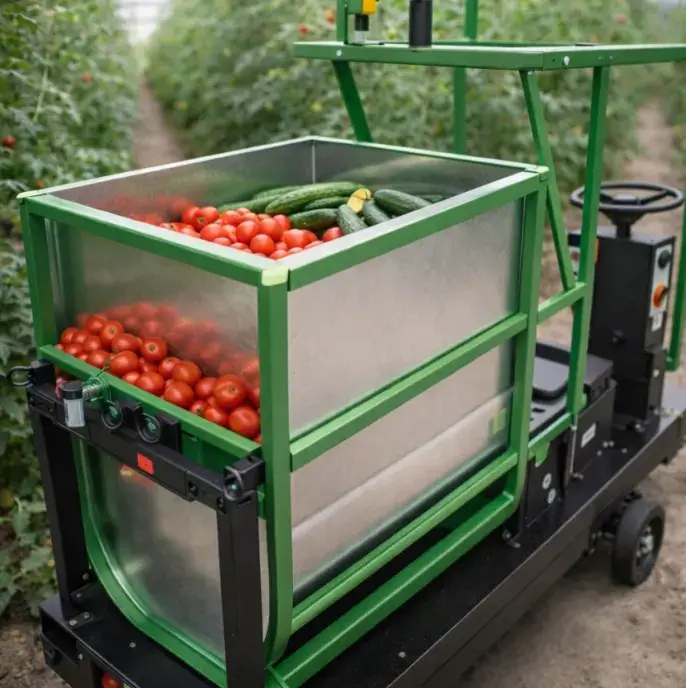
This is where a lift with dump tray can change the whole workflow. Instead of climbing down repeatedly to transfer produce, an integrated dump or tipping solution allows the operator to unload more efficiently with fewer interruptions. That reduces fatigue and can keep picking rhythm consistent across long rows.
If your harvest routine involves frequent unloading, an integrated system can provide a meaningful time advantage. It also reduces the chance of back strain from repetitive lifting and twisting, especially when the operator works alone.
Consider Operator Workflow and Safety
A vegetable picking lift must fit human behavior. It should support how people actually pick, not how the manual suggests they should pick.
Single Operator Control and Visibility
Many greenhouse teams want one person to control movement and picking without coordination delays. In that case, a single operator lift with intuitive controls is more than a convenience. It is a throughput decision. The operator should be able to raise, lower, and reposition smoothly while keeping attention on the crop and the row boundaries.
Visibility matters too. Narrow crop rows leave little margin. The operator needs clear sightlines to plants, row edges, and any obstacles such as irrigation lines, floor drains, or support posts.
Stability in Narrow Crop Rows
Safety in greenhouses is often about small, repeated risks: stepping down too often, rushing repositioning, reaching too far, or working on unstable footing. A picking lift reduces these risks when it stays stable and encourages correct posture.
Stability is also operational. If the platform feels stable, the operator works with confidence. If it feels uncertain, they slow down or compensate with awkward movements. Over weeks, that difference becomes measurable output.
Maneuverability and Power Options
Maneuverability and power are not separate decisions in greenhouses. They combine into one question: can the lift move where you need it, all day, without disrupting the environment?
Turning Radius in Confined Greenhouse Rows
In confined greenhouse spaces, turning radius and steering feel determine whether the lift supports smooth work. You want precise control for micro adjustments, and you want predictable response when the operator is balancing harvest and tools.
If your greenhouse has frequent intersections or end of row turnarounds, test that pattern mentally. How many corrections will the operator need per row? How much time is lost in each correction? A compact picking lift that turns cleanly can save time in a way that never appears in a simple brochure.
The same selection logic is useful in other confined environments. If your operation also manages narrow service corridors or indoor storage zones, the principles of compact lifts for narrow aisles can help you standardize how you evaluate clearance, turning, and daily movement efficiency.
When a Dedicated Vegetable Picking Lift Makes More Sense
Not every operation needs a specialized machine. But when you combine narrow crop rows, frequent height changes, and repetitive harvest handling, a dedicated solution often becomes the best choice.
If your team spends significant time climbing up and down, if picking slows because movement is awkward, or if you see minor safety incidents tied to ladders and improvised platforms, it is time to consider a purpose built unit. In that situation, a compact vegetable picking lift designed for greenhouse rows supports a single operator workflow where picking, moving, and unloading stay connected rather than fragmented.
A dedicated vegetable picking platform also makes sense when your harvest routine benefits from organized handling. For example, if you want fewer interruptions and cleaner transfer of produce, choosing a self propelled unit with harvest friendly layout can create a clear efficiency gain without changing your crop plan.
Conclusion: Match the Lift to Your Crops, Rows, and Workflow
Choosing the right vegetable picking lift is not about picking the biggest platform or the tallest height. It is about matching the lift to the reality of your greenhouse aisles and narrow crop rows, then aligning it with how your team picks every day. Start with clearance and turning, confirm the working height band, evaluate harvest handling needs, and prioritize a stable, single operator workflow that keeps productivity steady. Once those fundamentals are right, the lift becomes part of your picking system instead of a daily compromise.
A Practical Option from JQLIFT
If you are evaluating a greenhouse picking lift for narrow crop rows, JQLIFT provides purpose built vegetable picking solutions designed for compact movement, stable vertical access, and efficient harvest handling. For teams that want a self propelled workflow and faster unload cycles, a design with an integrated dump tray can reduce stop and restart time and keep operators working in a smoother rhythm across long greenhouse rows.
FAQ
Q1:What is the best vegetable picking lift for narrow crop rows?
A: Choose a vegetable picking lift that clears row width with margin, turns easily, and stays stable at your daily working height.
Q2:How do I choose a greenhouse picking lift for different crop heights?
A: Focus on the height range you use most and how smoothly the lift adjusts, not just the maximum lift height.
Q3:Is a single operator lift practical for vegetable picking?
A: Yes. A single operator lift improves rhythm when controls are simple and visibility is good in tight greenhouse aisles.
Q4:When does a lift with dump tray improve picking efficiency?
A: When unloading interrupts picking often. A lift with dump tray reduces climb-down cycles and keeps the workflow moving.
Q5:Can a standard scissor lift work as an agricultural picking lift in greenhouses?
A: Sometimes, but tight rows and frequent repositioning often favor a compact, purpose-built agricultural picking lift.