
How Narrow-Aisle Facilities Boost Efficiency with a Compact Scissor Lift
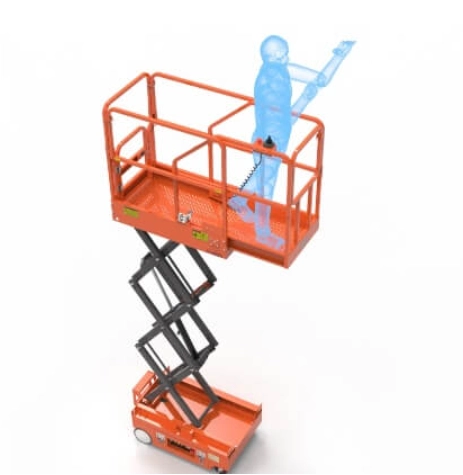
Warehouses keep getting taller. Aisles keep getting tighter. Staff is still expected to move faster, load higher, and fix problems at height without shutting down an aisle. In this kind of layout, a ladder slows you down and a big boom lift simply cannot turn. This is where a compact, warehouse-grade lifting platform becomes less of a “nice tool” and more of daily equipment.
Why Narrow-Aisle Warehouses Need Specialized Lifting Equipment?
Most modern storage sites chase density. Racks run high and close, sometimes with aisle widths that are barely wider than a pallet jack. You cannot drive a full-size outdoor scissor lift through that path without hitting uprights or product. You also cannot keep sending people up ladders with hand tools and hope there are no falls. A narrow-aisle scissor lift solves that tension: it fits the aisle and still gives a stable work position off the ground.
Typical Warehouse Challenges Without the Right Lift
Without a proper lift, common jobs take too long. Workers wait for a forklift just to swap a light or rehang a sensor cable. A ladder has to be carried, opened, climbed, moved, opened again. This is slow and risky, especially when the work sits 4 meters up. And there is another cost. When you block an aisle for too long, inbound and outbound flow gets stuck. That hurts throughput.
How a Compact Scissor Lift Improves Efficiency and Safety?
A compact electric or hydraulic lift made for warehouse duty is built around three simple needs: get up, stay steady, and move without chewing up space. At JQLIFT, you can see how indoor access machines are built around real warehouse limits: narrow paths between racks, low ceiling clearance, and constant up-and-down work. You care about steering and platform stability just as much as lift height.
Faster Access with Tighter Turning Radius
In a narrow-aisle scissor lift, the drive layout and steering system matter. Rear-wheel drive with hydraulic steering at the front lets the machine turn inside a typical warehouse aisle, instead of making a five-point turn. This means you can roll straight to the job, raise the platform, handle the task, lower, and move on. No long setup. No staging cones for ten minutes.
Stable Platform and Higher Load Capacity
A good warehouse access platform in this class can reach working heights in the 4.5 to 4.8 meter range. That is enough for lighting, scanners, signs, sprinkler heads, and cable trays in most standard warehouse ceilings. Load capacity around 300 kg on the main platform and about 100 kg on the extension deck means one person plus tools, parts, spare heads, labels, scanners, and even small cartons can all go up together. The deck can often extend by about half a meter, so you can reach over a conveyor or rack beam without moving the base.
Reduced Operator Fatigue and Injury Risk
Every ladder climb adds fatigue and fall exposure. A powered lift lets the operator ride up on a guard-railed platform instead of climbing rungs with both hands full. This is not just about comfort. It cuts strain, which cuts mistakes. Fewer strain injuries also means fewer HR reports and less friction with safety staff.
How Do Compact Lifts Cut Maintenance Cost?
If you run a warehouse every day, you care about how much time the lift spends out of service. The less time it is down, the less time you are stuck waiting at floor level. This is where mini scissor lift maintenance cost becomes very real.
Service Access and Simpler Hydraulics
Small indoor scissor lifts often place core components in a pull-out drawer or swing-out tray. That lets a tech reach hydraulic lines, pumps, and control wiring without tearing the whole machine apart. Fewer hours in maintenance means more time in use. A simpler hydraulic layout with short hose runs also means fewer leak points. Fewer leaks means less oil on the floor and less cleanup.
Long-Term Reliability
Because these units are built for indoor duty, not rough terrain, the design focuses on smooth lift cycles and repeatable steering, not just brute force. That slower, controlled movement is easier on pins, cylinders, and the scissor arms over time. Parts last longer. Fewer emergency repairs. Lower parts spend across the year.
When you start tracking these numbers, you can see how a tight-aisle platform can lower mini scissor lift maintenance cost versus always renting a big outdoor machine that was never meant to live between racks.
How Does a Compact Lift Compare to a Traditional Scissor Lift?
Traditional scissor lifts are often wide, heavy, and meant for site work or outdoor slab. They can reach very high, but they are hard to maneuver in a live warehouse lane. The compact format trades extreme height for agility. A smaller chassis will usually fit through standard warehouse aisles, turn without hitting racks, and travel at a safe indoor pace.
A typical compact unit will carry a person, tools, and small parts bins at a stable working height. A typical outdoor model might carry more weight and reach higher, but you will fight every turn indoors. You might even have to shut down a lane just to move it.
What Features Define a Quality Small Scissor Lift?
Details in the design tell you if the lift is made for this job or not. You should look at the platform, safety controls, and drive.
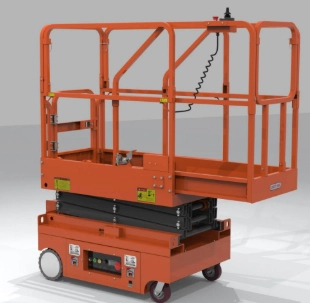
A good warehouse access platform should have a non-slip floor, guard rails, and a sliding extension deck so you can reach forward without leaning out. A tilt sensor can lock lift movement if the unit is sitting on an unsafe angle, so it will not raise when off-level. Hose burst protection can hold the platform in place even if there is a sudden hose failure. That prevents a fast drop. Indoor-grade wheels should handle joints, drains, and floor damage without breaking up or chattering. The finish should resist chipping and rust from daily indoor work, not just day-one showroom shine.
When Should You Move to a Compact Scissor Lift?
There are a few clear signs you have outgrown ladders and borrowed equipment. One, constant small jobs at height slow normal picking or packing. Two, your racks got denser, and now even a pallet truck barely clears. Three, the current lift cannot turn between racks without hitting steel. Four, you are starting to see near-miss reports for falls or awkward reaches.
If that sounds familiar, you are past the point of “making do.” At that point, a purpose-built narrow-aisle scissor lift is not just gear, it is part of your daily workflow. You can review how this kind of warehouse access platform is meant to move through standard aisles, raise smoothly to working height, and then tuck away without needing a whole parking zone.
FAQ
Q1: How wide does an aisle need to be for a compact lift?
A: Most narrow-aisle models are built for tight warehouse rows. They use rear drive and front hydraulic steering so they can turn where a normal outdoor scissor lift would get stuck.
Q2: How high can a narrow-aisle scissor lift reach?
A: Many units in this class reach platform heights around 4.5 to 4.8 meters, which covers lighting, labels, scanner mounts, and basic ceiling service in most standard buildings.
Q3: How much can it lift?
A: Common rated load is about 300 kg on the main platform plus around 100 kg on the extension deck. That lets one operator bring tools, labels, scanners, and light parts without making two trips.
Q4: Is it safe for daily indoor use?
A: These lifts use guard rails, controlled lift speed, tilt lock to block unsafe raise on a slope, and hose burst protection to prevent a sudden drop. Those features are there to cut fall risk and protect your staff.
Q5: How often does it need service?
A: Service needs depend on hours, but indoor compact lifts are designed for fast access to hydraulic and control parts. That reduces downtime and helps control mini scissor lift maintenance cost over the year.
Hangzhou Jiequ Machinery Manufacturing Co., Ltd. designs and builds indoor access equipment for storage, logistics, and facility service. The company produces compact hydraulic scissors lifts, narrow-aisle platforms, and stock-picking style machines that can move in live warehouse lanes without killing flow. The idea behind the engineering is simple: steady lift, tight steering, and safety features like tilt lock and hose burst protection built into the machine, not left to the operator.