
Cherry Picker vs Scissor Lift: Why Scissor Lifts Are the Safer Choice for Indoor Work
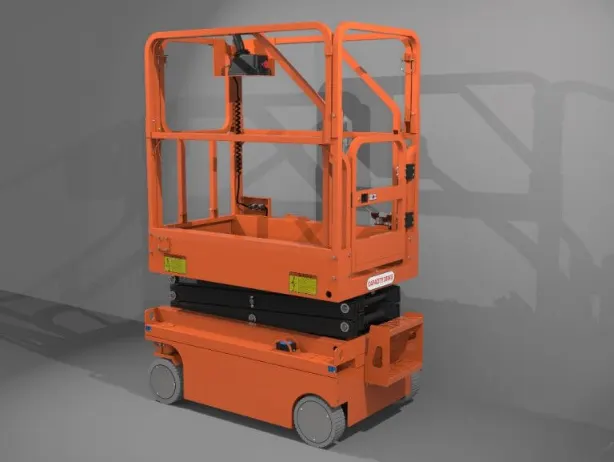
When you choose access equipment for indoor jobs, safety usually comes first. A poor choice can slow the job and also bring real risk to people, stock and the building. Both machines lift you up to the work point, but they do it in very different ways. Indoors, you rarely need extreme height or long reach. Most of the time you just want a steady platform right under the task, which is where a scissor lift normally fits better than a cherry picker.
Quick Answer for Indoor Lift Safety
If you work mainly on flat floors in warehouses, factories, malls or public buildings, a scissor lift is normally the safer pick. It moves straight up and down, has a wide work deck and keeps the load close to the base. This gives a firm feeling, even when you are close to full height. A cherry picker has a long boom and a small basket. That boom gives you reach, but it also adds sway and raises the center of gravity.
For a typical scissor lift for indoor work, the layout focuses on simple vertical travel and short moves on level ground. You are not fighting sideways swing or sharp boom movements. That usually means less stress for you and fewer surprises when lights, racks or ducting sit close to the platform.
Why Scissor Lifts Usually Feel Safer Indoors
On a scissor lift you stand on a deck that is wider than most cherry picker baskets. It is often rated for more weight, so two people and tools can work without bumping into each other all the time. The platform sits above the chassis in a straight line, which gives a solid base and less rocking.
A cherry picker still helps when you must reach over big machines or past obstacles. In tight rooms though, every bit of extra boom length also adds extra force on the floor and the outrigger points. That trade off does not always make sense indoors, especially on raised slabs or finished floors.
Key Indoor Safety Factors When You Compare Lifts
Once you look past “which one goes higher”, a few simple points shape how safe each machine feels indoors. These points are easy to miss during buying or rental, but they show up fast in daily use.
Stability and Platform Space
Indoor work often keeps you at height for a long time while handling cables, fittings or panels. A larger, box shaped deck gives you room to move, turn and reach without shifting the machine every minute. Scissor lifts keep that deck directly above the base, which helps stability and cuts down the side to side sway that some operators really dislike.
Cherry pickers have clear value when you must reach around or above something large. Still, the more you stretch the boom, the more the base has to deal with tilt and swing. In a tight indoor space that can feel nervous, even for trained people.
Floor, Emissions and Noise
Most indoor floors are smooth concrete, tile or coated surfaces. Scissor lifts, especially electric slab types, are built for this kind of ground. Many use non marking tyres that are kinder to finished floors. If you choose an indoor scissor lift, you also avoid engine fumes and cut noise, which matters in closed areas and places with staff or visitors.
A fuel cherry picker may still work indoors, but then you must think about air flow, smell and sound. That adds extra rules and more planning. For many sites it is simply easier to keep fuel machines outdoors and use electric scissor lifts inside.
People, Traffic and Operator Skill
Indoor spaces stay busy. Forklifts, pallet jacks and people move around you all day. A compact scissor lift has a neat footprint. It does not swing a boom over walkways, and most models use very simple drive and lift controls. That helps new operators build skill step by step.
Cherry pickers usually ask for more practice. The operator has to watch the boom tip, tail swing and basket at the same time. In a narrow aisle, one small mistake can take the basket or the boom too close to racks, signs or sprinklers.
Typical Indoor Scenarios Where Scissor Lifts Fit Better
When you look at real jobs, you can see clear patterns. Many indoor tasks do not need outreach at all. They just need safe, straight up access and enough space on the deck for people and parts.
Warehouses and Logistics Facilities
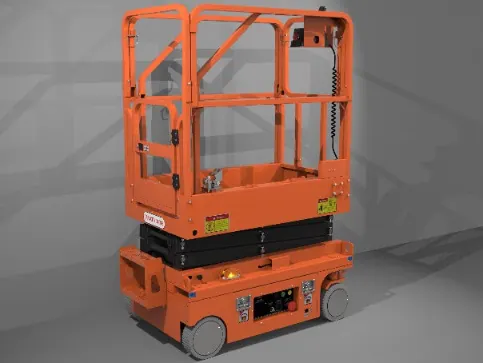
In warehouses you often work between racking, above conveyors or near loading docks. A compact mini scissor lift can pass normal doors, turn in narrow aisles and then rise right next to the shelf or beam. Electric micro scissor lifts are now common in storage areas for this reason. They keep emissions at zero and stay small enough to share space with trucks and pallets.
A cherry picker needs more side room. The boom can swing into beams or signs if the operator misjudges the move, which is easier to do when the aisle is tight or the roof is low.
Commercial, Public and Industrial Buildings
Shopping centres, airports, hotels and plants all share similar worries. They have finished floors, people below and many services overhead. For these places, scissor lifts are often chosen for smooth indoor floors and small turning space. Cherry pickers are more often sent to rough outdoor yards, steel work or tall facades.
For ceiling repairs, light changes or light mechanical work, an indoor scissor lift gives a simple routine. You roll in, lift, finish, lower and move on. Work stays steady and the risk of a sudden swing stays low.
About Hangzhou Jiequ Machinery Manufacturing Co., Ltd. (JQLIFT)
Hangzhou Jiequ Machinery Manufacturing Co., Ltd., known in the market as JQLIFT, is an access equipment maker based in East China. The company designs and builds aerial work platforms such as scissor lifts, vertical mast lifts, aerial order pickers and greenhouse pickers for customers in many regions. Its products are used in warehouses, factories, public buildings and other sites that need safe work at height.
JQLIFT focuses on compact access solutions and offers mini self propelled and push around scissor lifts for indoor and warehouse use. The range includes electric and hydraulic lifting platforms with stable frames, simple control layouts and safety features suited to everyday jobs. If you want to read more about common cherry picker vs scissor lift mistakes, there is a detailed guide on how buyers often choose the wrong type of platform.
FAQ
Q1: Is a scissor lift really safer than a cherry picker indoors?
A: For most flat indoor floors, yes. A scissor lift gives a wider deck, straight up movement and less sway, so the work often feels calmer and more controlled.
Q2: Can a cherry picker be used inside a warehouse?
A: It can, but you need plenty of room for the boom and very good air flow if it is not electric. Many sites only bring cherry pickers inside for rare jobs that a scissor lift cannot reach.
Q3: What is the safest lift for indoor warehouse work?
A: In many cases it is a small electric scissor lift that matches your rack height, aisle width and floor strength. When those three points fit, daily work tends to stay safer and smoother.
Q4: Do you still need training for a small indoor scissor lift?
A: Yes, training is still needed. Even a small lift takes you high off the ground, so you should learn checks, basic rules and good driving habits before real work starts.
Q5: How should you choose between different indoor scissor lift models?
A: Start with the working height and platform size you need. Then look at machine width, load rating and door openings on site. After that, compare simple details like control feel and drive speed to find a model that fits your jobs.